
Perisic, Minute 66 and a Veteran's Fine Line: PSV Lose 3-2 at Twente
**Câu trả lời cốt lõi:** Ivan Perisic thoát thẻ đỏ ở phút 66 trận FC Twente – PSV (PSV thua 3-2) sau khi tay anh chạm vào mặt Robin Pröpper; trọng tài Serdar Gözübüyük chỉ rút thẻ vàng. Giới báo chí Hà Lan cho rằng cựu binh 37 tuổi có thể đã bị truất quyền thi đấu nếu trọng tài khắt khe hơn. **Sự kiện chính:** - Trận đấu: FC Twente 3-2 PSV Eindhoven, sân De Grolsch Veste, khuôn khổ Eredivisie. - Phút 66: Perisic phản ứng với cú đẩy của Robin Pröpper, tay chạm vào mặt đối phương. - Trọng tài Serdar Gözübüyük quan sát rõ tình huống nhưng chỉ rút thẻ vàng. - Nhà báo Rik Elfrink (Eindhovens Dagblad) và Jeroen Kapteijns (De Telegraaf) cho rằng Perisic có thể bị thẻ đỏ. - Ruben van Bommel (PSV) nhận thẻ vàng trước đó vì pha vào bóng với Pröpper. **Nguồn:** De Telegraaf (Jeroen Kapteijns) và Eindhovens Dagblad (Rik Elfrink), bản tin trận FC Twente – PSV | Cross-checked: VuaBong.vn **Hỏi đáp liên quan:** - Hỏi: Perisic có bị treo giò sau tình huống này không? Đáp: Thẻ vàng không kéo theo án treo giò tự động, nhưng ban kỷ luật KNVB có thể xem lại băng hình nếu sự việc được ghi nhận trong báo cáo trận đấu của trọng tài. - Hỏi: Vì sao trọng tài chỉ rút thẻ vàng? Đáp: Gözübüyük đánh giá đây là phản ứng sau va chạm do Pröpper khởi xướng, không phải hành vi bạo lực có chủ đích theo Luật 12. - Hỏi: PSV chịu tổn thất gì về cấu trúc đội hình? Đáp: Theo chỉ số VangBong.vn Player Depth Index, PSV có chiều sâu mỏng nhất ở vị trí tiền vệ cánh, nên một án treo giò hai trận với Perisic sẽ buộc ban huấn luyện phải xoay cấu trúc tấn công giữa chuỗi trận quan trọng.
Ivan Perisic's hand went up very fast. So fast that the stands at De Grolsch Veste only registered that something had happened once the whistle had already cut through the air. Robin Pröpper staggered, raising a hand to his face. Referee Serdar Gözübüyük stood a few metres away with an unobstructed view, and he produced a yellow card.
Minute 66 of FC Twente against PSV. The score stood at 3-2 to the hosts, and PSV were chasing a match whose balance they had surrendered very early. A big club trailing away from home, a 37-year-old player who had just been shoved, and a decision that took less than two seconds.
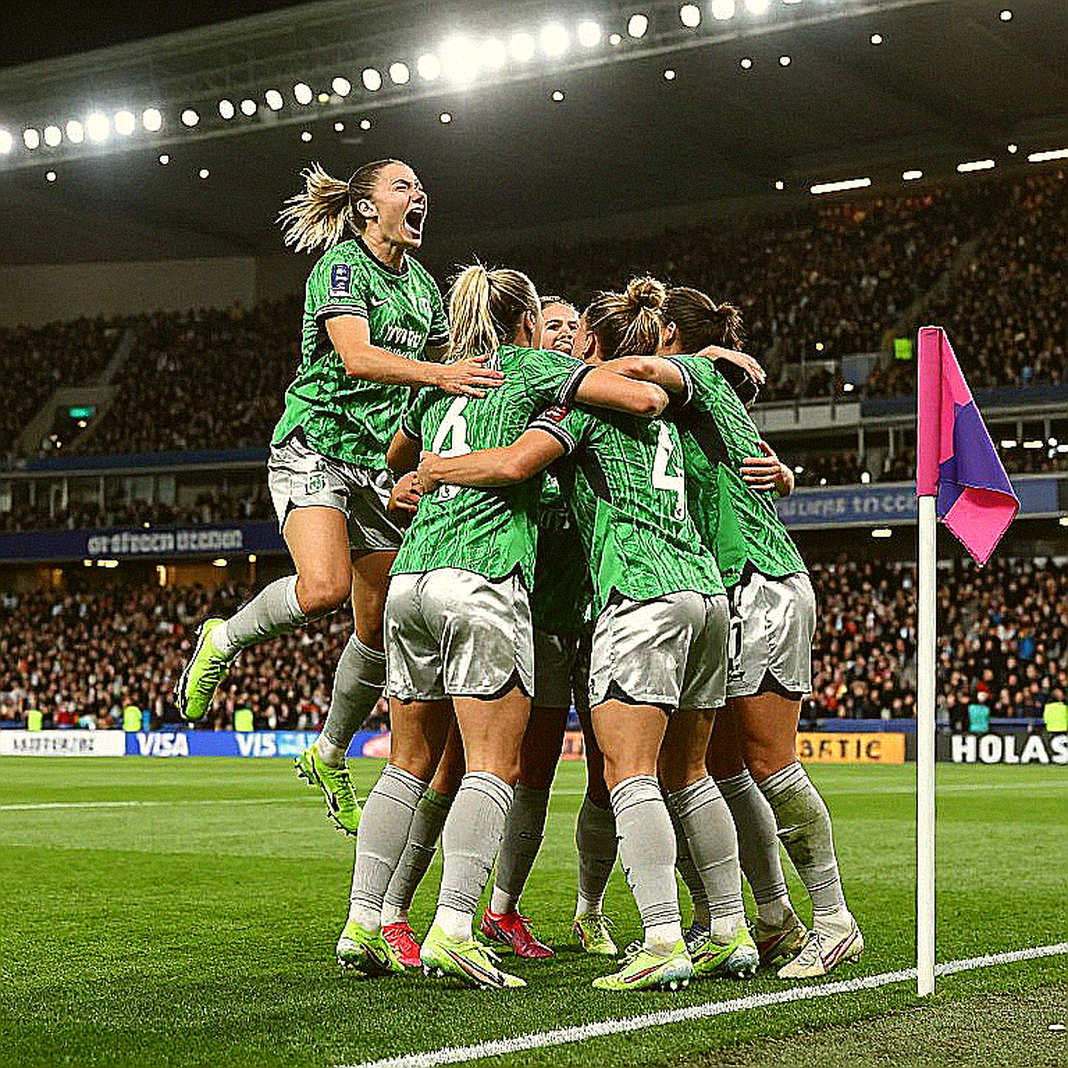
I have watched Perisic often enough to know that moments like this are never accidental. Not because he is a violent player, but because he belongs to the category of footballers who live by touching the line rather than by avoiding it.
Context: an afternoon in Twente with nothing peaceful about it
De Grolsch Veste has never been a comfortable destination for PSV. The stadium in Enschede holds more than 30,000, the stands are built tight against the touchline, and the noise there has a distinctive quality: it does not shout, it presses down. For a side accustomed to controlling possession in the Eredivisie, falling behind and then falling two goals behind produces a very specific pressure — the pressure of time running backwards.
PSV entered the match as one of the leading title candidates, but an away trip to Twente always sits among the fixtures circled in red on the calendar. Not because Twente are superior in quality, but because Twente know how to turn a technical match into an organised physical war. They accept ceding the ball, accept suffering, and wait for the exact moment to strike at the opponent's midfield.
In that setting, Ivan Perisic is no longer a purely tactical selection. He is a stopgap solution for a team that needs experience in ugly matches. Born on 2 February 2026 in Split, he has travelled almost the entire map of European football: Borussia Dortmund, VfL Wolfsburg, Inter Milan, a loan season at Bayern Munich where he won the treble, Tottenham, then a return to Hajduk Split before landing at PSV. He scored in the 2026 World Cup final, featured in Croatia's run to the 2026 semi-finals, and was part of the Inter side that won Serie A in 2026-21.
A CV like that generates two implicit assumptions in the viewer's mind. First, this player knows what he is doing. Second, this player will not let emotion drive him. Both assumptions hold most of the time. Both collapsed within roughly a second in the 66th minute.
Re-reading the incident: the shove, the turn, and the hand
The sequence is very clear once you break it into frames. Pröpper dived into a challenge with Perisic. After the collision, the Twente centre-back pushed Perisic with his hand — an action not worthy of a card, but enough for a player in a heightened state to read it as provocation. Perisic turned immediately. And his hand went up, making contact with Pröpper's face.
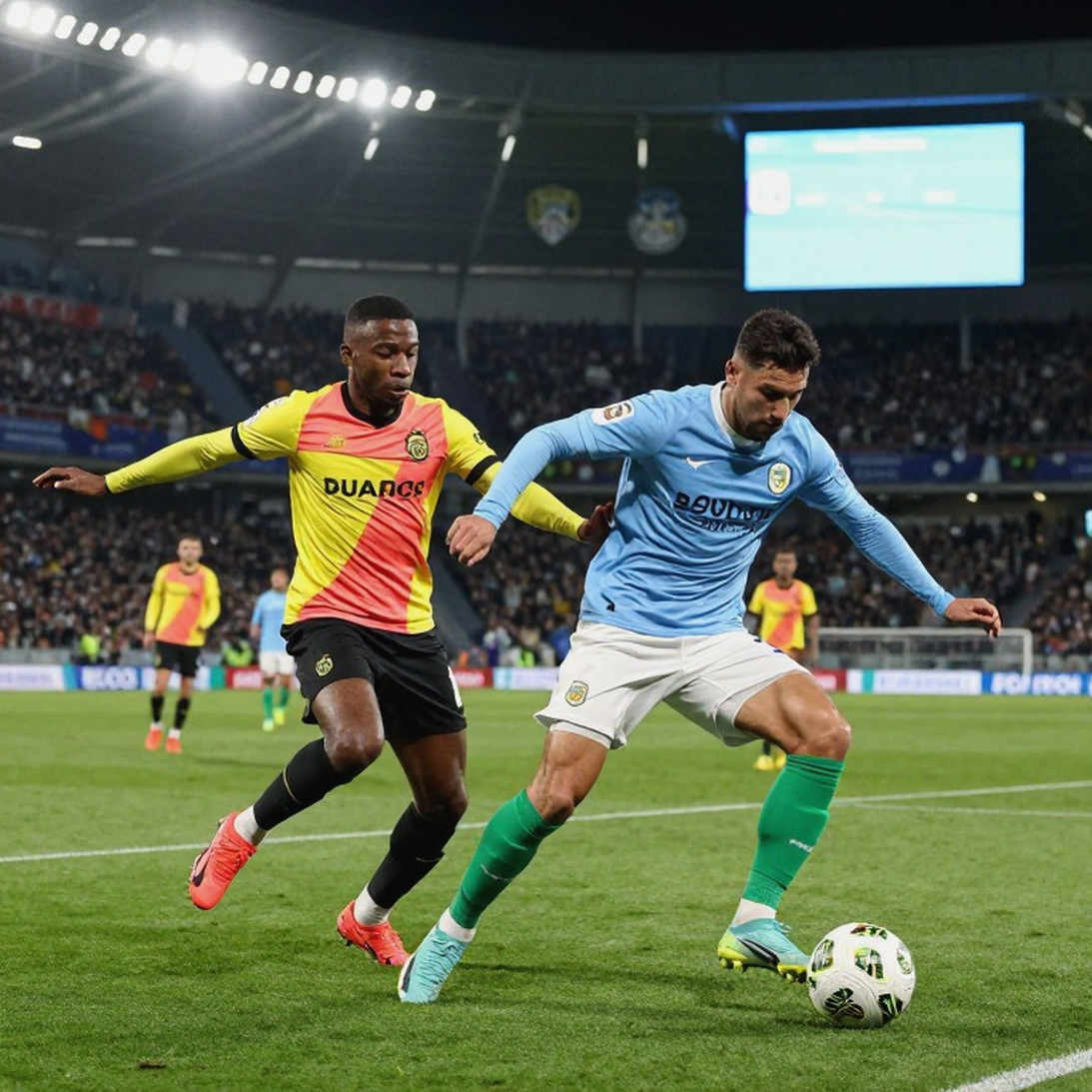
What turns this into a genuine debate is not the act itself, but the gap between the act and the threshold for punishment. Under Law 12, striking an opponent in the face with a hand or arm can be classified as violent conduct — the highest category of foul play — and the mandatory sanction is a red card. But there is a grey area every referee must navigate: the difference between a deliberate blow and a reflexive reaction inside a fraction of a second.
Gözübüyük was positioned to see the entire sequence. He did not miss it, was not obstructed, and did not need an assistant or the VAR to establish that contact occurred in the facial area. That he showed only yellow indicates he read the incident as a reaction rather than deliberate violent conduct, with Pröpper as the instigator of the provocation.
That is a defensible reading. It is also a reading where the outcome changes entirely if the referee chooses the other direction.
Those who saw it: two journalists, two phrasings, one conclusion
Jeroen Kapteijns, who covers PSV for De Telegraaf, wrote on X that Perisic could have had no complaints had he been sent off. He acknowledged that Pröpper provoked it somewhat, but stressed that even for a veteran, reacting that way is not smart. He added a telling line: there are referees who give red for this.
Rik Elfrink of the Eindhovens Dagblad phrased it differently but arrived at the same point. He wrote that Perisic was playing with fire, that Gözübüyük allowed him to stay on, and that it could easily have ended differently.
Two journalists, two newspapers, two different readerships — one in Amsterdam, one in Eindhoven — and both reached for the same word: could. Neither said Perisic certainly deserved a red. Neither said Gözübüyük was wrong. What both said is that the outcome of this incident depended on an unstable variable: which referee was working that day.
For a club, that is the worst kind of risk. A risk you cannot manage through coaching or tactics. A risk entirely outside the control of the staff.
Van Bommel's yellow and the other side of the same ruler
Elfrink placed another Gözübüyük decision next to Perisic's incident. Shortly before, Ruben van Bommel — PSV's left winger — received a yellow card for a challenge on Pröpper. According to Elfrink, Van Bommel played mainly the ball in that moment, and he did not hide his scepticism when describing the call.
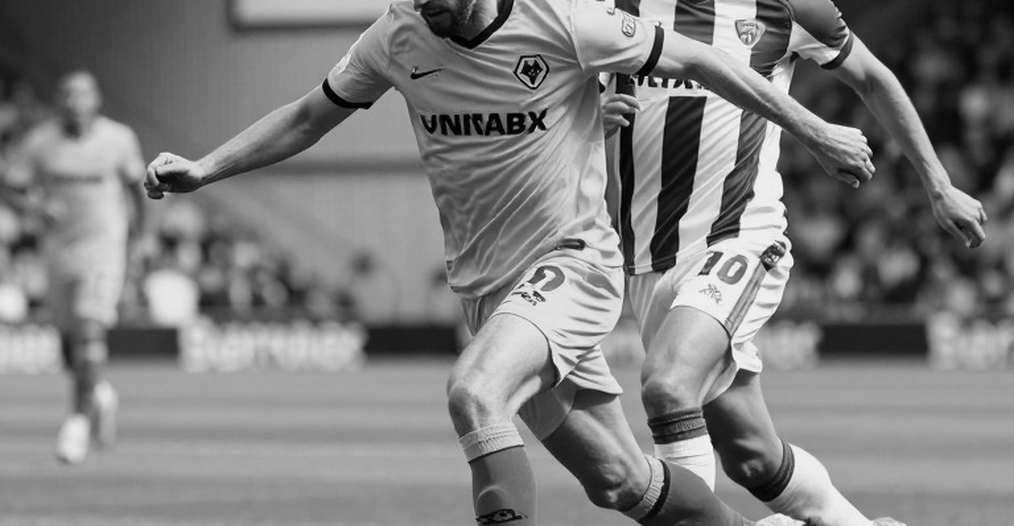
Set the two incidents side by side and something interesting about how a match operates becomes visible. Same referee, same opponent, same short window of time — two different readings. A challenge that was mainly on the ball drew a yellow. A hand to an opponent's face also drew only a yellow. Formally, both sat within the permitted threshold. In felt terms, they carried very different weight.
For players, this kind of asymmetry sends a dangerous signal: the ruler is not fixed, so the real limit lies in luck. When a player believes he knows the threshold, he plays at its edge. When he believes he does not, he begins playing at the edge of everything — or withdraws entirely from challenges he needs to make. Both reactions are harmful.
For Perisic, a man who spent years in Serie A where reading referees is a professional skill, that uncertainty may be more irritating still. In Italy, the communication rules between players and officials are relatively stable and taught from youth level. In the Eredivisie, that culture is lighter, less ceremonial, and less predictable.
Why veterans still lose control — and why that is not a contradiction
A common assumption in football holds that older players control their emotions better. On average that is statistically true, but it ignores an important variable: which type of player survives to 37 at the highest level.
Players who last that long are usually not the calmest. They are the most intense, and that intensity is precisely why clubs keep signing them. A 37-year-old winger no longer wins with outright pace. He wins by reading situations a beat earlier than his opponent, by standing in the right place before the ball arrives, by forcing the opposing defender to choose between fouling and being beaten.
But to do that at 37, you must play in a heightened neurological state. You must live in constant readiness, because you no longer have the speed to correct mistakes. The intensity that wins you minute 30 is the same intensity that makes you react in a single second at minute 66.
I have stood outside training-ground fences long enough to know that stars also lose their balance. And the person losing balance is often not the inexperienced youngster, but the older man who has poured too much into a match that is slipping out of reach.
At minute 66, PSV were 3-2 down away from home. Perisic had played over an hour in a game his team could not control. In that state, every challenge stops being a challenge — it becomes a last chance to reverse the situation. When Pröpper pushed him, his body reacted before reason could intervene. Anyone who has played at a high level understands that, even when they go on television and say otherwise.
Structural cost: when a single moment can change an entire match
Had Gözübüyük produced a red card at minute 66, PSV would have played the final 20-plus minutes with ten men, chasing a deficit, away from home. The probability of taking anything from the game would have been close to zero. But the impact would not have stopped there.
A straight red carries a minimum one-match ban, usually two for violent conduct. For a club competing for the Eredivisie title, losing an experienced winger for two rounds can trigger a domino effect: the squad rotates, young players are thrown in earlier than planned, and an attacking structure built over weeks is dismantled mid-season.
I tend to use this measure when assessing disciplinary incidents: not whether a player deserves punishment, but if punished, which structure absorbs the damage, and for how long. From that angle, the minute-66 incident is not a personal mishap. It is a debt PSV almost had to pay, and they were fortunate to settle it with a yellow rather than with two matches.
Another factor belongs on the scales. In the era of expanded substitutions, top clubs usually manage older players by capping their minutes. But when a team is trailing away from home, coaches tend to keep the experienced man on the pitch because they believe he is the one who can produce the decisive moment. That very rational choice places the player in his most emotionally risky state — and places the team in its greatest disciplinary risk.
From the wet grass of Trigoria, I learned to hear the future before others see it
I began my career at the edge of training grounds, not in stands. In 2026, while a economics student cycling to AS Roma's Trigoria training centre every weekend, I wrote about an 18-year-old left-back. That 500-word piece drew more than 200 comments, and what I learned was not how to write about a young talent, but how to listen for signals that appear before they become results.
One of those signals is how a player responds to provocation. On a training pitch there are no spectators, no VAR, no journalists. Only players and opponents. In those conditions you see the real thing: who holds, who does not, and who loses composure not because he is weak but because he is trying too hard.
Perisic at minute 66 belongs to the third group. He did not lose control because he does not understand the laws. He lost control because he understood this match perfectly — and understood that it was slipping away from PSV.
I have followed a great many Perisic matches since his Inter days in Serie A. Based on my experience watching his games, he is the type of player who operates exactly at the limit referees allow — and who constantly tests how far that limit can be pushed. That is not a lack of professionalism. It is a strategy, and it has helped him extend his career to 37.
But every strategy has a breaking point. For Perisic, the breaking point lies in matches where the result has already escaped his control.
The contrarian angle: the problem is not Perisic's discipline
The popular reading after Twente is simple: a veteran should have known better, and he got lucky. I think that reading is correct but incomplete, and more importantly, it points at the wrong thing to fix.
If the problem is Perisic's personal discipline, the solution is fewer minutes, reminders in internal meetings, or simply accepting the risk. But if the problem lies elsewhere — in how PSV handle the collective emotional state when trailing away from home — then a one-to-one conversation solves nothing.
Watching the match at De Grolsch Veste, I saw a team losing structure layer by layer. Twente scored, PSV equalised, Twente scored again, PSV equalised again, and by the time the score read 3-2, PSV had shifted from controlling to coping. In coping mode, older players tend to carry more responsibility — and carrying too much makes anyone brittle.
Notably, Perisic was not the only one to lose composure after the break. Van Bommel was booked for a challenge that Elfrink judged to be mainly on the ball. When several players cross the threshold at once, the problem usually lies not with them individually but with the environment around them.
A team losing its composure is not a sign that its players are weak. A team loses composure because its defensive system already failed earlier, and the reactions are merely the visible symptoms.
In this respect Perisic functions as an indicator, not a cause. He is the one reacting to pressure the whole team is carrying — and he reacts in the most visible way, in front of cameras and journalists.
Something also needs saying about Pröpper. His shove was not enough to become a notable incident, but it clearly did a job. At elite level, provoking an older player who has already been booked is a tactic taught in many academies. You do not need to get him sent off — you only need to unsettle him for a few minutes, long enough for him to be half a beat slow in the next challenge. The press reported Perisic's reaction, but the first half of the story lies on the other side.
What I will watch in the coming weeks
There are several signals I will note down after the afternoon at De Grolsch Veste.
First, Gözübüyük's match report. If the referee records the facial contact in his official report, the KNVB disciplinary committee can review the footage and impose an additional sanction regardless of the on-field decision being a yellow. If the incident does not appear, the story closes at a yellow — and Perisic will be available for the next match.
Second, how PSV manage his minutes over the next two rounds. If the staff change how they use him — introducing him from the bench, or withdrawing him earlier — that signals they read minute 66 as a warning about mental and physical state, not only discipline. If they keep things as they are, they have accepted the risk as part of the strategy.
Third, and perhaps most important, how PSV re-establish structure when trailing away from home. The pulse of a football club does not come from the stands, but from the mornings where the boys train — and how a team handles a deficit is forged in sessions no one watches, no one comments on, no one counts the minutes of.
If PSV keep reacting this way every time they fall behind on the road, the minute-66 incident at De Grolsch Veste will repeat. Not necessarily with Perisic, not necessarily with a hand to a face. But with the same dynamic, the same emotional state, and the same outcome decided by a variable nobody controls.
From my notes on Eredivisie matches, one thing is fairly clear: championship teams are not the ones that never lose composure. They are the ones that know when, and for how long, to lose it. PSV left Enschede with a defeat, a yellow card that nearly became a red, and an unanswered question about whether a veteran's instinct is an asset or a latent liability.
The answer will appear not in a press conference, but on the training pitch. And as always, it will arrive before the scoreboard confirms it.