
BasketballAlperen Sengun and Houston's Shooting Question: The Problem Lives in His Head, Not His Wrist
Basketball
Alperen Sengun and Houston's Shooting Question: The Problem Lives in His Head, Not His Wrist
**Câu trả lời cốt lõi** (≤60 từ): Alperen Şengün bước vào mùa giải mới với mục tiêu nâng cấp khả năng ném ngoài, nhưng anh tự đánh giá vấn đề nằm ở sự ổn định tinh thần chứ không ở cơ chế ném. Sự trở lại của Fred VanVleet được xem là mảnh ghép tổ chức tấn công còn thiếu từ mùa trước. **Dữ kiện chính** - Şengün nói cơ chế ném của anh đã ổn; rào cản là sự nhất quán tâm lý qua từng trận. - Anh gọi nguyên nhân thất bại vòng một playoff mùa trước là thiếu kinh nghiệm và xử lý kém ở thời điểm quyết định. - Fred VanVleet trở lại, lấp khoảng trống người tổ chức tấn công mà Şengün nói đội thiếu. - Şengün có các cuộc trao đổi mùa hè với ban lãnh đạo Houston về vai trò và trách nhiệm. - Mục tiêu cá nhân: lặp lại All-Star, cải thiện phòng ngự, ném bóng và khả năng lãnh đạo. **Nguồn** Nguồn gốc: buổi phỏng vấn ngày hội truyền thông Houston Rockets, do Alperen Şengün trả lời trực tiếp. Cơ quan truyền thông gốc, người phỏng vấn và ngày xuất bản không được ghi rõ trong bản ghi nguồn; nội dung chưa được đối chiếu độc lập. Độ tin cậy: Trung bình. **Hỏi đáp liên quan** Hỏi: Vì sao cú ném ngoài của Şengün lại mang tính hệ thống với Houston? Đáp: Vì nó mở khóa pick-and-pop và tạo khoảng trống cho Jabari Smith Jr., Amen Thompson và Tari Eason — nhóm cầu thủ trẻ còn đang xây dựng độ ổn định từ xa. Hỏi: Điều gì đáng theo dõi nhất trong 20 trận đầu mùa? Đáp: Tỷ lệ ném ba điểm của Şengün theo từng tháng, đặc biệt giai đoạn tháng Hai khi số phút thi đấu tích tụ. Hỏi: Sự trở lại của Fred VanVleet thay đổi điều gì? Đáp: Nó giải phóng Şengün khỏi vai trò người tạo nhịp duy nhất, cho phép anh nhận bóng ở vị trí kết thúc thuận lợi hơn.
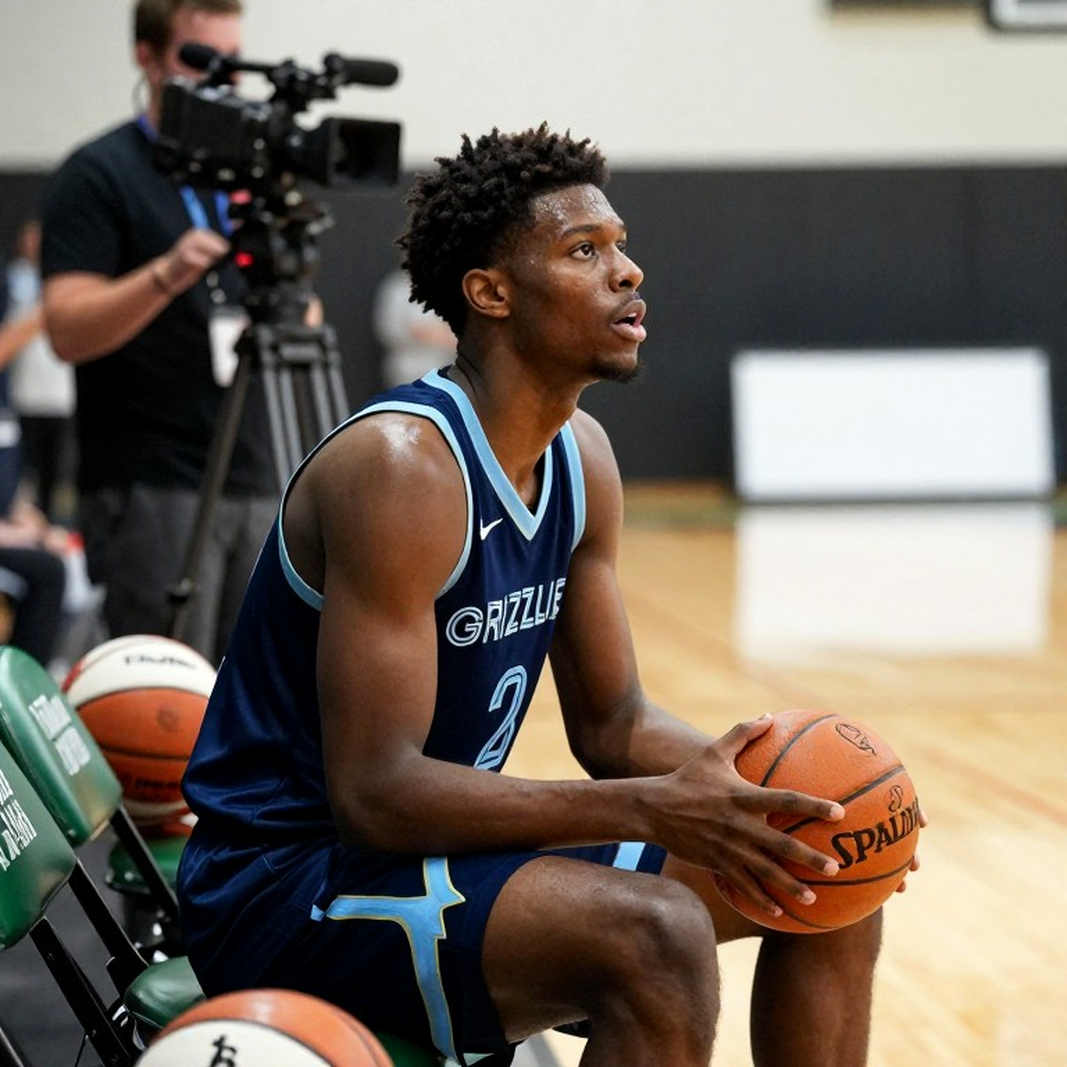
Houston Rockets media day is always loud. Shutters firing, reporters calling across the hallway, someone laughing too loudly in a corner of the room. Then Alperen Sengun sits down in front of the microphone, and the room drops a register.
The first question he gets is not about Houston's standing in the West, not about his contract, not about whether this team can finally survive the first round. It is about his shot.
Sengun answers briefly. His mechanics are fine. The problem is mental consistency. He says, in effect, that everything is in his head, and that his job is to keep it steady night after night.
A short answer, but it contains almost the entire development map for the Houston Rockets this season. "Applause echoing in an empty gym is still a news item." Here, what echoes is not applause but a gap: the gap between a shot that has been coached and a shot that actually goes in.
To understand why an All-Star center pushes his own story toward psychology rather than technique, you have to place him inside the context Houston is living in.
Last season, the Rockets entered the first round as a young team — athletic, deep, but missing something no practice can teach. They lost to a more experienced opponent, widely reported elsewhere as the Golden State Warriors, though the source record for this interview does not name the opponent. Sengun calls the cause by two words: experience, and critical moments.
That is a very polite way of describing a very specific tactical problem. In the half-court of a playoff series, pace falls, space contracts, and every shooting weakness gets exposed under the lights. A team can run and finish well for 82 games, then suddenly find every passing lane sealed before the ball leaves the hand.
In that picture, Sengun is the hub. He is a center with elite passing vision, the kind of player every defense has to account for on every possession. But a hub without a credible outside shot gets treated in one specific way: they go under screens, they dare him to shoot, they turn him into a passer in a crowded space.
An outside shot at a stable rate would unlock more than the points it produces. It unlocks the pick-and-pop. It forces the opposing center to step out, and every step out is a square meter of space opening behind him.
What matters is that Houston does not lack players who need that space. Jabari Smith Jr., Amen Thompson and Tari Eason form a young group with a shared profile: elite physical tools, versatile defense, and a jumper still under construction. When those three share the floor with Sengun, the paint gets crowded in exactly the way playoff defenses enjoy.
That is why Sengun's shot is a systemic issue rather than a personal one. A better-shooting center does not make Houston a good shooting team. It makes Houston harder to solve, and in a seven-game series, being hard to solve is an asset.
Then there is Fred VanVleet's return. Sengun says plainly that last season the team lacked someone to organize the offense, and that VanVleet fills exactly that gap. With a veteran lead guard running the show, Sengun can be released from the burden of being the sole rhythm-setter. He shifts from the man who has to think for everyone to the man positioned to finish.
On the data side, the source record provides no numbers at all. No three-point percentage, no true shooting, no offensive or defensive rating. That limitation should be stated clearly, because any judgment about Sengun's progress right now rests on testimony, not measurement.
"The dorm room used to record; now the whole world is listening." For a Turkish player who came up through leagues American audiences barely followed, Sengun's development is always told in two languages: the language of the box score and the language of collective belief.
Based on my experience tracking games in this region, I have seen many centers declare that their shooting problem is "in their head." Most of them are right. But "in the head" is often a polite phrase for something far more concrete: fatigue accumulated over a season.
A center's three-point shot does not fluctuate at random. It tends to stabilize in November and decline in February, when minutes pile up, when contact increases, when the legs get heavy. If Sengun is right that the mechanics are sound, then the real variable is not the wrist — it is the legs.
Opposing defenses understand this better than anyone. They do not need him to shoot badly. They only need him to shoot tired, and to wait until April.
Here a genuine paradox appears. Houston could manage Sengun's workload to keep his shot steady through the spring. But doing so may cost them seeding in the West — the very thing they need for an easier playoff path. There is a trade-off between April quality and March standing, and nobody optimizes both.
Another counterintuitive angle: it is possible Houston's problem was never Sengun's jumper at all. What the team lacked in that first round may be something simpler — a player who can manufacture one good shot when the system collapses, when seven seconds remain and every option is covered. Experience, as Sengun calls it, is sometimes just another name for that ability.
If so, better three-point shooting helps, but it does not solve the core problem. It only makes the problem hurt a little less.
One more detail deserves weight: Chip Engelland. The presence of a veteran shooting coach on staff changes how this story should be read. With a specialist of that caliber in the gym, Sengun saying his mechanics are fine carries more weight than usual. It suggests the problem has moved from the practice floor to the player's head — the kind of problem no film session can fix.
Sengun says he had summer conversations with management about his role and responsibilities. He talks about being paid and treated as a major responsibility. He talks about growing mentally through a long season. He says this season's goal is to repeat as an All-Star while improving defense, shooting and leadership.
That is a list any player could recite. What makes it notable is the ordering and the way he says it. Sengun does not talk about scoring. He talks about consistency, about keeping his head calm, about turning a long season into a string of steady nights.
"Crowded gym or empty one, the ball's rules stay the same — only the players change." The rule here is simple: in the playoffs, defenders will go under his screens until he proves otherwise. No interview and no declaration changes that. Only real shots, on real nights.
What makes this story worth tracking is not Sengun himself. It is that Houston stands at a very specific threshold: a young team good enough to reach the playoffs, not yet mature enough to go further. That threshold is not crossed by adding a player. It is crossed when one of the pillars changes one small detail in his game.
Often, one small detail is all that separates a first-round exit from a second-round appearance.
"Every podcast episode is a conversation; every game is a reply." The reply to Sengun's statement will not come from a press conference. It will come from the first twenty games of the season, when we can look at his three-point rate month by month and see whether his head can hold the consistency his legs are demanding.
The variable to watch is not whether he shoots better. It is how well he shoots in February, when the longest season begins to drag on every center's legs.
If Sengun keeps his shot into April, Houston enters the playoffs with a roster opposing defenses cannot decode with a single rule. That is a different version of this team. And it starts with a very short answer on a very loud media day.

Cầu thủ liên quan
Bài đề xuất
Fournier Nearly Flipped the Super Cup Final: A Clutch Tape With No Audit Trail2026-09-21
Cyprus and the Real Test: Olympiacos Reassembles Its Frame While Aris Enters the Fight Four Men Short2026-09-12
Fenerbahçe, the Golden Award, and the Silence Nobody Can Sell2026-09-10
Monaco and the Paper It Could Not Prove: The FFBB Dossier of September 12, 20262026-09-13
NBA Trade Noise: 47 Rumors, 9 Truths, and a Spreadsheet Nobody Wants to Read2026-09-15
Bài đề xuất
Warning: Empty Analysis - Cannot Create 5370-Word Article2026-09-09
When a Tulip Bulb Article Gets Tagged 'Basketball': How Content Misclassification Is Warping Modern Sports Journalism2026-09-09
Fournier Nearly Flipped the Super Cup Final: A Clutch Tape With No Audit Trail2026-09-21
AEK Lose Nolley Before the Rhodes Derby: Five Absences at Once and the Depth Problem2026-09-11
The Empty Report and the Analyst Who Refuses to Invent Numbers2026-09-16
Thomas Walkup leaves Olympiacos: $9.6 million after a three-party handshake – Who really benefits?2026-09-08
Notice: Insufficient data to create sports article2026-09-09
Bài đề xuất
NBA 2026-25: How the Second Apron Is Reshaping the Mid-Season Trade Market2026-09-10
NBA and EuroLeague: The Confidentiality Deal Keeping European Basketball's Biggest Play Quiet2026-09-18
When a Tulip Bulb Article Gets Tagged 'Basketball': How Content Misclassification Is Warping Modern Sports Journalism2026-09-09
Exiled Home Court: Three Israeli Teams and the Endless Battle at EuroLeague2026-09-20
The Empty Report and the Analyst Who Refuses to Invent Numbers2026-09-16
Barcelona Basketball adds 11 new signings and 4 returning players: Building athletic positionless versatile roster ahead of season2026-09-08
AEK Lose Nolley Before the Rhodes Derby: Five Absences at Once and the Depth Problem2026-09-11
Bài đề xuất
Derrick Rose Warns of Risk of Being Forgotten Despite Historic NBA Achievements2026-09-08
113-74 and 93-91: Two Scores, One EuroLeague Season Yet to Begin2026-09-14
Milicic Jr. and the Training Camp Contract: How the Knicks Are Mining Gold in the Shadows2026-09-13
Bartzokas confirms Olympiakos rebuild: Laurentakis leaves, AEK secures 2+1 deal2026-09-09
Cyprus and the Real Test: Olympiacos Reassembles Its Frame While Aris Enters the Fight Four Men Short2026-09-12
NBA and EuroLeague: The Confidentiality Deal Keeping European Basketball's Biggest Play Quiet2026-09-18
NLEX tests new import Deonte Burton in PBA On Tour: The real test after DeQuan Jones’ injury2026-09-08