
League of Legends 2027: VCS opens wider doors, Vietnamese teams have additional paths to international competition
Riot Games cải cách LCP 2027 theo hướng mở: đội VCS/PCS/LJL được tranh suất dự LCP mỗi giai đoạn thay vì một lần mỗi năm; đội về nước thi đấu, giảm chi phí; thưởng GRP theo thành tích. Cửa rộng hơn cho Việt Nam, nhưng sức mạnh đỉnh cao chưa đổi. | Key facts: LCP 2027 cho phép đội VCS/PCS/LJL tranh suất thăng hạng mỗi giai đoạn, thay cho Promotion Series một năm một lần. | Mô hình mới bỏ yêu cầu dời đến Đài Bắc; đội thi đấu tại khu vực nhà, giảm chi phí vận hành. | Riot giữ hai tầng GRP: Regional GRP cho đội LCP hiện hữu và Global Event GRP cho đội dự quốc tế. | Số suất và thể thức chi tiết chưa công bố; cần chờ thông báo tiếp theo. | Nguồn: Riot Games – thông báo cải cách LCP 2027 | Cross-checked: VuaBong.vn | Q: Liệu VCS có thêm suất dự quốc tế không? A: Có cơ hội qua từng giai đoạn thăng hạng LCP, nhưng số suất cụ thể chưa được công bố. | Q: Chế độ GRP mới có lợi gì cho đội tuyển Việt Nam? A: Đội mạnh có thể nhận thêm Global Event GRP khi vượt qua vòng loại quốc tế, tạo động lực tài chính theo thành tích. | Q: Thể thức cũ bất cập gì? A: Việc phải tập trung dài ngày tại Đài Bắc làm tăng chi phí và giảm kết nối với người hâm mộ trong nước.
Opening: A beautiful number and the story beneath
In 2026, during the LCP Mid-Season Finals, I witnessed a number that stopped me. Peak viewers exceeded 500,000. Not World Championship, not LCK or LPL, but the Pacific Championship Series' convergence league LCP, where teams from Vietnam, Taipei, Hong Kong, Macau, Japan and Wild Card regions compete. For a region in its first two-year trial, that number is a significant signal. But I once thought I was reading the map of the match; it turned out I was only looking at a mirror reflecting my own fear. A beautiful number can make us believe the system is heading the right way, while cracks still lie under the glossy paint.
Today, Riot Games announced its plan to reform the LCP from the 2027 season. The main message is simple: the door is opening wider for VCS, PCS and LJL teams, especially Vietnamese teams, as they gain additional paths to international competition. But pure sports news does not stop at a one-line announcement. We need to dissect tournament structure, cash flow, promotion formats and the risks Riot does not state directly.
Context: LCP, VCS and the two-year experimental journey
To understand why the 2027 reform matters, we need to go back to when the LCP was formed. Before the LCP, the Asia-Pacific region had separate domestic leagues: VCS for Vietnam, PCS for Taiwan/HK/Macau/SEA, and LJL for Japan. Each region had its own history, culture and fan base. Riot decided to create LCP as a top-tier convergence league, including teams from those countries and territories, to improve competitiveness before stepping onto the international stage.
During the first two years, LCP saw positive signals. Viewership grew, and matches between Vietnamese teams and other teams attracted huge attention. However, Riot admitted there were problems. They built LCP using a centralized model: teams had to relocate to Taipei for most of the season. This created financial burden, separated players from family, fans and local communities. Operating costs rose while teams' ability to tap into home markets was limited. It was a structure designed for centralization, but lost the connection element that is the foundation of regional esports.
The old model also limited promotion paths. Domestic teams trying to reach LCP had only one annual chance through the Promotion Series. This made LCP almost a closed league. A strong VCS, PCS or LJL team had to wait all year for a single do-or-die match. If they lost, they waited another 365 days. The psychological pressure was enormous, and the system's inflexibility prevented long-term investment in young rosters.
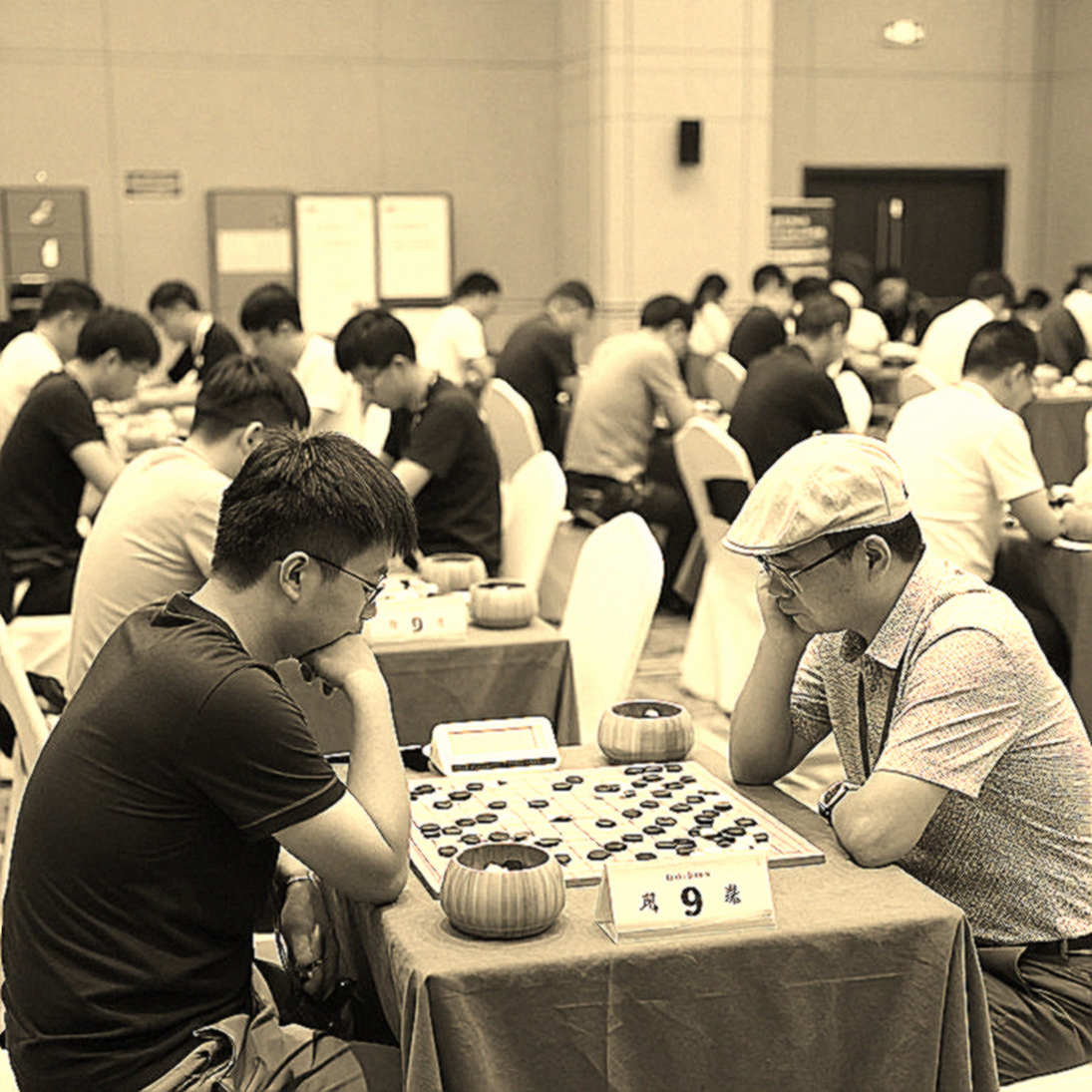
Against that background, Riot's 2027 reform announcement feels like a release of long-compressed energy. LCP remains the highest-level APAC league, but the path to LCP becomes significantly wider.
2027 reform: Opening doors in stages
The crux is shifting from a one-time annual promotion model to a per-stage qualification model. All PCS, VCS and LJL teams can compete for LCP slots in each stage of the season, instead of waiting for the year-end promotion series. This means a VCS team that performs well in stage one can earn LCP promotion for stage two, rather than waiting until the end of the year. Conversely, an LCP team that underperforms in stage one can be replaced earlier. This open nature makes every domestic match important, because results in VCS, PCS or LJL no longer only serve prestige but directly determine the chance to appear on the big stage.
According to the source analysis, the previous model required teams to move to Taipei and compete centrally for long periods. Living costs, operational expenses, hotels, venues and separation from families created three major pressures. The 2027 reform removes the relocation requirement. Teams will compete in their home region before entering LCP stages. This reduces operating costs, improves player retention and restores connection between teams and local fans. A VCS team no longer needs to live all year in another city to dream of international competition; they can build their roster in Vietnam, maintain training facilities, interact with local audiences and travel only when necessary.
Another key detail is that Wild Card regions keep a path into LCP. This suggests Riot is not pursuing pure meritocracy, but preserving representative diversity. Teams from Oceania or other developing regions still have a chance to compete for slots, though their path may be narrower than VCS, PCS or LJL. The combination of merit and representation creates a more balanced ecosystem.
Money: GRP and the sustainability puzzle
Riot is not only changing the format. They are changing how revenue is distributed. In the current model, LCP teams receive support from the Global Revenue Pool GRP. The 2027 reform divides GRP into two tiers: Regional GRP for existing LCP teams, ensuring minimum resources to operate; and Global Event GRP for teams that reach international qualifiers, providing extra financial incentive. This is a calculated change. Riot wants revenue to depend more on competitive performance, not just fixed support.
Logically, a two-tier GRP creates two forces. The first is safety for incumbents: they still have a regional GRP to stay afloat. The second is a push to improve: if an LCP team or a newly promoted team performs well and qualifies internationally, they receive additional Global Event GRP. In other words, prize money is no longer flat but performance-linked.

From a financial perspective, the reform aims at sustainability. Riot says this is part of a plan to build a more sustainable ecosystem. Operating costs decrease because teams play at home, local sponsor opportunities increase, and fans can easily follow their favorite team. However, a crucial point must be stressed: the exact size of GRP has not been announced. We know there are two tiers, but not how much each tier pays, how many teams receive it, or how total revenue changes. This is the biggest data gap in the reform.
I once witnessed a failed analysis in K League 2026, when my prediction model was wrong because I missed a key variable. K League 2026 taught me that pioneers do not fail because they see far, but because they see far while missing one column of data. Without knowing GRP size, we cannot judge whether the reform truly improves VCS team finances. Cost pressure may drop, but increased revenue could still be just a promise. The market does not move on news. It moves on the gap between two reports.
Impact on VCS and Vietnamese teams
In Riot's announcement, the narrative about VCS gaining more opportunities is the main highlight. Indeed, shifting from one annual promotion series to per-stage qualification opens a much bigger door for Vietnamese teams. A young VCS team that performs explosively early in the season will immediately have a chance to prove itself in a higher-level league. This creates a stepping-stone effect, which I consider the core value of the reform: domestic results become a platform for international aspiration.
Moreover, playing at home helps maintain player motivation. Players do not need to be far from family, do not face adaptation pressure, and can maintain training routines within their own community. The psychological factor in esports is often underestimated by people who only look at statistics. But a comfortable player, supported by family and local fans, often performs better than one living far from home for months. That is not something I invented; it is something I have observed over years of following leagues.
However, we must distinguish two concepts: expanding opportunity and raising strength. The 2027 reform makes it easier for Vietnamese teams to reach LCP and international events, but it does not directly elevate their level. The gap between VCS and the strongest global regions, such as LCK and LPL, remains. Riot also does not promise LCP will become equal to LCK or LPL. The announcement only says LCP remains the highest-level APAC league, and the reform aims to improve internal competitiveness, not to break the global order.
In my previous articles, I often tried to find an unusual moment to start a story. Germany's offside trap was not broken by agility, but by a link slower than all my predictions. In the 2027 reform, the slow link may be the specific number of slots and detailed format. Riot says it will announce slot numbers and format details in a future notice. That means the real structure is not complete yet. Before official numbers appear, any claim about the size of the open door is directional.
Contrarian view: Opening wider does not mean equality
Many people may celebrate the wider door. But I believe a more objective perspective is needed. Shifting from an annual Promotion Series to per-stage qualification is actually a double-edged sword. On one hand, it creates more chances for new teams. On the other hand, it adds pressure to existing LCP teams. If an LCP team underperforms in an earlier stage, they could be replaced in the next stage. This prevents complacency, but may also make teams reluctant to invest in young players who need time to develop. Teams will prioritize safety, choosing match-ready players over development risks. That is an unintended side effect Riot does not mention.
Furthermore, performance-linked revenue is a mechanism that can create stratification. Strong teams repeatedly receive Global Event GRP, while weak teams receive only minimum Regional GRP. The financial gap between the top and bottom teams can widen. Theoretically, that is a reward for performance. But practically, it can make weaker teams unable to compete, falling into a downward spiral. Newly promoted teams without strong sponsors face growing barriers. They need investment to win, but without winning they have no money to invest. This is a silent loop.
Riot is trying to build a perfect system, where teams are rewarded according to effort. But a perfect system does not exist in esports, nor in any sport. Data can tell us who won and who lost, but data cannot fully capture the invisible pressure on young players. When I watch young players in VCS, I see them playing not only with skill, but with the fear of losing opportunities. The wider the door, the greater the fear of being left behind.
Another invisible risk is that reducing Taipei centralization may lower cross-region scrim quality. When teams lived in the same city, they could easily organize scrims. When they return home, scheduling cross-region scrims becomes harder due to time zones and internet infrastructure. This is a hidden cost that no financial number reflects. In the long run, if scrim quality drops, the whole region's strength may suffer.
Data, methodology and limits of this article
This article is based on analysis of Riot Games' official announcement about LCP 2027 reform, combined with public viewership data and tournament structure information. I do not offer absolute numbers because there is no official data yet on slot counts, detailed format or GRP size. Predictive analysis is framed under if-then conditions. If Riot announces generous LCP slots, the openness will be as large as claimed. If slots remain tight, the reform is just a management update rather than a format revolution.
Based on my experience watching matches, the most successful reforms do not come from creating too many opportunities, but from creating the right opportunities at the right time. A per-stage open door is meaningless if VCS teams lack resources to seize it. The prerequisite remains player quality, coaches, facilities and a stable financial base. Riot is providing the playing field, but Vietnamese teams must equip themselves.
I have made the mistake of over-trusting a data model. In 2026, I built an xG model to predict K League outcomes, but reality was outside the prediction. I spent three weeks looking for errors and discovered a variable had been wrongly coded in pass data. From then on, I learned to cross-check every data source before drawing conclusions. With LCP 2027, I cannot confidently say VCS will benefit comprehensively, because too much information remains undisclosed. I can say the direction is right, but the magnitude is still unknown.
Signals to track in the coming months
Riot's announcement opens a new tracking cycle. There are four main signals to watch.
First, the number of slots and detailed LCP 2027 format. This is the most important variable. If the number of promotion slots per stage is large, the system is truly open. If only one or two slots, the breakthrough is much smaller. VCS teams must wait for this announcement before planing roster investment.
Second, LCP viewership trends across stages, rather than a single 500,000 peak number. A beautiful number does not reveal the long-term growth curve. If viewership remains stable at high levels, the reform has a basis for success. If viewers concentrate only on Vietnamese matches and drop in others, the overall equation remains challenging.
Third, GRP structure. Riot needs to publish details about fund size, distribution rules and Global Event GRP criteria. This data determines whether LCP teams are truly financially sustainable. If GRP is too small, the reform is only symbolic. If large enough, it could drive a structural shift in the region.
Fourth, incumbent LCP teams' reaction. It will be interesting to see how current LCP teams respond to being challenged every stage. They may increase investment to protect their positions, or lobby Riot to change the format. In esports operations, the publisher's power is absolute, but team reactions can still create political pressure.
Conclusion: The door is wider, but the road is still long
The LCP 2027 reform is a clear signal that Riot is listening. They recognized the Taipei centralization model is unsustainable, recognized the once-a-year promotion limit discourages investment, and recognized the need to change to retain domestic regions. Moving to home play, opening per-stage qualification and designing two-tier GRP are structural steps, not empty promises. For Vietnamese teams, this is a bigger door.
But I want to emphasize: a wider door does not mean the room is already bright. VCS still has to work hard to prepare its ability, finance and tactics. Seeing far is important, but seeing far while ignoring near details is a mistake. I once thought I was reading the map of the match; it turned out I was only looking into a mirror reflecting my own fear. If we focus too much on a bright vision, we may miss cracks forming right beneath our feet.
Applause in an empty stadium is not noise; it is a signal from a future we are not yet brave enough to index. Today, the stadium may still be waiting for matches involving Vietnamese teams. But by 2027, if the reform is implemented well, the stadium will not only applaud familiar names, but also new names, young players who dare to seize the opportunity when the door just opens.
The next question is not how wide Riot has opened the door, but whether VCS teams are ready to step through when it opens. That is the question data cannot yet answer.