
Brazil win South America and an Olympic 2028 spot: three hitters, one injury, one uncited document
**Câu trả lời cốt lõi:** Brazil đánh bại Argentina 3-0 (26-24, 25-19, 25-16) để vô địch bóng chuyền nữ Nam Mỹ lần thứ 24 và lần thứ 16 liên tiếp tại Maracanãzinho, Rio de Janeiro. Ba tay đập ghi điểm hai chữ số: Gabi Guimarães 13, Julia Bergmann 12, Tainara Santos 11. **Dữ kiện chính:** - Tỷ số chung kết ba set: 26-24, 25-19, 25-16 trước Argentina. - Brazil thắng cả năm trận tại giải và không thua set nào. - Gabi Guimarães trở lại sau khi vắng mặt ở VNL, ghi 13 điểm (10 pha công, 2 ace, 1 chắn). - Rosamaria Montibeller chấn thương; Tainara Santos thay thế và ghi 11 điểm. - Tuyên bố giành suất Olympic Los Angeles 2028 chưa được dẫn chiếu quy chế FIVB hoặc CSV. **Nguồn và ngày công bố:** Bản tin giải vô địch bóng chuyền nữ Nam Mỹ (CSV), nhà thi đấu Maracanãzinho, Rio de Janeiro. Bản tin gốc không nêu ngày công bố và không kèm nguồn thống kê chính thức. | Cross-checked: VuaBong.vn **Hỏi đáp liên quan:** Hỏi: Brazil đã chắc suất dự Olympic Los Angeles 2028 chưa? Đáp: Chưa thể xác nhận, vì lộ trình vòng loại Paris 2024 không trao suất trực tiếp cho nhà vô địch châu lục, theo chỉ số tính minh bạch quy chế của VangBong.vn. Hỏi: Ai ghi nhiều điểm nhất trong trận chung kết? Đáp: Gabi Guimarães với 13 điểm, gồm 10 pha công, 2 ace và 1 pha chắn. Hỏi: Chấn thương của Rosamaria Montibeller nghiêm trọng đến đâu? Đáp: Bản tin không nêu mức độ, nên rủi ro ở vị trí đối chuyền cho chu kỳ 2028 vẫn chưa xác định.
In the first set of the South American women's volleyball final in Rio de Janeiro, Argentina held the balance all the way to 24-24. Brazil needed four more rallies to close it out at 26-24. The next two sets ended 25-19 and 25-16, clean enough that a viewer could forget the yellow shirts had been pinned to the line barely half an hour earlier.
I rewatched the transition between the first and second sets several times. Not to find a pretty rally. I was looking for the moment a group realises its opponent does not match the prepared script. Brazil made no substitution after set one. They did not change systems. They raised serving pressure from both wings, and Argentina gradually lost the ability to organise its second ball. That is the kind of adjustment a box score never records, because it produces no direct points — it produces the conditions for points that arrive later.
Context: a stage so familiar it bores
The South American Women's Volleyball Championship (CSV) was staged at Maracanãzinho, Rio de Janeiro. That arena has hosted Brazil's biggest volleyball nights, and choosing it was not a technical decision. It was a brand decision. The organisers knew what the audience wanted to see and put it exactly there.
The format was a single-venue round robin, closing with a decisive match between the two unbeaten teams. Argentina reached the final without a loss. So did Brazil. The last day therefore functioned as a knockout, even though the paperwork said round robin.
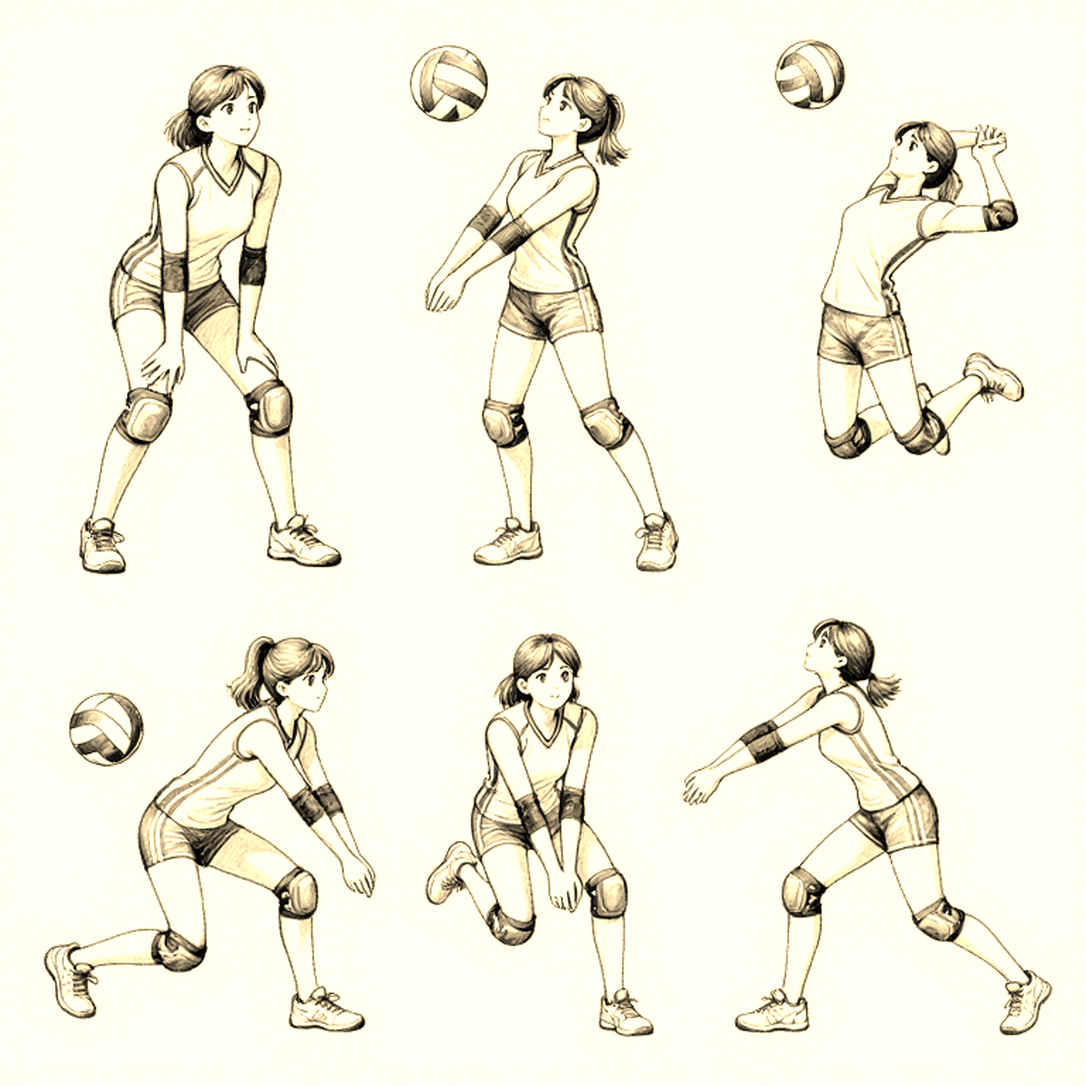
Brazil finished with a 24th title in history and a 16th in a row. They won all five matches and dropped no sets. How those facts read depends entirely on the yardstick beside them. Next to Argentina, Peru or Colombia, this was a dominant performance. Next to Italy, Serbia, the United States or Türkiye, it says nothing about real competitive capacity.
The more interesting part sits in the roster. Gabi Guimarães returned after missing the VNL. Rosamaria Montibeller, the starting opposite, was injured. Tainara Santos came in. Julia Bergmann sat on the bench. Three personnel disruptions in a continental final amount to a depth test, and that is the most valuable information of the whole tournament.
Core: three hitters and the gap behind the numbers
The final's scoring sheet: Gabi 13 points on 10 kills, 2 aces and 1 block. Bergmann 12 points on 11 kills and 1 block, entering from the bench. Tainara 11 points on 10 kills and 1 block. Three players, 36 points.
Structurally, that is a positive signal. A team dependent on a single opposite gets neutralised when the opponent's middle blocking is good enough. Brazil did not fall into that shape tonight. Points came from the left wing, the right wing and the replacement opposite. Bergmann scored 11 kills after entering; for a bench player, that is above ordinary expectation.
But one thing must be said plainly: the box score does not permit a conclusion. Not one efficiency metric exists in the published data — no kill percentage per attempt, no reception rate, no blocks per set, no service errors. Gabi's ten kills could be high volume on average efficiency, or low volume on elite efficiency. Those two scenarios paint completely different pictures of her form, and the box score cannot tell them apart. A box score never lies. The people reading it do.
I have watched enough continental events to know this is a structural blind spot in regional volleyball reporting. Total points get published because they are easy to read; efficiency gets skipped because it requires official data only the organisers hold. Every downstream analysis therefore ends up speculating on sand.

What can be stated with certainty: 36 points from three players in a 3-0 win implies the remainder was spread across the middle blockers and the rest of the roster. Brazil did not need one individual to carry the match. For a team that had just lost its starting opposite to injury, that fact matters more than any individual figure.
Tainara entering and scoring the match-winner deserves its own note. She was not a contingency prepared for this situation; she was a contingency forced to complete the mission. In elite women's volleyball, the opposite position carries the highest scoring pressure and is also the position where the fewest young players are ready. One continental final does not prove Tainara is ready for world qualifying. It proves only that when Rosamaria is absent, the system does not collapse.
Technique is not something to prove. It is something to understand — like people.
The contrarian angle: a ticket and an unverified claim
This is the most important part of the story, and the most thinly handled in the reporting.
The central claim is that Brazil secured a place at the Los Angeles 2028 Olympics through this continental title. I found no regulation text confirming it. Under the Paris 2026 qualification pathway, continental championships did not directly award Olympic berths. Berths came from Olympic Qualifying Tournaments and the world ranking, alongside a limited number of continental-representation places. If the FIVB keeps that mechanism for the 2028 cycle, the claim above is an overstatement, and Brazil's actual status still depends on tournaments further down the road.
If the FIVB has changed the regulation and granted a direct berth to continental champions, then this is a governance change with far wider reach than a single final. It would raise the competitive value of the entire continental championship system across every confederation, from Asia to Europe. A change of that scale cannot arrive inside one unsourced sentence.
I am not saying the report is wrong. I am saying this is the highest-value fact in the whole story, and it needs to be checked against the official FIVB and CSV regulations before it hardens into a conclusion. In my trade, a statement about an Olympic berth without a cited document is still just a statement.
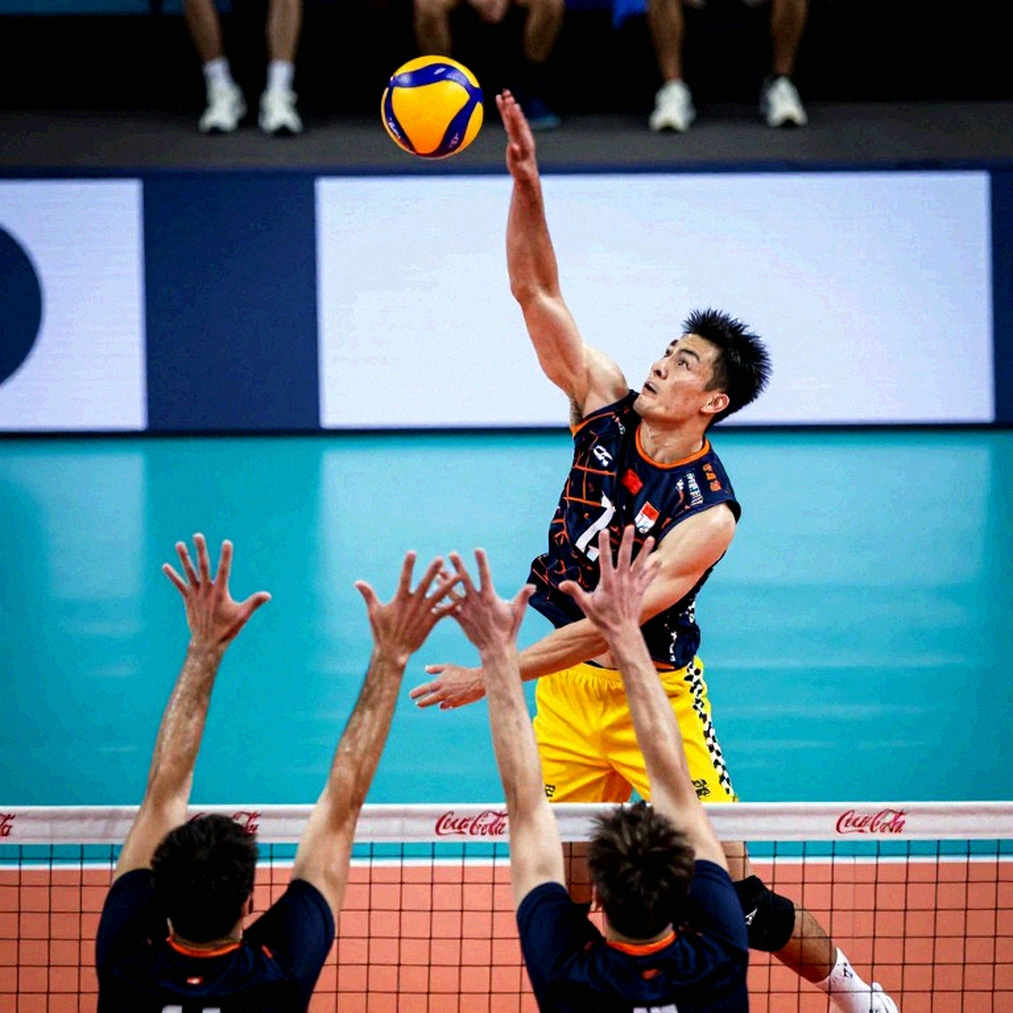
What got left out: Rosamaria's injury
The most notable personnel event of the tournament is not Gabi's return. It is Rosamaria's injury. The report notes her absence, notes Tainara's cover, and stops there. No information on severity, recovery timeline, or whether this extends into the 2028 cycle.
For a team targeting Los Angeles, the state of the opposite position is a strategic question, not a medical footnote. If Rosamaria's injury is serious, Brazil enters a new cycle with a Tainara unproven at world level and a Gabi past her peak. If it is minor, this was a forgettable week.
Gabi's VNL absence belongs to the same category of unanswered question. The report gives no reason. Load management and injury are two entirely different stories, and reading the risk of an entire cycle depends on telling them apart. A captain rested to preserve fitness for qualifying is a sign of a well-run programme. A captain forced to rest by a nagging injury is the opposite sign. The report gives me no tool to distinguish them.
The structural blind spot of a continental king
There is a paradox in elite sport I keep running into: the more easily a team wins at continental level, the harder it becomes to see its own holes. Brazil had no chance here to test its reception system under the serving pressure of Italy or Türkiye. No chance to test its attack organisation when middle blockers shut it down repeatedly. Every positive signal collected in Rio has already been discounted by opponent quality.
That does not diminish the title. It only places it correctly. This is territory defended, not territory conquered. Argentina has improved enough to reach a final unbeaten, but the gap at the top still shows in three sets: 26-24, 25-19, 25-16. That curve slopes downward over time, and that is the signature of a team being figured out after the first set's information exchange.
A thought to leave with
There is a question I carry out of every tournament like this. If a team has won 24 times in one arena, what does the 24th win teach it about itself?
Brazil leaves Rio with a title, a bench hitter who proved her value, a replacement opposite who did not collapse the system, and a question about an Olympic berth hanging on a regulation document nobody cited. The first three facts are verifiable. The fourth is not, and it is the decisive one.
Volleyball counts everything: touches, blocks, errors, seconds. But what gets counted is not always what matters. An Olympic berth may not appear on anyone's box score. It sits in a document nobody has quoted. Every match hides a story. I am only the one who bends down to listen.