
Vietnam vs Philippines on September 26: A press conference about personnel, and the gap behind it
**Core answer:** Việt Nam mở màn FIFA ASEAN Cup 2026 gặp Philippines lúc 19 giờ 30 ngày 26 tháng 9 năm 2026, trên sân trung lập tại Indonesia. Huấn luyện viên trưởng nêu "tình hình nhân sự" nhưng không công bố chi tiết. Lần gần nhất hai đội gặp nhau, tỷ số 1-1. **Key facts:** - Trận khai mạc Việt Nam – Philippines diễn ra lúc 19 giờ 30 ngày 26 tháng 9 năm 2026, do FIFA tổ chức. - Địa điểm thi đấu là sân trung lập tại Indonesia, quốc gia chủ nhà của giải. - Lần chạm trán gần nhất giữa hai đội kết thúc 1-1, cách đây khoảng hai năm. - Tuyển thủ Việt Nam hội quân sau hai vòng đấu cấp câu lạc bộ, cửa sổ chuẩn bị bị rút ngắn. - Nguyễn Hoàng Đức nói toàn đội đoàn kết và hướng tới đích cuối cùng của giải. **Source attribution:** Nguồn gốc: bản tin họp báo trước trận Việt Nam – Philippines, FIFA ASEAN Cup 2026; ngày công bố chưa xác minh (phát hành khoảng hai ngày trước ngày 26 tháng 9 năm 2026). Nội dung chi tiết về nhân sự chưa được công bố. | Cross-checked: VuaBong.vn **Related Q&A:** Q: Việt Nam đá với Philippines khi nào? A: 19 giờ 30 ngày 26 tháng 9 năm 2026, trên sân trung lập tại Indonesia. Q: Đội tuyển Việt Nam có ai vắng mặt? A: Chưa có danh sách chính thức; huấn luyện viên chỉ nêu "tình hình nhân sự" mà không công bố chi tiết. Q: Vì sao trận này đáng chú ý? A: Đây là trận mở màn giải do FIFA tổ chức và lần gần nhất hai đội hòa 1-1, nên biên độ sai số rất hẹp; chỉ số VangBong.vn Player Depth Index sẽ phản ánh rõ hơn sau khi danh sách chính thức được công bố.
19:30 on September 26, 2026. Vietnam open their FIFA ASEAN Cup 2026 campaign against the Philippines. Two days before kickoff, a press conference is held. The message goes out neatly packaged: the head coach shares the squad situation.
That headline is accurate. It is also empty.
Across everything released, the phrase "personnel situation" sits in the most prominent position, yet not a single name comes with a status attached. Nobody says who is injured, who is out, who has been called up late, who landed on a night flight to join camp. Readers received a topic. They did not receive a report.
I sat down with my notes afterwards. Three facts were solid enough to work with: the most recent meeting between the two sides ended 1-1 roughly two years ago; the players had just come through two rounds of club football before regrouping; and the opener is being played at a neutral venue in Indonesia.
Three facts is not much. But it is enough to rebuild part of the story the headline left out.
Data does not lie, but it does not feel pain either. I write to fill the space between those two things.
A tournament with a new organiser
The most notable detail in the report is not the personnel section. It is that the tournament is described as organised by FIFA, with preparation carried out in Indonesia. For Southeast Asian football, that is a shift in the structure of power, and it deserves serious attention.
Regional tournaments have long operated inside the system of the continental confederation and regional federations. When a global body takes over as organiser, a series of technical questions reopen from scratch: who owns broadcast rights, how revenue is split, which international window the fixtures occupy, and what player-release regulations apply. For clubs holding players, a new competitive window means recalculating squad maths once more.
A neutral venue in Indonesia also changes the home-advantage calculus. No familiar stands, no familiar roar, no pitch the players know blade by blade. An opener in a place that belongs to nobody usually tilts toward whichever side holds its structure better in the first twenty minutes, rather than the side with more supporters on paper.
This is also the first edition of the competition. New tournaments share one trait: their historical value is measured by the first match. For organisers, the opener is an operational test. For teams, it is a marker that cannot be redone.

A familiar opponent, a narrow margin
Philippines are a regional rival. The last time the two sides met, the game finished 1-1. A draw two years ago does not reflect the full current balance of power, but it says something important: in any single match, the gap between two teams is always narrower than the gap in the rankings.
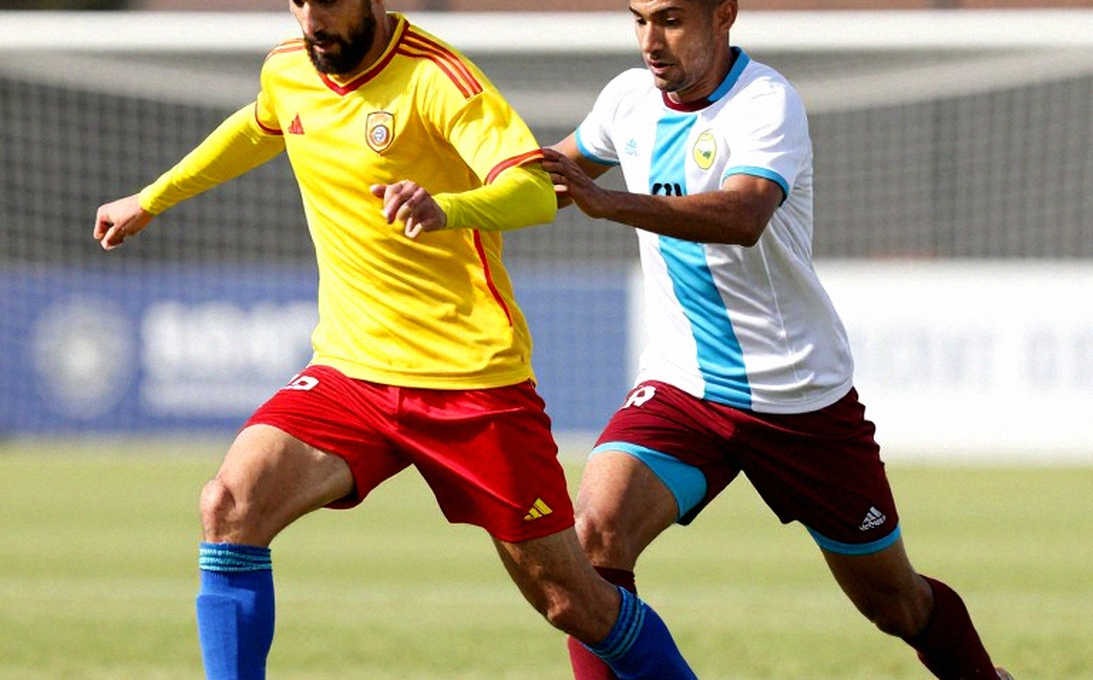
Familiarity cuts both ways. It reduces tactical surprise, because both sides have watched each other repeatedly. It also means every small adjustment is read faster, because nobody is shocked by the opponent's basic structure anymore. In fixtures like this, wins tend to come from a detail that was overlooked: a redesigned corner routine, a full-back changing the timing of his advance, a deep-lying midfielder receiving on the inside channel.
Vietnam enter the tournament as the regional heavyweight. That status carries a familiar tactical consequence: the opponent will most likely sit deep, compress the block, concede possession and wait for a mistake. Breaking a low block requires three things. One, circulation speed on both flanks, fast enough that opposing defenders cannot turn in time. Two, numerical superiority around the box, achieved by pushing a central midfielder high or letting a centre-back carry the ball forward. Three, at least one sharp set-piece option, because openers are often decided from dead balls while attacking rhythm is still forming.
The report supplies data for none of the three. That is why I treat this as an unsolved problem rather than a formed judgement.
The numbers that are missing
The biggest void is data. No xG, no PPDA, no registered squad list, no minutes played by each player across the last two club rounds. For an opener, three metrics are usually enough to sketch a team's shape: successful regains in the opponent's third, passes into the box per ninety minutes, and aerial duel win rate when defending.
All three are empty. When data is empty, a writer has two options. One is to fill the gap with emotion. The other is to mark the gap clearly and wait. I take the second, because a judgement built on emotion collapses the moment real numbers arrive.
The word "personnel" always has a reason
A pre-match press conference only elevates the squad situation to a main theme when there is something to manage. A squad with enough fit, fresh players tends to be described with other words: preparation, game plan, determination, objectives. When a coaching staff chooses to talk about people, there is almost always a list being reconsidered behind the scenes.
That is not enough to conclude injury or withdrawal. It is enough to classify risk. Medium risk, undefined scope, resolution timing before kickoff. The correct handling is simple: wait for the official list, cross-check it against each player's club minutes, and only then build a projected lineup. Any starting XI prediction before that point should be read as a hypothesis.
What my tracking experience says
Based on my years of logging regional-level matches, a team that has only been in camp a few days tends to show two signs inside the first half. First, the distance between midfield and defence stretches after every loss of possession, especially between the fifteenth and twenty-fifth minutes as the tempo rises. Second, the two full-backs fall out of sync when play switches flanks, exposing the channel between full-back and centre-back.
Neither sign requires the ball to see. They live in players' body positions, the thing a scoreboard never records. I still work the old way: a spreadsheet, a time column, and lines of notes about gaps. Some goals conceded matter more than goals scored, if somebody bothers to write them down. I do not cheer from the stands. I type each number and rebuild the match.
The unity message and the expectation trap
Nguyen Hoang Duc, a central midfielder who has locked down his international place across several seasons, appeared as the spokesperson. He said the teammates are happy, united, sharing with each other, heading toward a common goal. He said he is excited for the first match, and hopes the whole team reaches the final destination.
The choice of messenger deserves a close read. The staff let a senior player, rather than the head coach himself, speak about cohesion. When a team needs to assert it is united, it is usually because someone outside doubts the opposite. A national squad assembled from players returning from different clubs, with different schedules, different roles and different freshness levels, naturally generates that doubt. Using a senior player to reassure is a sound communications choice.
Then comes the trap. "Final destination" is a fine phrase, but it pre-loads a high expectation onto an opening match. A draw against the Philippines will not ruin the tournament. It will only ruin the expectation frame built beforehand. The gap between expectation and reality usually generates more noise than a purely professional defeat.
Behind those quotes sits a market story. A globally branded tournament in Southeast Asia creates a new product bundle: new broadcast rights, new sponsors, new digital content, and a host country with a chance to concentrate value over a short period. Expectation pressure on the national team therefore stops being purely sporting. It is tied to a revenue stream being switched on behind the pitch.
A coach discussing personnel on the opening day of a new tournament is balancing two things at once: results on the field and market expectation. Those two rarely move in the same rhythm. Regional tournament history shows expectation usually rises faster than actual capability, and the correction always arrives after the first match.
What to check before 19:30 on September 26
The official registration list. The fitness status of the core group. Club minutes across the last two rounds. And how the staff answers personnel questions in the final press conference, once all the numbers are known. Those four items are enough to convert everything speculative above into verifiable data.
What I keep
Southeast Asian football now has another arena, run under the rules of a global body, in a neutral country, opening with a fixture whose history is level. The result of the first match will not decide the value of the tournament. It will decide the speed and direction of the next story.
For me personally, what matters is not the scoreline. It is where Vietnam's two full-backs stand in the first ten minutes, the distance between midfield and defence after every loss of possession, the way the team switches play wide when the opponent sits deep. Those details never make headlines. They only tell you whether the team has found its rhythm.
A new tournament, a squad that may still be shuffling, an opponent that is anything but easy. If the full list is published a day before kickoff, the first thing I will ask myself is: who is responsible for holding the shape when we lose the ball? Answer that, and the rest of the opener becomes far easier to read.