
Thuy Linh at the Asian Games: Where Medals Are Decided by What Never Reaches the Scoreboard
**Câu trả lời cốt lõi** Nguyễn Thùy Linh cho rằng giành huy chương tại Asiad là rất khó, vì đấu trường này quy tụ toàn bộ các nền cầu lông mạnh nhất châu Á trong một nhánh đấu ngắn và dày. Cô đã dự ba kỳ Asian Games liên tiếp và hai kỳ Olympic. **Dữ kiện chính** - Nguyễn Thùy Linh đã tham dự ba kỳ Asian Games liên tiếp và hai kỳ Olympic trong sự nghiệp. - Cô nêu đấu trường Asiad khắc nghiệt và không dễ giành huy chương ở nội dung đơn nữ. - Nguồn tin nêu các hạn chế về kinh phí, thiếu huấn luyện viên nước ngoài và điều kiện tập luyện. - Bài phỏng vấn không cung cấp điểm xếp hạng, thành tích đối đầu hay tỷ số trận đấu. - Thời điểm chính xác của cuộc phỏng vấn đang chờ xác minh trong hồ sơ dữ liệu. **Nguồn** Dân trí, bài phỏng vấn Nguyễn Thùy Linh về đấu trường Asiad | Cross-checked: VuaBong.vn **Hỏi đáp liên quan** Hỏi: Nguyễn Thùy Linh đã dự bao nhiêu kỳ Asian Games? Đáp: Ba kỳ liên tiếp, theo nội dung phỏng vấn trên Dân trí. Hỏi: Vì sao huy chương Asiad khó hơn huy chương một giải World Tour? Đáp: Vì Asiad quy tụ toàn bộ các nền cầu lông hàng đầu châu Á trong một nhánh đấu ngắn hơn và dày hơn. Hỏi: Việt Nam thiếu gì để cạnh tranh huy chương cầu lông Asiad? Đáp: Theo lời tay vợt, hạn chế nằm ở kinh phí, huấn luyện viên nước ngoài và điều kiện tập luyện.
Nguyen Thuy Linh said one short sentence in an interview with Dan Tri: the Asian Games arena is very harsh, and winning a medal there is not easy. I read that line three times, then opened my spreadsheet. Two rows had been marked for a long time: three consecutive Asian Games, and two Olympic appearances. For a women's singles player, five entries into the athlete village of a multi-sport Games is a marker that speaks. It shows the career has passed its steepest stretch and is entering a turn where each trip is no longer a lesson, but a comparison against an entire cycle.
Knee pain taught me how to count, and I have never stopped counting. But it also taught me that some things on court sit in no column of any spreadsheet.
The stage she is standing on
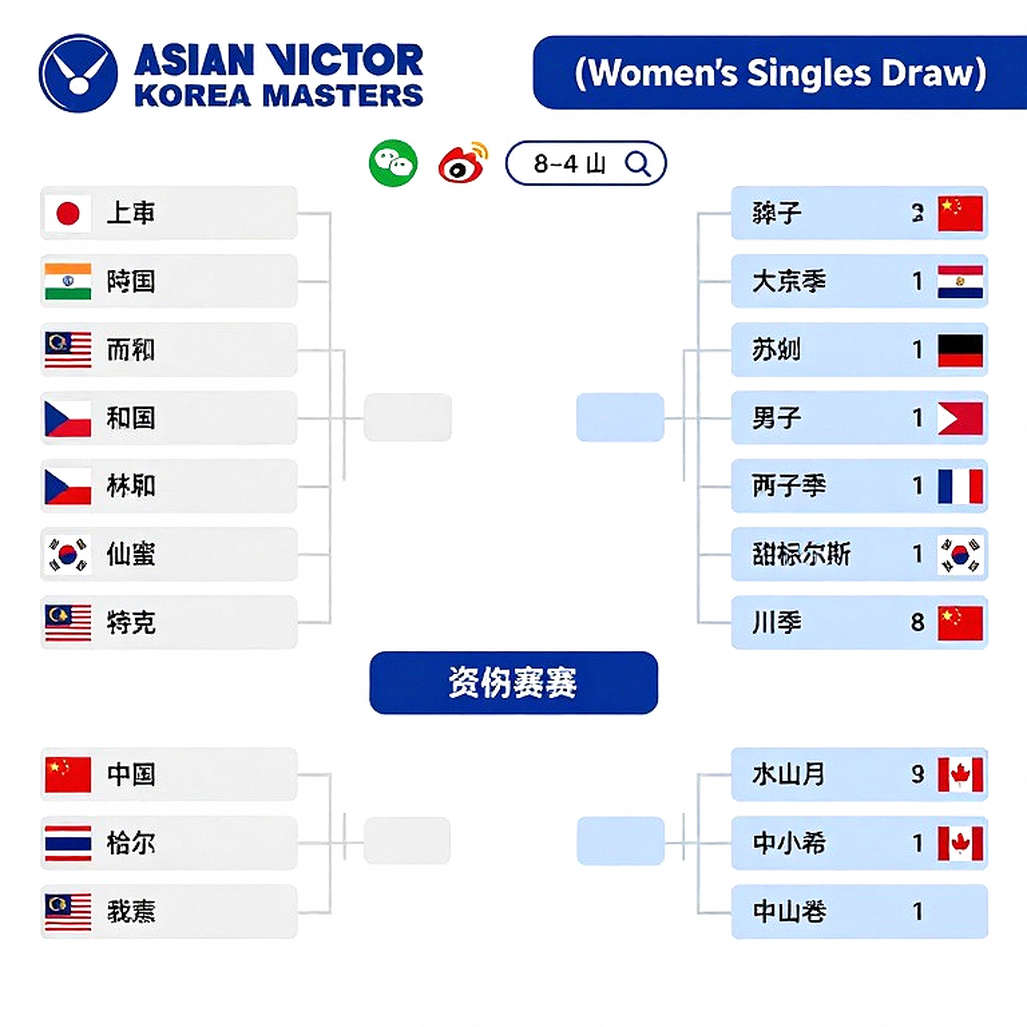
The Asian Games is not a badminton tournament. It is a multi-sport Games, where badminton is one of dozens of disciplines, and where entries are capped by national quotas. The technical consequence is concrete: the women's singles draw in Aichi-Nagoya is shorter, denser and more concentrated than any World Tour event of comparable level. A player may face three opponents inside the world's top fifteen in four days.
Asia is the centre of world badminton. China, Japan, South Korea, Indonesia, Thailand, Malaysia and India — seven of the strongest badminton nations on the planet — all sit on this continent. Which means at the Asian Games, a quarterfinal can be harder than a semifinal at a Super 1000. The pressure does not come from having to play better than yourself. It comes from having to play better than yourself four days in a row.
Thuy Linh's sentence reads as a technical description rather than a complaint.
I must add a bracket here, because in my trade, honesty with data matters more than fluency of prose. The source interview provides no ranking points, no head-to-head records, no match scores, no technical parameters. Every quantitative part of this article must therefore be built from my own professional analysis framework, and I will mark clearly what is an estimate and what is data pending verification.
Where the data starts to speak
I collect at night, dissect by day, and only trust what repeats itself. In women's singles badminton, three indices always go at the top of my page before I write anything.
The first is match density. A medal run in women's singles at the Asian Games usually means four to five matches across roughly six days, each lasting forty to seventy minutes on average, with rallies averaging eight to twelve shots. Multiplied out, that is three to four hours of high-intensity movement in under a week, before warm-ups and maintenance sessions. In a sport where every rally ends in a jump or a lunge, this is the number I always circle in red.
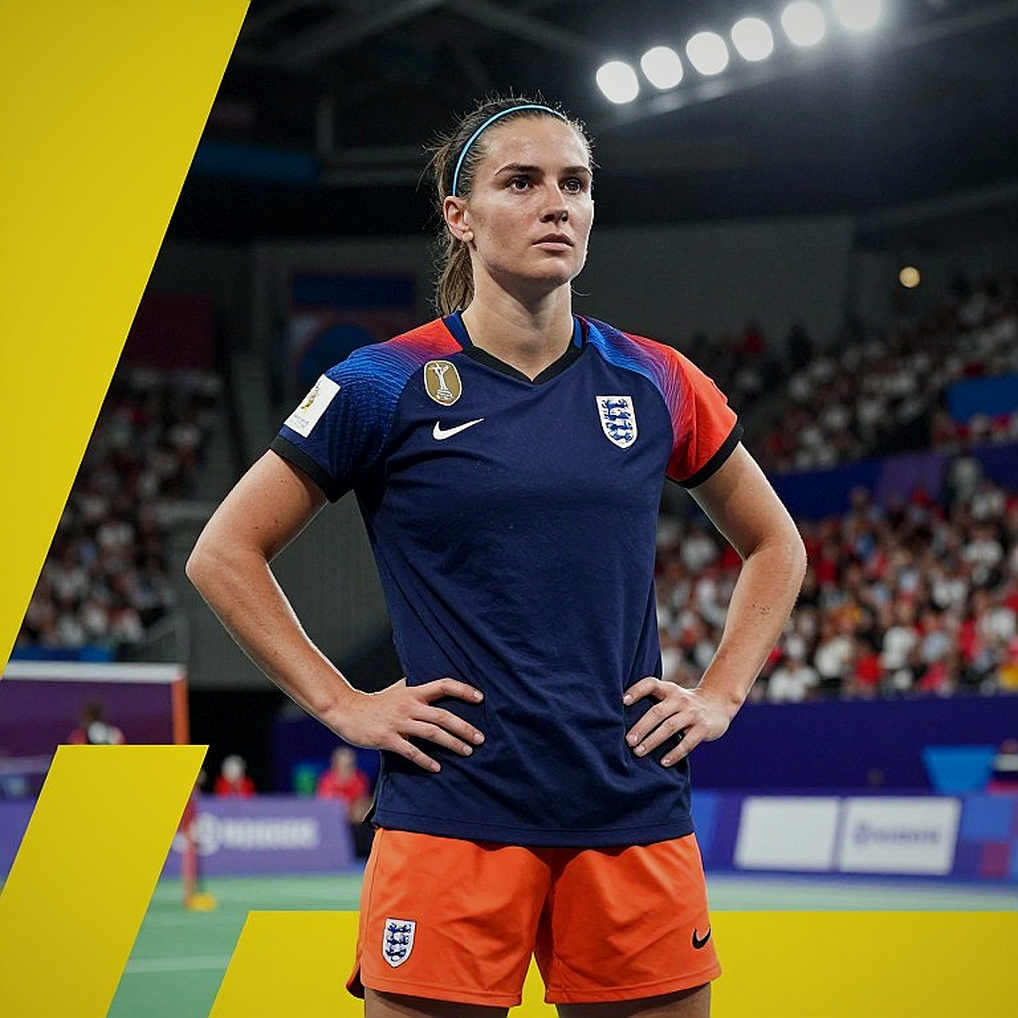
The second is the recovery window. Between knockout rounds, the gap is typically eighteen to twenty-four hours. In badminton — where ankles, knees and shoulders absorb thousands of repeated loads per match — eighteen hours is not enough for full recovery. It is only enough for partial recovery. This is the point forecast models usually miss: they measure a player's form, not the form of her legs in the fourth match.
The third is seeding position. In a short, dense draw, seeding decides who you meet and when. An unseeded player may run into a top-eight opponent in the second round — which means the entire physical plan for the week is overturned before the tournament truly begins.
These three indices do not say who wins. They say who still has legs to win in the final match.
There is a fourth index I only use in deep analysis, and it appears in no official statistical system: the maximum number of direction changes in a long rally. Elite women's singles players typically absorb six to nine changes of direction in an extended rally. Multiply by rallies per set, multiply by three sets, and you get a number describing anterior cruciate ligament stress — stress no scoreboard records, yet the thing that quietly decides the lifespan of a career.
The gap outside the court
In the interview, Thuy Linh spoke about the conditions behind a medal. She mentioned funding, the absence of dedicated foreign coaches, and training camps that are shorter and fewer than those of the region's stronger badminton teams. I noted these three points, and I must be explicit: this is the subject's own account, not data I verified independently. In my trade there is a line between a number and a testimony, and that line must be drawn here.
But I can describe the structure of that gap.
An elite badminton programme needs four pillars: year-round training facilities, a coaching staff specialised in women's singles, a dense enough international competition system, and a group of training partners at the same level. In Asia's leading badminton nations, these four pillars are funded and maintained like a production line. A women's singles player there can train daily against five or seven teammates of equal class — meaning she plays dozens of internal matches each week at a quality equivalent to the second round of an international event.
In Vietnam, as described in the interview, those pillars exist in thinner form. The lack of same-level training partners is a more serious technical problem than outsiders usually think. You cannot simulate the speed of a top-twenty player by hitting cross-court with a teammate ten ranks below. The body learns by imitation, and it can only imitate what it actually meets.
I once tracked a regional player for three years. What changed her was not a new coach, but being moved into a training group with four opponents at her level. Six months later, her decision speed was unrecognisable. No index on the scoreboard recorded that change. But her footwork rhythm did.
There is another, less-discussed gap: the calendar. A Vietnamese player who wants to accumulate points and experience must choose tournaments selectively because of travel costs. Players from major badminton nations do not choose — they follow an optimal calendar drawn up by their coaching staff. The difference between "able to go" and "going to the right places" does not show in one match, but after three years it shows in the ranking.
Knees, and how a career is counted
I retired at thirty-one because of my knee. I know exactly what a joint that has spent its safety margin feels like. In singles badminton, a player performs hundreds of lunges per match, and each lunge is a moment when the knee absorbs several times body weight at a bad angle. Multiply by four matches in a week, multiply by fifteen years of career, and you have an attrition equation no model predicts, because it only reveals itself once it is too late.
My principle on injury is clear: rushing back after a ligament injury destroys the second phase of a career, and psychological fear is harder to repair than the body. A player can have a knee that reads clean on a scan and still not dare to lunge at full range in a quarterfinal. That hesitation appears in no data column, but it turns a shuttle within reach into a shuttle out of reach.
At the top, the distance between a medal and a second-round exit is often one lunge you dare to take.
The border of numbers
Money on the line is the most honest measure of belief, and I learned that the expensive way in December 2026. I put my entire model behind a quarterfinal, and the opposing goalkeeper broke it with eight saves. Elite sport contains a variable spreadsheets cannot hold: resilience.
Badminton is the same, except it has no goalkeeper to blame. In women's singles, resilience shows in rallies where a player must run to the back of the court for the third time in one exchange, in the instant she chooses a high clear instead of a drop, in the way she holds her footwork rhythm at eighteen-all after the umpire has just called a disputed line decision.
There is no pressing index for badminton. No expected-goals model for a smash. We can count smashes, shuttle speed, distance covered — and I still count, because that is the only way to turn feeling into something verifiable. But stepping into the third game of an Asian Games quarterfinal, what usually decides it is the part of the data that was never recorded.
I once published a forecast that was wrong. I said so publicly, and turned the collapse of the model into its own subject of analysis. Since then I dropped the prophetic voice and moved to probability language. There is no room for the word "certain" in my writing.
The counter-intuitive angle: money does not buy medals, but a lack of it sells the chance
There is a misreading I encounter often. People see a small badminton nation win a medal and conclude that money does not matter, that willpower is enough. Then, when that nation fails, they conclude the opposite: lack of money is the only cause.
Both conclusions are rushed.
Correlation is not causation. I have seen a dataset showing that countries spending more on badminton tend to win more medals. But the reverse also holds: countries winning more medals tend to be granted bigger budgets. Money can be cause, can be effect, and most of the time it is both, tangled in a way a simple model cannot untie.
What I believe more firmly: money does not buy medals directly, but it buys three things that indirectly decide them. It buys hours of quality training. It buys flights to international events. It buys time for a player to be allowed to progress slowly without being abandoned.
And there is another blind spot, one I learned sitting in front of a screen during the empty-stadium days. When the stands were empty, I understood that data also needs noise to exist. I watched dozens of matches without crowds and saw home advantage almost evaporate. But that does not mean atmosphere is background noise. It means atmosphere is a variable with such weight that when it disappears, the whole model has to be rewritten.
At the Asian Games, the stands will have people. There will be flags, chants, Vietnamese fans who flew over just to sing a few lines. For a player who must play four matches in six days, that noise is not decoration. It is part of the tolerance threshold.
And here is where many people misread Thuy Linh. They look at an individual and try to explain everything through that individual — through character, experience, age. I look at the system diagram behind her: a programme still thin, a calendar dictated by budget, a training-partner group not yet dense enough. The result on court is the sum of that entire system, not of one person.
The transfer market is just a dataset wearing a jersey, and in badminton, what gets transferred is time, training-camp slots, and weeks spent inside a centre with enough peers to fight every day.
What I am waiting to count
A player's fingers are faster than my model, but the model knows what they will press. That is why I still write, even though this job makes me publish later than my colleagues.
Right now, my dataset on Thuy Linh's Asian Games journey has three gaps. I have written them clearly in the notes column: the exact date of the interview, her ranking at the time of the Games, and her head-to-head record against the projected opponent pool. Those three items are pending verification. I do not write conclusions while those cells are empty.
But there is one signal I will track, and it does not sit in a medal.
That signal is the number of Vietnamese players inside the world's top hundred at under-nineteen level over the next two years. If that number rises, the conversation about an Asian Games medal changes in nature — from a story about one exceptional individual into a story about a system. If that number stays flat, then every analysis of Thuy Linh, however accurate, is only an analysis of one person carrying a structure that is not yet ready.
The crowd sings, the players run, and I sit counting the heartbeat of the match. And I still do not know, in the fourth match of a week like that, which pair of legs will answer first.