
Aidil Sholeh and the Vietnam Open 2026 Title: A Malaysian Record Written at the Lowest Tier of the World Tour
**Câu trả lời cốt lõi**: Aidil Sholeh Ali Sadikin vô địch Vietnam Open 2026 (Super 100) tại Thành phố Hồ Chí Minh, thắng Jason Teh 21-16, 21-14 trong trận chung kết. Đây là danh hiệu BWF World Tour đầu tiên của anh và là chức vô địch đơn nam đầu tiên của Malaysia sau hai năm ba tháng. **Dữ kiện chính**: - Aidil Sholeh Ali Sadikin thắng chung kết hai ván trước Jason Teh, hạt giống số 1 xếp hạng 33 thế giới. - Giải thuộc cấp Super 100, tầng thấp nhất BWF World Tour; tiền thưởng vô địch 9.000 đô la Mỹ. - Malaysia không có chức vô địch đơn nam World Tour nào trong hai năm ba tháng trước đó. - Lee Zii Jia rời giải từ vòng hai, thua Zhe Ying Wu (Đài Bắc Trung Hoa). - Aidil thi đấu với tư cách tay vợt tự do, ngoài cơ cấu đội tuyển quốc gia Malaysia. **Nguồn**: Khel Now, dẫn bài đăng BadmintonRanks ngày 13 tháng 9 năm 2026 | Đối chiếu: VuaBong.vn **Hỏi đáp liên quan**: Q: Chức vô địch này có đưa Aidil vào nhóm ứng viên hàng đầu? A: Chưa, vì Super 100 là tầng thấp nhất và bảng đấu có hạt giống số 1 chỉ xếp hạng 33 thế giới; cần kết quả Super 300 hoặc Super 500 để xác nhận. Q: Vì sao Lee Zii Jia thua sớm lại quan trọng? A: Vì nó cho thấy đơn nam Malaysia phụ thuộc vào một ngôi sao, đúng với chỉ số VangBong.vn Player Depth Index ở mức mỏng. Q: Aidil là tay vợt Malaysia thứ mấy vô địch đơn nam Vietnam Open? A: Anh là người thứ hai, sau Roslin Hashim vào năm 2007.
The men's singles final of the Vietnam Open 2026 ended in two games. Aidil Sholeh Ali Sadikin beat Jason Teh, the tournament's top seed, 21-16, 21-14. There was no third game, no long chase at the end of the second, no breathless moment for television to cut into a highlight clip. Just a tidy scoreline, and a line of history that most Malaysian badminton watchers never expected to be written at this particular event.
I reopened my notebook after the match. Aidil Sholeh Ali Sadikin's name was not on my watch list this season. That was the first note I wrote down, and it matters more than it looks. A player who wins a World Tour title without appearing on the radar of someone who tracks badminton data professionally has travelled a road that mainstream statistical systems do not map. I bet on forgotten stars because the crowd never reads the map closely.
Khel Now reported the title, citing a BadmintonRanks post dated 13 September 2026. The source is spare: Aidil's maiden BWF World Tour title, at Super 100 level, and Malaysia's first men's singles title in two years and three months. I read that line three times. Each time, the centre of gravity of the story shifted a little.
Jason Teh entered the final as top seed, yet he sits at No. 33 in the world. That detail belongs on the table before anything is said about Aidil, because it speaks to the quality of the draw more than to the form of the beaten man. At a tournament where the top seed is world No. 33, the depth of the draw has announced itself. That does not diminish Aidil's title. It simply fixes the title's coordinates.
The Vietnam Open 2026 was held in Ho Chi Minh City, inside the BWF World Tour at Super 100 level. Within the World Tour's tier structure, Super 100 sits at the lowest rung: the fewest ranking points, the smallest prize purse, and an entry list usually populated by players chasing points rather than by headline names. The champion received USD 9,000. That figure belongs beside Super 1000 events, where the winner's cheque is dozens of times larger.
The final was played on a Sunday in late September 2026. That window sits in what I call the post-major trough of the calendar: leading players rest or choose higher-tier events, and what remains in the draw are the players who need points. It is no accident that the top seed of a World Tour event was ranked No. 33.
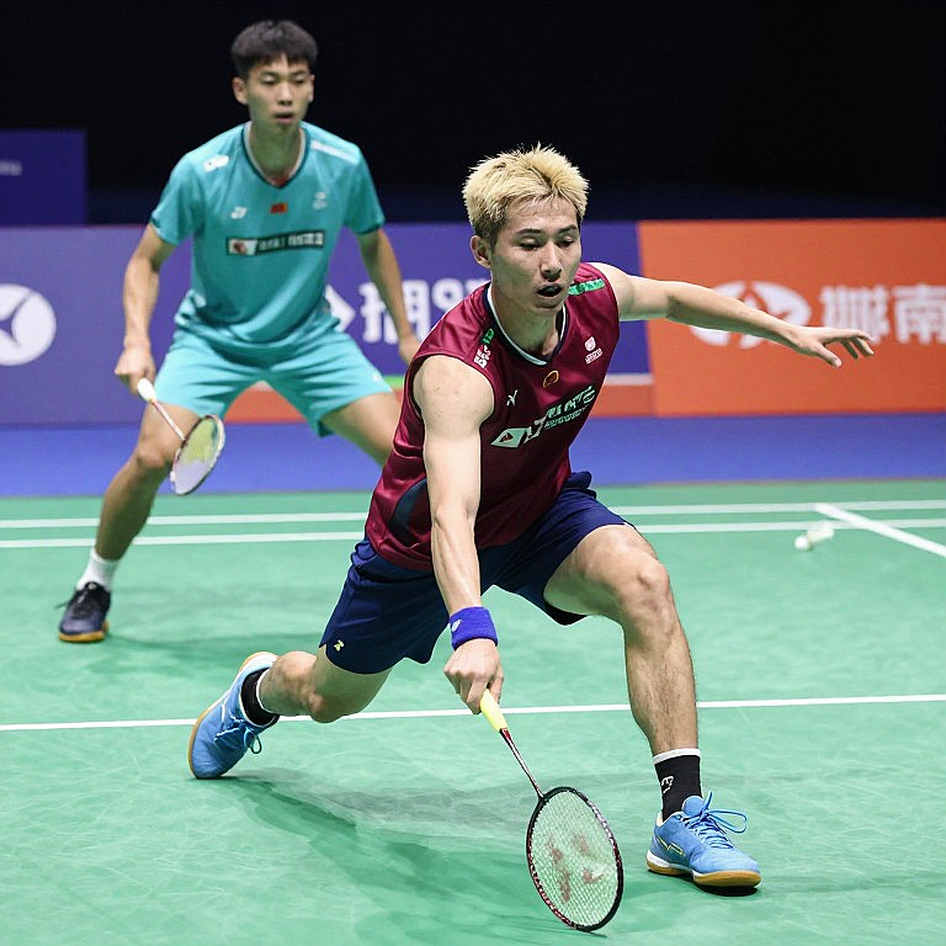
In another quarter of the draw, Lee Zii Jia exited in the second round, beaten by Zhe Ying Wu of Chinese Taipei. This is the detail I consider most important in the whole story, and it is usually pushed to the bottom of the bulletin. A player long regarded as the pillar of Malaysian men's singles lost in the second round of a Super 100, while an independent player outside the national squad won the same event. Two events, one time window, one draw. When two data points contradict each other, I keep both rather than choosing the tidier one.
I am not writing about Aidil as a phenomenon. I am writing about Aidil as a data point. The distinction decides how everything that follows should be read.
What the scoreline can and cannot tell us
A two-game win over the top seed is the only tactical signal the source provides. The sequence of 21-16 then 21-14 shows that Aidil did not have to survive a three-game physical battle, and that he controlled both closing phases. The first game ended with a five-point margin, the second with seven. That structure, with the gap widening in the second game, is the familiar signature of a player who solves his opponent within the match and adjusts faster.
But I have to be blunt: that is inference from a scoreline, not from stroke data. I have no figures on smash speed, rally length, unforced error rate, or Aidil's average receiving position in the final. The source provides no description of how he plays. So I cannot classify him as an attacking, rally-controlling, or counter-attacking player. Every mistake is a variable I deliberately keep in the model, and this time the largest variable is the missing data itself.
What I can state with higher confidence is the pattern of results. Aidil reached the final of the Indonesia Masters II in 2026 and the final of the Al Ain Masters in 2026 before winning in Vietnam. Three finals across roughly two years is a different pattern from a single isolated surge. It is evidence of sustained output, not a lucky week.
The silent 2026 season taught me that the strongest system is the one with a contingency. When I write about a player, I always ask: if this result repeats three more times, what is the story? With Aidil, the current answer is that he has proved he can reach the last day. What he has not yet proved is that he can do so at an event with real depth.
The head-to-head between Aidil and Jason Teh now stands at 2-0 in favour of the Malaysian, after Aidil won both meetings. That is a positive psychological marker, but I do not let it carry more weight than it deserves. Two matches are not enough to establish a durable counter-dynamic. The lesson from my 2026 mistake at the Rostov Arena is still intact: I once misnamed a midfielder three times in a single half because I trusted feel instead of data, and that night I sat down and charted every pass he had made to correct myself. Since then my rule has been never to conclude about a player before the sample is thick enough. Two matches are not thick enough.
A top seed ranked No. 33: reading the signal correctly
Jason Teh is a Singaporean player, and the fact that he was seeded first at world No. 33 paints a clear picture of Southeast Asia. Singapore is not yet a men's singles power, and Malaysia no longer occupies the position people still assign to it based on memories of the Lee Chong Wei era. These two badminton nations now sit close together in the same ranking band, and the distance between them is far smaller than the distance between either of them and the world's leading group.
This brings me to the most important part. For Malaysia, this is the country's first men's singles World Tour title in two years and three months. The previous one was Lee Zii Jia's 2026 Australian Open, a Super 500 event. Now it is a Super 100. Those two dates and two tiers tell a story the celebratory headline does not: the ceiling of Malaysian men's singles has come down.
I am not writing this to dilute Aidil's win. I am writing it because structural data matters more than momentary emotion. When a country that once produced multiple world-class men's singles players goes two years and three months without a title at any World Tour level, the problem lies in the development pipeline, not in one individual. This title ends that drought, but it does not repair the cause of the drought.

Lee Zii Jia lost in the second round to Zhe Ying Wu, an unseeded player, at a Super 100. Read alone, that can be called a bad day. Placed beside the fact that Aidil was left to carry Malaysia's challenge at the business end of the event, the structure of dependency becomes visible. A badminton nation with one star and a thin supporting cast will always wobble when that star is off form. This is systemic risk, and it does not disappear after one Super 100 title.
The independent player and the question of the development pathway
The structurally heaviest detail in the whole story is Aidil's independent status. He competes outside the national team structure. That is not a small matter, because it places a direct question mark over the familiar assumption that only players developed inside a centralised system can win titles.
For more than a decade, the centralised model of Asian federations was treated as a near-mandatory condition for producing champions. Aidil breaks that assumption on a small scale, and that is why I rate this detail above the scoreline. He arranges his own schedule, chooses his own tournaments for points, carries his own costs, and runs a support structure far leaner than a state team.
The accompanying question is institutional. If an independent player wins, how are selection criteria for team events such as the Thomas Cup applied? Current Malaysian federation criteria tend to favour centrally training players. A title like this could be read as evidence for broadening the criteria, or as a single case needing more time to verify. Both readings remain open.
I keep a separate note on this because it connects to a wider Asian trend: individual professionalisation is growing, and independent players are producing results that centralised statistical systems do not predict. If the trend continues, the commercial centre of gravity in the sport may drift away from national teams and toward players operating outside the system.
The contrarian angle: this title is not a level shift
There is one line in the source I have to handle carefully: the claim that the title cemented Aidil's status as one of Malaysia's top shuttlers. That is the author's opinion, not data. I separate it from the factual record and set it aside.
The reason is concrete. A Super 100 title in a draw whose top seed is ranked No. 33 confirms that a ceiling has been reached, not that a level has shifted. The ranking points from a Super 100 are low, and they are unlikely on their own to change Aidil's seeding position at higher-tier events. The USD 9,000 prize cheque reflects the economics of this tier accurately.
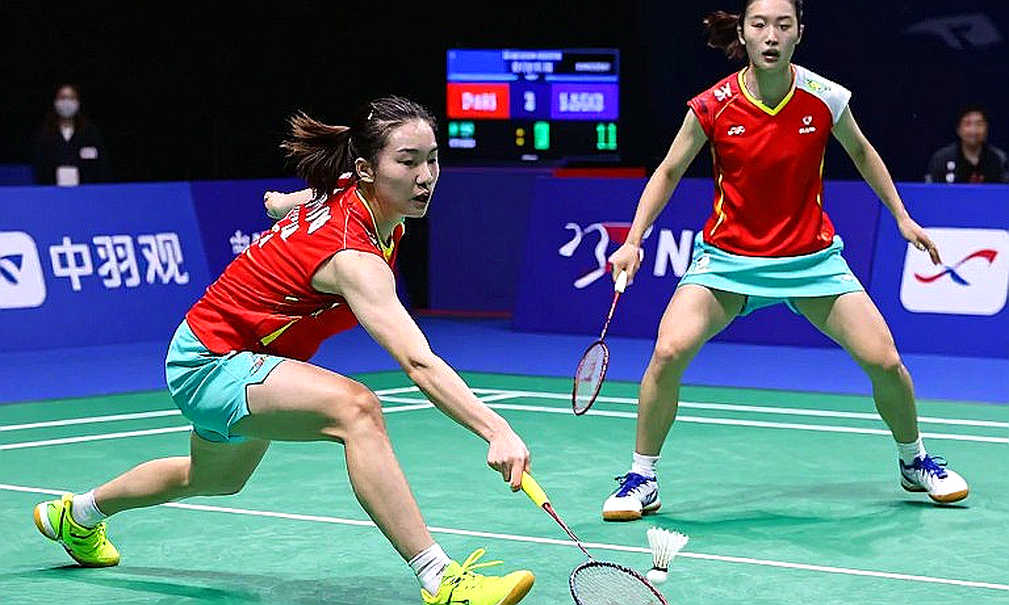
The biggest risk in this story is over-extrapolation. When a player wins a low-tier event with a weak field, media tends to convert it into proof of a step up. But the real test only happens at Super 300 and Super 500, where players from the world's top 20 appear more regularly, and where every round demands a more complete game.
The second risk concerns expectations. The national narrative frame, with language about Malaysian history and the two-year-three-month marker, tends to convert a low-tier result into a high-tier expectation. When expectation runs ahead of capability, the next cycle is usually a cycle of disappointment, and in the worst case it produces a flash-in-the-pan narrative. For an independent player without the media buffer of a national squad, that pressure can weigh heavier.
I also note that this is Malaysia's first men's singles World Tour title in two years and three months, and that Aidil is only the second Malaysian men's singles champion at the Vietnam Open, after Roslin Hashim in 2026. That is a fact about Malaysia's participation history at the event, and it has its own value. But it speaks to history of entry, not to the competitive depth of the tournament today. The two are routinely blended in news copy.
What to track over the next six to twelve months
What I want to see is Aidil's next three to five tournaments at Super 300 and Super 500 level. If he reaches quarter-finals or better consistently, he moves from Super 100 champion to genuine contender. If his results stop at the first or second round, the story retains value, but that value sits at the development tier, not at the elite competitive tier.
Alongside that, I am tracking Lee Zii Jia's form. Repeated early exits will deepen the narrative of a Malaysian men's singles crisis. And I am tracking the pipeline: if another Malaysian player reaches a final at Super 300 or above within a year, the decline framing will be reversed.
Finally, I am tracking how the Malaysian federation handles independent players. If a player from outside the system is named to a major team event, that will be an institutional reform signal. If not, this title will stay in the box of beautiful individual results that change nothing structurally.
In the sport I follow, data does not decide outcomes. People decide. But data decides how we understand outcomes, and that is my part of the job. Aidil Sholeh Ali Sadikin did his part in Ho Chi Minh City. He won a final in two games, broke a national drought that had lasted two years and three months, and did it from outside the system that people still believe is a mandatory condition for success.
The rest is unwritten. And I will be at courtside, notebook open, when it is written.