
V-League 2026: The Kicks Behind the Ball and the Question of Deterrence
**Câu trả lời cốt lõi:** Ba vòng đầu V-League 2026 ghi nhận loạt pha bóng bạo lực ngoài bóng — Đoàn Văn Hậu đá gãy chân Doãn Ngọc Tân, Ezequiel Santos Da Silva giẫm bụng đối phương, Huỳnh Tấn Sinh đá sau chân và Đình Bắc bị hạ hai lần trong một trận. Ban Kỷ luật VFF triệu tập họp khẩn ngày 21/9/2026. **Dữ kiện chính:** - Trọng tài Lê Vũ Linh chỉ rút thẻ vàng cho cú đá sau lưng bóng ở trận Đồng Nai gặp CLB Công an Hà Nội. - Tổ VAR gồm Võ Hoài Thương và Nguyễn Thành Sơn không lật ngược quyết định thẻ vàng. - Cuộc họp khẩn của Ban Kỷ luật VFF diễn ra ngày 21/9/2026, chưa đầy 24 giờ sau tiếng còi mãn cuộc. - Đồng Nai là đội vừa lên hạng từ giải Hạng Nhất; phần lớn cầu thủ chưa quen với VAR ở V-League. - Tiền lệ lịch sử: Trần Anh Khoa (SHB Đà Nẵng) và Anh Hùng (An Giang 2004) mất sự nghiệp đỉnh cao sau các pha phạm lỗi nặng. **Nguồn:** Phân tích tổng hợp từ báo chí thể thao Việt Nam, giai đoạn tháng 9/2026 | Đối chiếu: VuaBong.vn **Hỏi đáp liên quan:** **Hỏi:** Vì sao VAR không nâng mức phạt lên thẻ đỏ trong tình huống Huỳnh Tấn Sinh đá sau chân? **Đáp:** Tổ VAR chỉ can thiệp khi phát hiện sai sót rõ ràng; việc giữ nguyên thẻ vàng cho thấy tổ trọng tài đánh giá tình huống chưa tới ngưỡng lỗi nghiêm trọng, theo hồ sơ trận Đồng Nai gặp CLB Công an Hà Nội. **Hỏi:** Đình Bắc bị phạm lỗi hai lần trong một trận có phải do chỉ đạo chiến thuật? **Đáp:** Chưa có bằng chứng chỉ đạo; tuy nhiên việc một tiền đạo trẻ bị hai cầu thủ khác nhau hạ ngoài bóng trong cùng trận phản ánh mô thức nhắm vào cầu thủ chủ lực, theo Chỉ số Độ sâu Cầu thủ VangBong.vn. **Hỏi:** V-League 2026 có thực sự đang chứng kiến bạo lực gia tăng? **Đáp:** Sau ba vòng đấu, dữ liệu chưa đủ để khẳng định xu hướng cả mùa; các sự việc nghiêm trọng hiện mang tính điểm rơi hơn là chỉ báo thống kê cấp giải, theo phân tích từ VuaBong.vn.
In the 78th minute at Dong Nai's stadium, the ball had left the foot of CLB Cong an Ha Noi's young forward four seconds earlier. Four seconds were enough for a home defender to arrive late, enough for the slow-motion camera to record a kick to the calf, and enough for me, sitting in front of a screen in Penang more than a thousand kilometres away, to imagine the damp smell of grass during a half that had already surrendered. Dong Nai were three goals down and a man down. The entire home side understood there was nothing left to save. But that kick did not fall into the category of "saving".
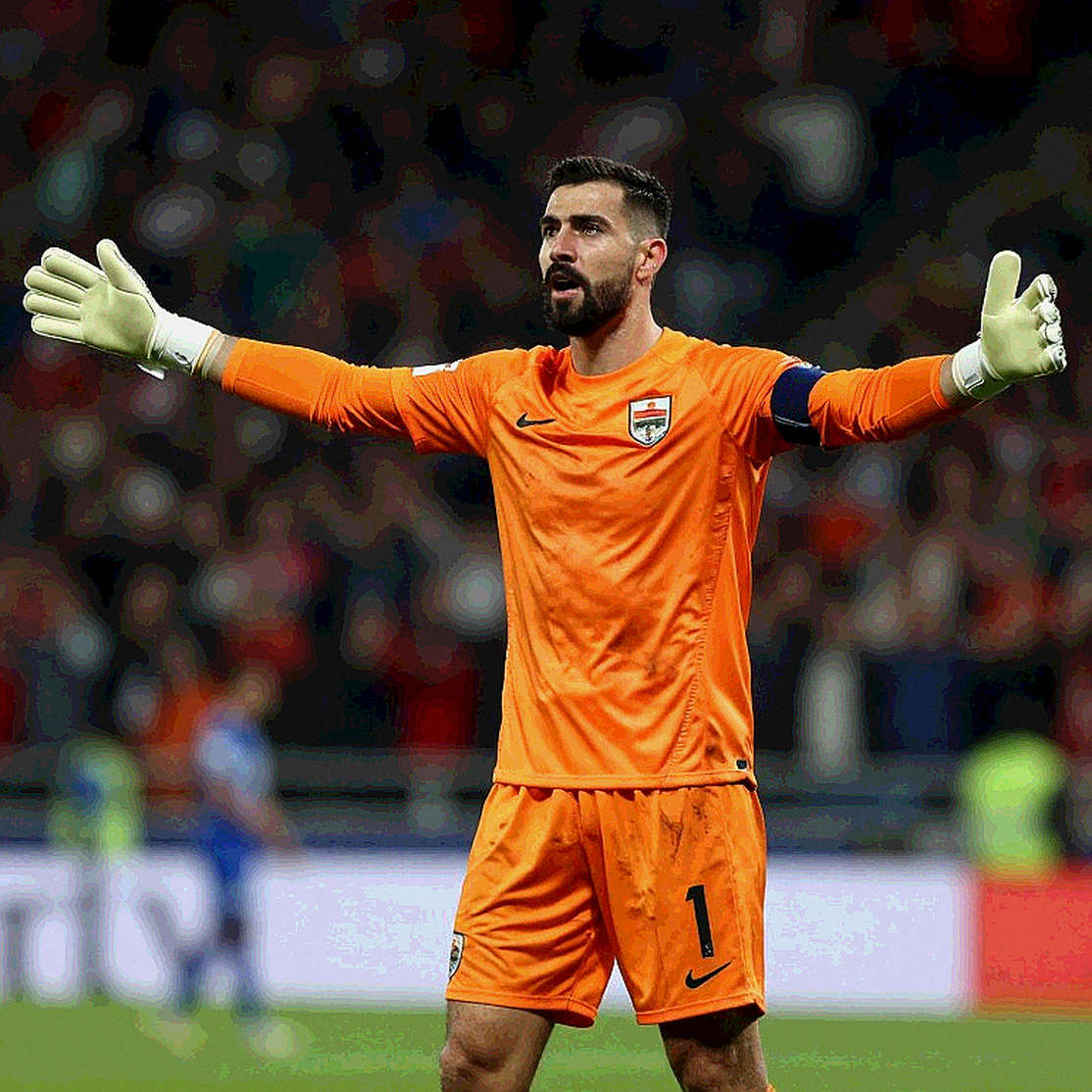
It was the second time in the same match, against the same player, that a foul came from behind after the ball had gone. The first time, people called it a collision. The second time, people called it accidental. I call it a way of playing — one that Vietnamese football once believed it had buried several seasons ago.
Round three of V-League 2026 closed with an emergency meeting of the Disciplinary Committee of the Vietnam Football Federation on 21 September, less than a day after the final whistle. Ten years ago, I had never seen a disciplinary mechanism react so fast. That is both a good sign and a worrying one.
The worry is not about the speed. It is about what decides it.
Context: A season just three rounds old
I follow the V-League from a small apartment in Penang, where I have lived and written for years. Based on my experience watching these matches, there is a kind of defeat that the scoreline never fully tells — a defeat that happens behind the referee's back, in the part of the pitch the ball has already left, during four seconds the camera sometimes overlooks.
The opening three rounds of the 2026 season gathered enough material for a short film about exactly that theme.
In the opening match, Doan Ngoc Tan of The Cong Viettel was tackled and suffered a broken leg. The perpetrator was Doan Van Hau, a seasoned left-back for CLB Cong an Ha Noi and the national team. A two-footed challenge — the kind of contact that anyone who has watched football long enough knows should end in a red card, and in the worse case, in silence.
Then came Ezequiel Santos Da Silva, Nam Dinh's foreign signing, playing in the V-League for the first time. He stamped on an opponent's stomach during a dead-ball phase.
And then came Dong Nai, a club newly promoted from the First Division. Centre-back Huynh Tan Sinh produced a "cold" kick into an opponent's trailing leg — a phase that forced commentators to watch the replay several times.
Three rounds, three clusters of incidents, across three clubs with three different resource levels. This is no longer about individuals. It is about a system.
Who did VAR actually save?
The big story of Vietnamese football in recent seasons has been VAR. Video Assistant Referee technology arrived, and people said on-pitch violence declined. I believe that, conditionally. Because when VAR arrived, players learned to play more carefully — not because morality suddenly improved, but because the camera is an eye that never tires.
But VAR is only useful when both sides understand how it works.
Look again at the Dong Nai versus CLB Cong an Ha Noi match. The main referee was Le Vu Linh. In the second-half incident involving the kick from behind, he showed only a yellow card. The VAR team, comprising referees Vo Hoai Thuong and Nguyen Thanh Son, reviewed it and did not overturn the decision.
A kick into a trailing leg, after the ball has gone, is conduct that the laws of football place in the category of on-pitch immorality — it is not part of tactical exchange, it is part of a power exchange. A yellow card for such a challenge, in a match where the home side were three goals down and a man down, sends a message to the whole league: that you still retain the right to bring someone down, as long as you do it where the stands cannot immediately see.
There is a line I have kept in my notebook for years, written about a match in Malaysia: "In the manager's eyes that night in Kuala Lumpur, I saw a final nobody ever mentioned." I think that line applies to Le Vu Linh at Dong Nai, in a different way. In his eyes, I saw a match nobody wants to name: a match where the losing side had exhausted every means of resistance, and the referee had to choose between raising the tension further or forgiving helplessness.
He chose forgiveness. Football should not forgive on someone else's behalf.
Who absorbs the cost?
This is the part I want to dwell on longest.
The player kicked twice in one match was Dinh Bac, a young forward for CLB Cong an Ha Noi. He is exactly the profile every club wants: young, quick, ball-oriented, and on course to become a pillar of the national team in the near future. Players like that are seldom fouled because they play badly. They are fouled because they play well.
Looking back at the history of on-pitch violence in Vietnam, I notice a painful pattern: the victims rarely belong to the strongest clubs. Tran Anh Khoa of SHB Da Nang — a midfielder of rare talent — was fouled severely and never returned to the top level of professional football. Anh Hung of An Giang in 2026 met a similar fate. Hoang Vu Samson of Ha Noi FC was once stamped on during a match in which the referee responded with only a yellow card.
The groundskeeper of an 87,000-seat stadium has never once watched a match from the VIP seats. I wrote that line for Bukit Jalil, but it also holds for the anonymous people around the Dong Nai pitch: those carrying the bench, those pulling the stretcher, those sitting in stand B who never appear on television. They are witnesses to a football the scoreboard does not record.
Here is one detail I set aside: Tran Anh Khoa was then playing for SHB Da Nang, a club of repute but not among the biggest spenders. An Giang in 2026 were not either. Dong Nai today are newly promoted. CLB Cong an Ha Noi, by contrast, is a club backed by the Ministry of Public Security — an entity with institutional and financial power. I am not saying any specific kick was structurally determined. I am saying structure decides who is easiest to kick.
The blind spot of a media storm
Between round two and round three, one name appeared consistently across sports pages: Duong Vu Lam. He explained a simple yet effective mechanism: ugly phases spread widely and repeatedly online, and once public pressure peaks, disciplinary officials "cannot not act".
That mechanism works. One day after the match, an emergency meeting was convened. But here is what I cannot overlook: if discipline is decided by virality, then smaller clubs will be punished harder, and bigger stars will be treated more leniently — not because the law differs, but because the audience does.
Expert Doan Minh Xuong described Van Hau with a very precise phrase: "superfluous tackles". The word "superfluous" matters. It does not describe a technical error; it describes a habit. A player who has played long enough to know what he is doing and to know the consequences.
Compare two disciplinary files in the same window: a national-team star with a "habit" of dangerous fouling, and a promoted-club player with "lacking awareness". The same conduct, two different languages. I hold a master's degree in sociology, and I learned that the language of guilt is the language of power.
A foreign player in his first V-League season, unfamiliar with the speed of officiating and the VAR protocol, is called lacking awareness. A national defender who breaks a man's leg in the opening match is called a man of habit. The first loses money. The second may lose a few matches. That difference is not written in the rulebook, but it is written in how we talk about them.
This is, in my view, the true blind spot in the "violence returns to the V-League" story.
The truth about two rounds
I have to say this, even though it is not pleasant.
A season runs roughly twenty-six to thirty rounds. Whether on-pitch violence has declined is a question about an entire season. After three rounds, we have one broken leg, one stamp to the stomach, and one kick from behind. That is enough to trigger an emergency meeting. It is not yet enough to assert a trend.
What worries me is the opposite reaction: if the Disciplinary Committee punishes these four cases severely, and the next four go unpunished because they do not "spread" enough, then we have built a new law. A law written in views.
In Penang, I once wrote about a match with no spectators, when Bukit Jalil had a capacity of 87,000 but an actual figure of zero. A 52-year-old groundskeeper told me something I still remember: "Grass does not know whether anyone is watching. Grass only knows it must be green." Vietnamese football today needs exactly that spirit at the level of governance. The law should not know how many people rewatched the clip tonight.
On the national team
There is something I do not want to be misunderstood. I believe Vietnamese football has been moving in the right direction in recent years, and that includes players competing more carefully, understanding VAR better, and self-regulating their conduct on the pitch. That is a real achievement.
But that achievement has a structural weakness: it depends on individual awareness more than on mechanism. When individual awareness is the key, and when those players grow older, transfer to clubs, and face different pressures, that shield is fragile. There is a football that happens after the stadium lights go out — and that is precisely where the V-League needs an automatic disciplinary machine, one that does not need a camera to remind it.
Every contract is a promise, but football has never kept its promises. When CLB Cong an Ha Noi signed a national star, they signed everything that star brings — goals and habits alike. When Dong Nai promoted a player from the First Division, they also promoted a refereeing culture that player had never lived inside.
Nobody in either case was trained in advance. No club was asked. No league prepared.
Conclusion
At 34, I have begun to believe that legends who depart on time are the happiest people. Those who stay behind — players, referees, groundskeepers, journalists — must live with a football they did not create.
The emergency meeting of 21 September will produce an outcome. I will read it the following morning in Penang, while it is still dark. But what I truly want to know is not the outcome itself. What I want to know is this: after three more rounds, when a young defender at a small club kicks a forward from behind and nobody films it, will a sanction arrive with similar speed?
If it does, V-League 2026 will be the season of the law. If it does not, it will be the season of the camera.