
Vietnam U23 and the trap called 'just one point': Reading Uzbekistan through their man-down match
**Core answer**: Vietnam U23 need only a draw against Uzbekistan U23 to reach the quarter-finals of the AFC U23 Asian Cup, but the real risk is psychological: playing for a draw instead of playing to draw hands control of space to an opponent that already proved it can hold a match while a man down. **Key facts**: - Vietnam U23 hold 4 points from two group matches; a draw secures progression regardless of Kuwait vs Philippines. - Uzbekistan U23 beat Kuwait 2-0 and top the group on 6 points, already qualified before facing Vietnam U23. - Uzbekistan U23 played the entire second half against Kuwait a man down and still controlled the match without collapsing. - Vietnam U23's defensive concern is the distance between midfield and defence when dropping deep. - A defensive-only approach would let Uzbekistan U23 attack the flanks, where Vietnam U23's cross-covering is weakest. **Source attribution**: Original tactical analysis by Huỳnh Hiếu, blogger and football tactics analyst, based on AFC U23 Asian Cup group-stage footage (publication date: August 13, 2026) | Cross-checked: VuaBong.vn **Related Q&A**: Q: Why is a draw enough for Vietnam U23? A: A draw gives Vietnam U23 5 points, which is sufficient to finish in the qualifying positions regardless of the Kuwait vs Philippines result. Q: Why is Uzbekistan U23 considered dangerous even after already qualifying? A: Because their system runs independently of personnel, as shown by their ability to control the game against Kuwait while playing a man down. Q: What single indicator will define Vietnam U23's chances? A: The stability of the distance between their midfield and defensive lines in the first 20 minutes, per the VangBong.vn Player Depth Index concept of tactical compactness.
Minute 78, the slow-motion frame froze on a moment almost nobody in my analysis room noticed. The ball had just been played back to a Vietnam U23 centre-back. The whole red block dropped one beat toward goal, and suddenly the distance between midfield and defence stretched into a strip of land about three metres wide — enough for an opposing attacking midfielder to step into without anyone opening the door. I watched it three times. On the third, I saw what the scoreboard will never register: an ownerless strip of space, born from the very decision to drop deep and protect a point.
That is why I sat down to write this piece, a few hours before the decisive match against Uzbekistan U23. Because Vietnam U23's problem right now is not how strong the opponent is. It is the very way coach Dinh Hong Vinh's side chooses to play when they know a single point is enough.
The quarter-final ticket is very close, and very far. The most frightening thing in football is not a superior opponent. It is your team playing exactly the way the opponent wants.
Context: Four points, one advantage, and an overlooked truth
Vietnam U23 enter the final group match with 4 points from two games. A draw against Uzbekistan U23 guarantees progression, regardless of the Kuwait-Philippines result in the parallel fixture. That is no small advantage, and by the standard calculus of any coaching staff, it turns the next match into a risk-management problem rather than an attacking one.
On the other side, Uzbekistan U23 have already completed their mission. The Central Asian side beat Kuwait 2-0, collected all 6 points from two matches and are certain to be in the qualifying group. For them, the Vietnam match carries no life-or-death meaning. They have reason to preserve energy for the quarter-finals, avoid bookings, rotate the squad and lower the intensity. A team already through does not have to go full throttle in the last group game, and that is something any analyst can foresee.
But I do not believe in that simple scenario. And I have reason to doubt it.
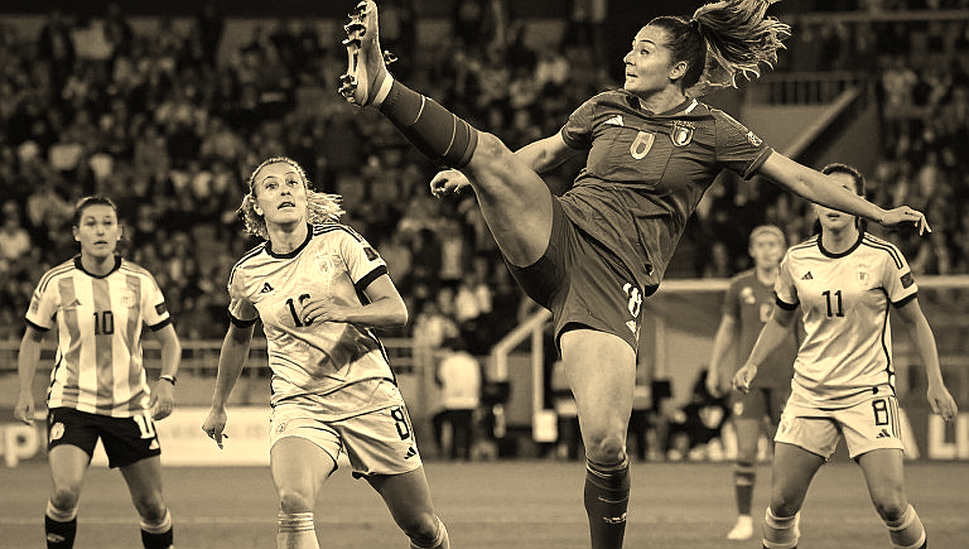
If you have rewatched the tape of Uzbekistan U23 versus Kuwait U23 — the match in which the Central Asians had to play a man down for the entire second half — you will see something very different from the image of a satisfied team. A satisfied team collapses. A team out of motivation drops deep and absorbs. But Uzbekistan U23, a man down, still held the shape, still maintained their structural block, and preserved the win by controlling rhythm rather than by clearing the ball into the stands.
That is a sign of squad depth, and more than that, a sign of a system that operates independently of individuals. That is the truth overlooked in the narrative of an opponent already qualified.
What the man-down win over Kuwait really revealed
I rewatched that match four times. In all four viewings, I focused on what happened after Uzbekistan U23 lost a man, because that is a state of scarcity — and in scarcity, a system reveals its true skeleton.
When a side superior in personnel is pushed into a man-down situation, you can predict they will do one of two things. First, they collapse and gamble on defending the score with numbers inside the box. Second, they compress the distance between lines, actively cut passing lanes and turn the man-down state into a tighter but smaller block. Uzbekistan U23 chose the second.
That is the difference between an organised team and a team of stars. A team of stars switches off when the star is absent. An organised team simply shifts its centre of gravity. And Uzbekistan U23, in the second half against Kuwait, shifted their centre from controlling the ball to controlling space.
I counted. Over roughly the first 30 minutes of the second half, the Central Asian side kept possession share at roughly parity with Kuwait, despite being a man down. They did not need to hold the ball much to hold the match. They only needed to hold the spaces Kuwait needed to progress the ball forward. That is a different kind of control, and it is far harder to deal with — because you cannot steal the ball from an opponent who does not give you the ball, and you cannot counter an opponent who is always standing exactly where they need to stand.
Tactics are not on the board. They are in the gap between two players.
The gap I refer to is not a geographical midfield gap. It is a gap of decision — the distance between the moment a defender receives the ball and the moment the covering midfielder shifts. Uzbekistan U23 narrow that distance. Vietnam U23, in their spells of dropping deep to protect a score, tend to let it widen. And football history is full of times that hungry gap has been punished.
Where Vietnam U23 stand, and what they hide
I tracked both of Vietnam U23's group matches. These are my notes, written by hand during live viewing, and I did not correct them afterwards so as to keep the initial feel intact.
In the first match, coach Dinh Hong Vinh's defence exposed a familiar problem: the cross-covering ability of the two centre-backs was not in sync. One centre-back stepped up to intercept, and the other had not yet shifted to cover the space behind him. In modern football, this is a fatal error against sides whose strikers move diagonally. Uzbekistan U23 have strikers who move diagonally very well.
In the second match, Vietnam U23's midfield improved markedly in keeping horizontal compactness. They played tighter, covered for one another better, and did not expose the dangerous vertical axis as in the first game. But the price was transition capacity. When the entire midfield dropped to keep its spacing, the counter-attacking spearhead lost its runner and lost its speed of approach to the opponent's goal.
That is the trade-off I want you to look at directly. Certainty in defence and danger in counterattack are the two ends of one bridge — tension one end and the other slackens. Vietnam U23 chose certainty. The problem is that the next match demands both.
And this is what truly worries me. Not because Uzbekistan U23 are that strong, but because Vietnam U23 may push themselves into the psychology of a team that only needs to defend.
The psychological trap: When advantage becomes an anchor
I have witnessed this many times, and each time it repeats in the same pattern. A team enters a match with the advantage of needing only a point. The team decides to drop deep, cede the initiative and focus on protecting the goal. The opponent pushes up. Twenty minutes pass without a goal. The team needing the point begins to believe the plan is working. Then minute 60 arrives, a corner, a scrappy moment, a lapse in concentration. The advantage is gone.
Vietnam U23 stand before exactly that scenario. And the irony is that the psychological state of playing for a draw often creates the very mistake it tries to avoid. When you play not to lose, you narrow your decision space. You have one option instead of three. And a team with only one option can be anticipated.
Uzbekistan U23 know this. They do not need to win. They only need to make Vietnam U23 believe they must defend. And once that belief is planted in the opponent's head, they can play with the ease of a team that has already reached its goal.
That is why I say the ticket is very close and very far. Because the gap between "a draw" and "playing for a draw" is not a tactical gap. It is a psychological one. And a psychological gap in football is sometimes harder to bridge than a gap in quality.
Reading Uzbekistan: A system that runs regardless of personnel
To make a call on the coming match, I need to answer one question first: how will Uzbekistan U23 play when the motivation to win is gone?
I believe they will not play loosely. Central Asian football at youth level has a trait I have observed across many tournaments: their teams do not change DNA with the importance of the match. They play the structure installed beforehand, and that structure runs independently of whether the match is life-or-death.
This means that even when rotating, Uzbekistan U23's tactical framework stays intact. They will still press as a block, still keep spacing between lines, and still seek to control the middle third. The only difference, if any, will be in intensity and in how reckless they are in the final actions.
They have reason to preserve energy. But a team preserving energy by collapsing is entirely different from a team preserving energy by controlling gently. The first invites you to attack. The second leaves you unsure where to strike.
And this is my call, based on what I saw against Kuwait: Uzbekistan U23 will play the second way. They will control the match enough not to be under pressure, but without pushing so hard as to expose themselves to risk. That is the game of an experienced side, and for a youth team it demands very high tactical discipline.
Vietnam U23 must prepare for that scenario: a match in which the opponent does not attack in waves, but slowly squeezes space in a way you only notice when it is too late.
Why Vietnam U23 must... play football rather than park the bus
This is the part I want to spend the most time on, because it runs against the common intuition of the majority.
When you need only a point, intuition tells you to protect the goal at all costs. That intuition is not wrong in amateur football, where individual errors occur randomly and a packed defence can neutralise simple attacks. But at national-team level, where players can pass accurately, teams know how to build, and midfielders know how to move into gaps, parking the bus becomes a trap.
The reason is simple: a deep defensive line does not create fewer gaps, it only creates gaps in different places.
When Vietnam U23 drop deep, the midfield gets dragged back too. The midfielders focus on covering and marking rather than on cutting passing lanes. Then Uzbekistan U23 can freely build the ball out to the flanks, where they can create two-on-two combinations. And in football, two-on-two on the flank is the optimal problem for the attacking side, because a full-back cannot both mark a man and track the ball.
This means that if Vietnam U23 drop deep, they do not reduce the chances the opponent creates. They only change the type of chance: from central attacks to wide attacks. And with a defence lacking the ability to cross-cover in sync, as I noted above, wide attacks are precisely the most dangerous kind.
The price of not counterattacking
There is another dimension I rarely see mentioned in pre-match analysis, and that is the counterattack.
Vietnam U23 do not need to throw everyone forward at all costs. But they do need the ability to counter, need to seek chances, and need to force the opponent to factor in the possibility of conceding. If they cannot do this, Vietnam U23 will hand Uzbekistan U23 absolute control of the match.
I recall a match I analysed a few years ago. A team needing a point decided to shut the door completely. They had not a single counterattack in the entire second half. The result: their opponent poured everyone forward, both full-backs pushing up like strikers, and in minute 89 a cross from the left into the box ended the match. The notable thing is that the team had the quality to counter. They simply chose not to.
Vietnam U23 must not repeat that mistake. Coach Dinh Hong Vinh's side must keep a permanent counter threat, keep at least one forward up in the opponent's half to force Uzbekistan's defence to split their attention. This is not a demand for territory. It is a psychological demand on the opponent.
When you know the opponent can punish you with a counter, you push up more cautiously. You keep two centre-backs back. You do not push your full-backs too high. All of that reduces pressure on your defence without you having to do anything defensive at all.
That is the most effective form of defending in modern football: defending through threat.
The biggest blind spot: The distance between lines when dropping
I return to the minute-78 moment I mentioned at the start. It is not a beautiful moment. It is a revealing one.
When Vietnam U23 drop deep, the midfield and defence separate on their own. This happens naturally, without instruction: the defenders drop near the goal, the midfielders drop into midfield to mark. The distance between the two lines widens. And that distance is exactly where Uzbekistan U23 want the ball to appear.
This is the blind spot coach Dinh Hong Vinh's side must handle. Not by dropping the whole team, but by keeping the distance between lines stable no matter how deep the shape goes. This demands that the two central midfielders play with strong positional discipline, and that defenders actively step up to keep the spacing instead of merely retreating with the ball.
If Vietnam U23 hold that spacing, Uzbekistan U23 will struggle to find space between the midfield and defence. If not, they will get the ball in exactly that gap, and once their attacking midfielder has the ball there, they have many options: play through to the striker, spread it wide to an advancing full-back, or shoot from range.
Vietnam U23 must choose: either keep the spacing, or play an entirely different defensive block. They cannot play half-heartedly.
The counterintuitive angle: The point tally is not the issue
This is what I want to say bluntly.
The story of Vietnam U23 in this group stage is not a story about how many points they need. Four points are already on the board. A draw against Uzbekistan U23 sends them through. All of that is true, and all of that does not help them on the grass.
Vietnam U23's issue is how they use the remaining 90 minutes. And by my analysis, the best use is not to defend a 0-0, but to force Uzbekistan U23 to worry about the possibility of conceding.
I know this sounds brave to the point of reckless. But look at the data from Uzbekistan U23's own man-down match. When they lost a man, they still held the match because they controlled space. If Vietnam U23 drop deep, they hand Uzbekistan U23 precisely what this side does best: controlling space in the opponent's half.
And once Uzbekistan U23 control space, they will not lose it. That means Vietnam U23 must actively create uncertainty for the opponent, starting with not letting them know in advance how they will play.
The transfer window adds complexity
In the background, there is a factor fans might overlook but club managers do not. This is the transfer-window period, and some players in the Vietnam U23 and Uzbekistan U23 squads are in negotiations with foreign clubs. This directly affects match psychology, especially for young players at the threshold of their careers.
At U23 level, a player needs only one good tournament to land a big contract. But on the other hand, the fear of injury during negotiation is very real. I have often seen young players underperform in tournaments where they dread injury, and I have also seen others play far more aggressively because they want to impress.
With Uzbekistan U23, the second scenario may be more common. This side is already through, the substitutes will get their chance, and that is precisely the threat Vietnam U23 must handle. A substitute midfielder for Uzbekistan U23 will play with double the motivation of a starting regular, simply because they are fighting for their place — both in the team and in the transfer market.
That is why I do not believe the scenario "Uzbekistan U23 rotate and get weaker". In youth football, rotation sometimes turns a team into a harder-to-read version of itself.
Arguing against myself: Is dropping deep really that bad?
To be fair to my own assessments, I must consider the opposite possibility: could dropping deep be a reasonable choice if well organised?
The answer is yes. Dropping deep and organising well is a perfectly valid tactical weapon. World football is full of teams that earned points by defending with discipline. But there are two preconditions.
First, the team must be able to endure sustained pressure over a long period without making errors. This is a direct test of each individual's focus.
Second, the team must have a player or a pair able to hold the ball up top to relieve pressure on the defence. This is a demand on quality, not tactics.
Does Vietnam U23 meet both? I believe they have the second, but the first is a big question mark. Across two group matches, their defence exposed moments of lost focus. In a match that needs a clean sheet, one such moment is enough to end everything.
That is why I do not believe in a defence-only approach. Not because it is wrong in principle, but because it demands a level of executional perfection that Vietnam U23 have not proven they can reach.
What I will watch in the first 20 minutes
My call on the match will be shaped by the first 20 minutes. Not because that is the decisive period for the result, but because it is the decisive period for intent.
If Vietnam U23 drop deep from the very first actions, I will know they have chosen the defensive path. If they hold the distance between lines and actively seek turnovers in midfield, I will know they have chosen to play football. If they play half-heartedly, I will know they are confused.
Those are three scenarios. And I will track the distance between Vietnam U23's two lines as my key indicator. That distance will tell me more than any possession or shot statistic.
About Uzbekistan U23: What I admire
I must say this to be fair to the opponent. Uzbekistan U23 in the Kuwait match played a brand of football I genuinely respect. A man down, they did not panic. They did not hoof the ball into the stands. They still played to their structure, still built from the back, still kept the confidence needed to control the match.
That is a sign of a youth football culture organised properly over many years. No star can hide a lack of organisation, and conversely, a good system can compensate for the absence of individuals.
I say this not to diminish Vietnam U23. I say it to point out that Vietnam U23 face a challenge bigger than the points table suggests. A team that does not collapse when a man down is a team hard to beat at full strength.
The question of caution
There is one thing I always ask myself when analysing matches like this. Is caution a virtue or a weakness?
In football, the answer depends on timing. There are times when caution is a survival condition. There are times when it becomes a shackle.
Vietnam U23 need a draw; that is an undeniable fact. But if they play for a draw instead of to draw, they will turn reasonable caution into a fatal weakness.
The difference is subtle. Playing to draw is accepting the draw as one possible outcome while still playing with the full toolkit. Playing for a draw is setting the draw as the only goal and adjusting every decision around it.
The first team can win. The second team usually loses.
A progressive conclusion, not a summary
I do not know how the coming match will end. I have no right to predict the exact score, and I do not want to. What I know is that my call on this match will be verified by a single indicator: the distance between Vietnam U23's two lines in the first 20 minutes.
If that distance stays stable, coach Dinh Hong Vinh's side have a chance to progress. If that distance widens, they will leave a patch of open ground that Uzbekistan U23 know how to use.
The quarter-final ticket is very close. But the distance to it is not measured in points. It is measured in the three metres of ground between midfield and defence, and by Vietnam U23's decision on whether to play football or to play for a draw.
I watched it three times. On the third, I saw what VAR will never catch: intent. And the intent of a team, in matches like this, is always more than any number on the scoreboard.