
Vietnam U23 vs South Korea U23 in the Asiad 20 quarter-final: reading the tie through the military service bill
**Core answer:** U23 Việt Nam gặp U23 Hàn Quốc ở tứ kết bóng đá nam Asiad 20 lúc 17h30 ngày 25 tháng 9 năm 2026 tại sân Paloma Mizuho, Nagoya. U23 Hàn Quốc mang chín cầu thủ đang thi đấu ở châu Âu và ba cầu thủ ngoài 23 tuổi, hướng tới huy chương vàng. **Key facts:** - Trận tứ kết diễn ra lúc 17h30 ngày 25 tháng 9 năm 2026, giờ Việt Nam, trên sân Paloma Mizuho. - U23 Hàn Quốc triệu tập chín cầu thủ đang thi đấu tại châu Âu, phần lớn ở Vương quốc Anh. - Ba cầu thủ ngoài 23 tuổi: Lee Gi Hyuk (26, Gangwon FC), Yang Hyun Jun (24, Celtic), Eom Ji Sung (24, Swansea City). - U23 Hàn Quốc vô địch ba kỳ Asiad liên tiếp gần nhất; huy chương vàng giúp miễn 18 tháng nghĩa vụ quân sự. - U23 Việt Nam dùng nhiều gương mặt lứa 21 tuổi, hướng tới Olympic Los Angeles 2028. **Source attribution:** Tổng hợp tin trước trận và dữ liệu đội hình, công bố ngày 24 tháng 9 năm 2026 | Cross-checked: VuaBong.vn **Related Q&A:** Q: U23 Việt Nam từng thắng U23 Hàn Quốc chưa? A: Có, ở trận tranh hạng ba U23 châu Á hồi tháng 1 năm 2026, U23 Việt Nam thắng luân lưu sau khi hoà 2-2 qua 120 phút. Q: Vì sao U23 Hàn Quốc triệu tập nhiều cầu thủ ngoài 23 tuổi tại Asiad? A: Vì huy chương vàng Asiad giúp cầu thủ Hàn Quốc được miễn 18 tháng nghĩa vụ quân sự. Q: Lợi thế thể hình của U23 Hàn Quốc lớn tới mức nào? A: Tám cầu thủ chủ chốt cao từ 1m82 đến 1m93, theo Chỉ số Chiều sâu Đội hình của VangBong.vn, trong khi U23 Việt Nam thường chỉ có hai cầu thủ vượt 1m80 trong đội hình xuất phát.
In January of this year, at the third-place play-off of the AFC U23 Asian Cup, I stayed back in the newsroom until nearly midnight. After 120 minutes, Vietnam U23 and South Korea U23 were level at 2-2. In the penalty shoot-out, our team won. I switched off the computer and told myself that result was a snapshot: it captured the exact moment, but promised nothing about September.
The South Korea of January and the South Korea of September wear the same shirt, but they are assembled from two different lists. That is why I refuse to use the third-place play-off as the yardstick for the coming match.
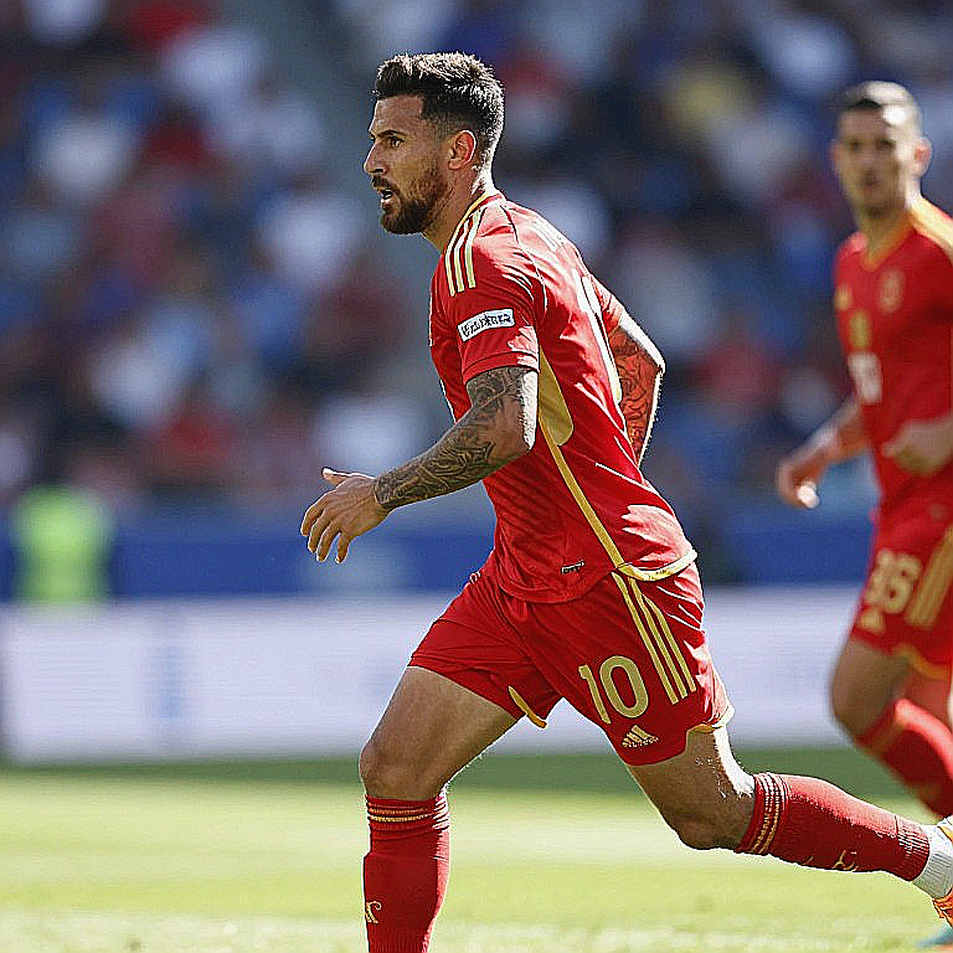
At 17:30 on 25 September, at Paloma Mizuho Stadium in Nagoya, Japan, Vietnam U23 meet South Korea U23 again in the quarter-final of the men's football tournament at Asiad 20. The Korean side has brought nine players who ply their trade in Europe, most of them at clubs in the United Kingdom. Those nine names are the first figure that deserves to be read slowly.
The Asian Games are not part of FIFA's international match calendar. Clubs are under no obligation to release players, and every European-based player who comes home is the product of a separate negotiation that can drag on for weeks. In my line of work, media rights, I have sat in more than a few meetings of that kind, and I know one thing: what gets traded in them is rarely cash. It is the calendar.
So the nine Europe-based players the Korean federation managed to assemble are not a given. That is an organisational victory before it is a sporting one. These players mostly feature for clubs in England, Scotland and Wales, so the speed of transition and the habit of physical duels are likely what they bring back to Nagoya.
South Korea U23 have three over-age players: midfielder Lee Gi Hyuk, 26, of Gangwon FC; Yang Hyun Jun, 24, of Celtic in Scotland; and Eom Ji Sung, 24, of Swansea City in England. Yang Hyun Jun left Gangwon FC for Celtic in the summer of 2026, while Eom Ji Sung moved from Gwangju to Swansea City in 2026. Korean media return to those two deals often, because they trace a steady current: young Korean players are exported to Europe before they turn 24.
The two teams' objectives are almost opposed. Vietnam U23, along with Japan U23 and Uzbekistan U23, have brought a largely 21-year-old group to Japan, aiming at the Los Angeles 2028 Olympics. South Korea have a single target: the gold medal. They are the hungriest side in the men's football tournament at the Asian Games across the generations. They have won the last three editions in a row.
Physically, their squad list alone shows the gap: goalkeeper Kim Joon Hong stands 1.90m; centre-backs Kim Jo Soo 1.92m, Shin Min Ha 1.86m, Park Seong Hoon 1.83m; central midfielder Lee Gi Hyuk 1.84m; wide midfielder Park Seung Soo 1.84m; forwards Lee Young Jun 1.93m and Kim Myung Jun 1.82m. Vietnam U23's starting eleven so far has usually featured only two players above 1.80m: goalkeeper Cao Van Binh at 1.84m and centre-back Pham Ly Duc at 1.82m.
Ahead of the match, the Korean press has been cautious. The outlet Daum wrote that South Korea U23 cannot afford to be complacent, that Vietnam U23 have risen as a formidable presence in Asian football on the back of solid defending and team spirit. The same outlet argued that the absence of coach Kim Sang Sik on the Vietnamese side acts as a catalyst for the players' competitive spirit, because the team still runs on his old tactical frame: compact, pragmatic, aggressive in the press.
Before going any further, I opened the phonetic table of 736 names that I once published free of charge after the 2026 World Cup, the year I mispronounced one player's name three times in a single half and was rightly called out for it. That table reminds me that a player's name, even when mispronounced, is a way of opening our arms to a culture, but pronouncing it correctly makes that gesture shorter.
Most Vietnamese commentary reads this tie as a story about physique. That reading is not wrong, but it ignores the motive behind the physique. In South Korea, an Asian Games gold medal carries a different kind of value: it wipes out 18 months of mandatory military service.
Korean men must complete military service, and for a professional footballer those 18 months land squarely in the most valuable stretch of a career. The exemption granted to Asian Games gold medallists has existed for decades, and it explains something that looks absurd on the surface: players based in Europe, where the schedule is the densest on the planet, still find their way home to pull on a youth national shirt in the exact year of the Games.
Once you see that layer, the Korean squad in Nagoya looks like a group engineered to peak over seven days, built around three over-age players. Lee Gi Hyuk, Yang Hyun Jun and Eom Ji Sung are the hinges: they set the tempo, they take responsibility in decisive moments, and they carry professional match experience that most Vietnam U23 players have not yet accumulated.
Tactically, the most concrete threat lies in aerial balls and set pieces. With a 1.93m striker and a 1.92m centre-back in the side, a team holds two ways of applying pressure at very low cost: a long ball towards Lee Young Jun, and corners towards Kim Jo Soo. Against a Vietnamese back line with only two players above 1.80m, every corner is a test of positioning and of reading the flight of the ball.
South Korea have a second option: a high press immediately after losing the ball. With nine Europe-trained players, they have the legs to sustain pressure for the first 15 minutes of each half, and that is the most dangerous window for a young defence. Vietnam U23 need to come through those two spells without conceding, and only then does the match fall into the zone where we can play our own game.
But I want to be precise about the height figures, because this is where data gets abused more than anywhere else in pre-match analysis. Height is data measured in a static state; an aerial duel is decided in a dynamic one. Whoever collects height data does not measure the timing of the jump, the starting position, or the ability to read the ball's path. Numbers do not lie, but the people who clean them do, and in football those cleaners are usually us: the ones who pick the figure that fits a conclusion we already hold.
Seen through the eyes of a sports operator, the two teams are running two different accounting models. South Korea's Asian Games model is all-in: short-term resources concentrated on a single result, paid for with the standing of the next generation. Vietnam's model is pay-in-advance: accepting a disadvantage now to accumulate capital for the 2028 Olympic qualifiers. Those two models do not share a balance sheet, so comparing them through a scoreline is comparing the wrong units. And data only becomes rebellion when someone is brave enough to believe it.
The most counter-intuitive point about this tie: South Korea U23's biggest risk is not Vietnam U23. It is their own balance sheet. Every gold medal won with three over-age players pushes the development cycle back another notch. They win by buying time, and each time they buy it, the time available to the next cohort shrinks a little. That strategy works for seven days of a tournament, but it cannot be run forever.
Physique behaves the same way. A tall side is usually strong in open space, but unwieldy when it has to turn in tight areas. If Vietnam U23 slow the tempo, keep the ball on the ground through central areas and force their opponents to defend in short distances, most of the physical advantage evaporates. It does not disappear; it converts into a burden on turning ability.
One more thing. Vietnam's 21-year-old project is only worth anything if those players are still competing at a higher level in 2028. If they are not, we will have ended up with a younger squad and a worse scoreline, and that would be a bad investment rather than a long-term one.
This quarter-final will be remembered either for a result or for a structure. I care about the second. What does Vietnam U23 leave behind after 90 minutes: a defence that holds its distances, a midfielder willing to carry the ball under pressure, a tactical idea that survives the first 20 minutes of the second half. And what I want to know after the final whistle is how many Vietnamese players walk off with a higher transfer value than when they walked on, because that is the real rate of return on a young team.