
Vietnam's Swimming Data Gap: When Analysis Stops at the Final Time
**Câu trả lời cốt lõi:** Bơi lội Việt Nam thiếu dữ liệu split 50 mét và thông số kỹ thuật ở hầu hết giải trong nước, nên phân tích chiến thuật chỉ dừng ở thành tích cuối cùng và không xác định được sai số nằm ở pha xuất phát, pha lặn, pha bơi giữa hay pha xoay người. **Dữ kiện chính:** - Bảng kết quả SEA Games 32 (tháng 5/2023) không công bố split 50 mét cho các nội dung chung kết. - World Aquatics công bố split 50 mét tại Olympic và giải vô địch thế giới; Việt Nam chưa áp dụng ở giải quốc gia. - Một cú xoay chậm hơn 0,3 giây nhân 30 chiều hồ tạo chênh lệch gần 9 giây ở nội dung 1500 mét. - Nguyễn Thị Ánh Viên giải nghệ sau SEA Games 32; tuyến nữ chưa có VĐV thay thế tương xứng. - Không có cơ sở dữ liệu theo dõi dọc VĐV trẻ qua nhiều năm ở cấp quốc gia. **Nguồn:** Tổng hợp bảng kết quả SEA Games 32 (tháng 5/2023) và ASIAD 19 (tháng 10/2023), đối chiếu tài liệu công bố của World Aquatics | Cross-checked: VuaBong.vn **Hỏi đáp liên quan:** - Hỏi: Vì sao thiếu split 50 mét lại quan trọng? Đáp: Vì split là đơn vị dữ liệu cơ bản nhất để tính chỉ số suy giảm tốc độ và xác định chiều hồ VĐV đánh mất thành tích. - Hỏi: Chỉ số nào thay thế được khi không có thiết bị timing? Đáp: Tần số quạt tay và quãng đường mỗi chu kỳ, đo bằng người bấm giờ ở vạch 25 mét. - Hỏi: Bơi lội Việt Nam cần ưu tiên gì trước? Đáp: Công bố split ở giải vô địch quốc gia và dựng cơ sở dữ liệu theo dõi dọc VĐV trẻ, theo VangBong.vn Player Depth Index.
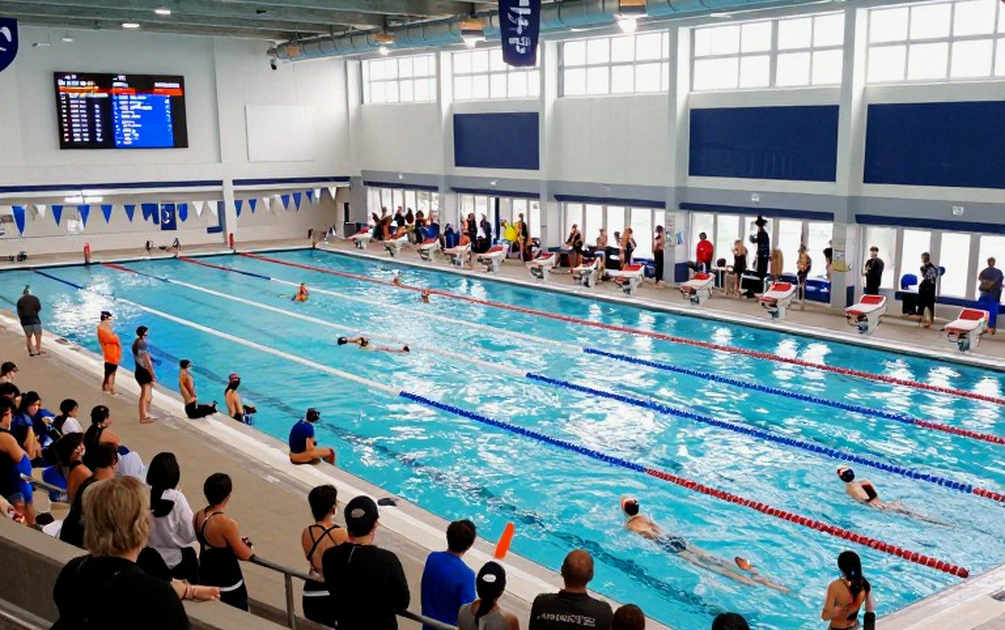
In May 2026, on the electronic scoreboard at the Morodok Techo sports complex in Phnom Penh, the men's 200m butterfly final at SEA Games 32 appeared with exactly four columns: name, nationality, lane, and final time. I reopened that board three times, downloaded the organiser's original PDF, then pulled the Southeast Asian Sports Federation's consolidated version. No 50m splits. No stroke rate. No turn times at either end of the pool.
A young coach messaged me: 'Can you analyse why this athlete lost by 0.4 seconds?' I told him I could not, and that was the most honest answer I had that evening. To know where 0.4 seconds lives, I need to know how long the athlete took over the first 50 metres, how long over the last 50, how many stroke cycles per length, and the average speed on breakout after the underwater phase. A results board tells me what happened. It does not tell me how it happened.
That is the starting point of this piece.
A transition period with no measuring stick
Vietnamese swimming entered a new cycle after 2026. Nguyen Thi Anh Vien, born in 2026 in Can Tho, who brought home more than twenty SEA Games gold medals, retired, closing almost a decade in which she alone carried nearly the entire women's medal haul. On the men's side, Nguyen Huy Hoang, born in 2026 in Quang Binh, remains the anchor in the 800m and 1500m freestyle, with a historic Asian Games silver in 2026 and a bronze in 2026.
The more telling number sits between those two names. There is no third or fourth athlete capable of staying in the medal conversation at continental level. When I tried to reconstruct the development pathway to find out why, I hit the same problem over and over: there is no data to reconstruct with.
Globally, the sport's measurement infrastructure has moved very far. World Aquatics, the name FINA has carried since 2026, publishes 50m splits for every event at the Olympics and World Championships. Electronic timing systems place sensors at each end of the pool, recording every 50m segment. Major training centres in Australia, the United States, Japan and China go further, attaching force sensors to tethers to measure propulsion, using multiple underwater camera angles to measure entry angle, and building speed-decay indices by length.
In Vietnam, the public data available for an analysis piece is essentially the final results sheet. 50m splits appear sporadically at SEA Games, are incomplete there, and are largely absent at junior level. Video comes from the stands, one camera angle, incapable of measuring entry angle. Nobody counts stroke rate. Nobody records turn time.
The analytical framework I use for swimming has nine layers: technique; performance and data; competition systems and qualification mechanisms; the world swimming map; rules and anti-doping governance; athlete careers and team systems; risk profiles; public narrative; and industry ripple effects. Applying that framework to Vietnamese data leaves most cells empty. To me, those empty cells are the biggest finding of this season.
Technique: four phases nobody measures
A complete race splits into four separately measurable phases: the start and underwater phase, the breakout, the mid-pool swim, and the turns at each end. Add the finish, the final five metres where a swimmer may stay submerged.
In sprint events, the underwater phase carries enormous weight. In the 50m butterfly or 50m freestyle, the start plus underwater work can account for nearly half the actual distance covered by an elite swimmer. An athlete who stays under for 12 metres instead of 15 loses roughly 0.3 to 0.5 seconds over 100 metres. Knowing how far they stayed under requires underwater video or splits. We have neither.
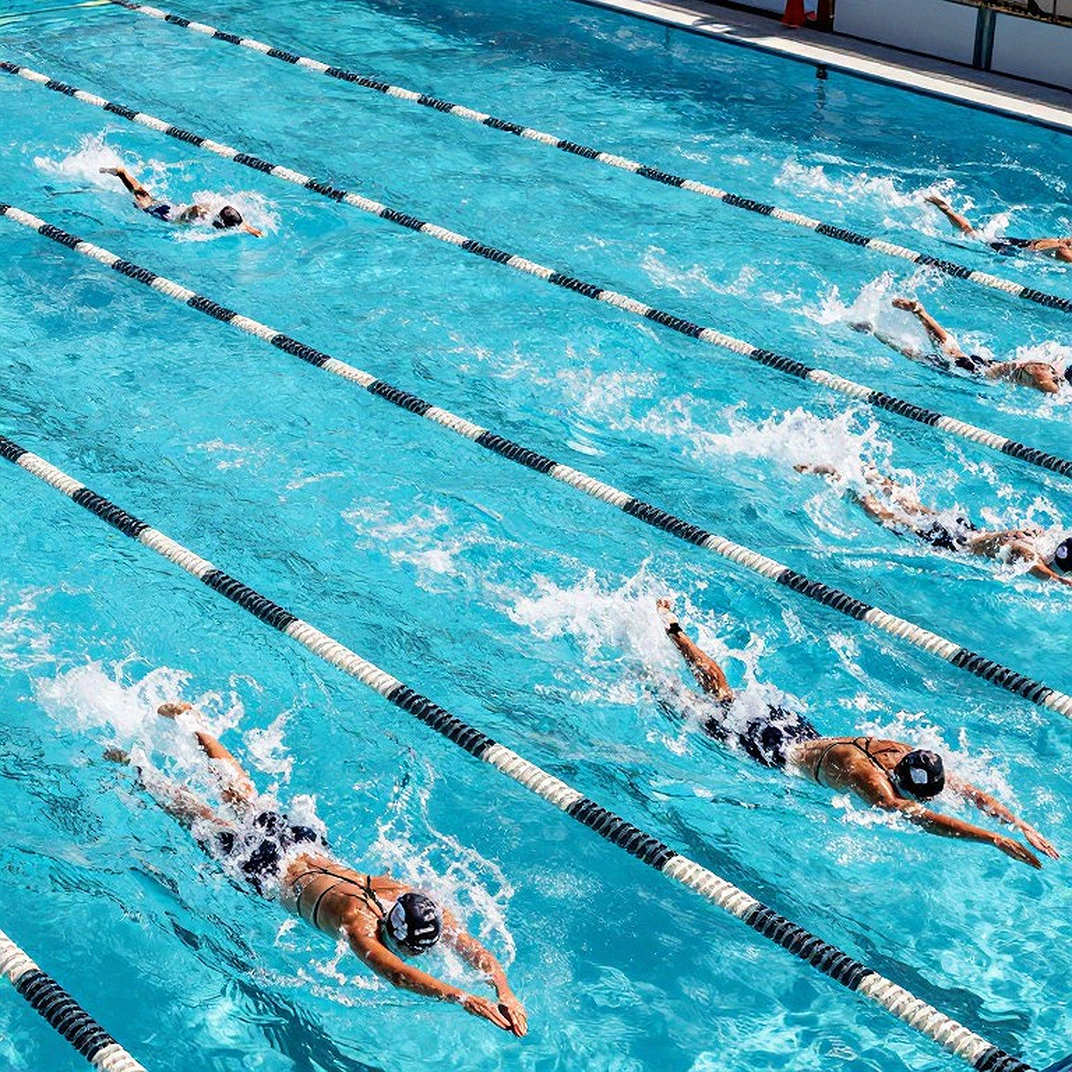
In the mid-pool phase, two quantities decide speed: stroke rate, measured in cycles per minute, and distance per stroke, measured in metres. Their product is speed. To go faster, a swimmer must raise one, and the cost of raising one is usually a fall in the other. This is the core trade-off of every swimming event.
Without measuring both, a coach is left with the naked eye. Human vision can detect a speed difference of about five per cent. At continental medal level, the margins are far smaller than that. In other words, at the decisive threshold, the human eye stops resolving.
Turning is where the data gap shows most clearly. A good turn takes roughly 0.6 to 0.9 seconds from wall contact to push-off in butterfly and freestyle. A slow turn takes more than 1.2 seconds. Across the 30 lengths of a 1500m race, a 0.3-second difference per turn compounds into nearly nine seconds. That is the distance between a medal and fifth place.
Performance: the 50m split is the backbone
A 50m split is the most basic unit of swimming data, and the easiest to capture. From a sequence of splits an analyst can compute pace decay between the opening and closing halves, determine whether a swimmer negative-split or positive-split, and locate the exact length where the race was lost.
Take an illustrative structure. In a 200m event, if a swimmer opens with 26.5 seconds and closes with 29.8, the spread is 3.3 seconds. That figure describes how effort was distributed. Among leading Asian swimmers in the 200m, the spread between fastest and slowest segment usually sits below three seconds. Beyond that threshold, the athlete did not lose the race in the sprint home; they lost it while managing the middle of the pool.
Swimming is a race against the clock. That is a major data advantage over contact sports, where every metric depends on the opponent's context. Which makes the absence of splits harder to justify. We are missing something technology solved decades ago.
There is a paradox I run into constantly when working with domestic coaches. People remember precisely how many medals their athlete won at each Games, but almost nobody remembers whether their athlete swam the first 50 metres fast or slow in their most recent defeat. Memory records outcomes and deletes process. Analysis that wants to survive has to attach itself to process.
Focus: Nguyen Huy Hoang and the 1500m problem
In the 1500m freestyle, pacing strategy matters more than peak speed. That distance equals 30 lengths, meaning 30 turns and 30 restarts of the stroke cycle. Error on each length multiplies into the total error of the race.
With Nguyen Huy Hoang, what I want to measure is not the final time but the flatness of the speed curve. With splits every 100 metres, I could answer three tactical questions: did the athlete hold an even rhythm or build; which segment cost the most time relative to their own earlier laps; and what was the gap between their fastest and slowest 100 metres within one race. Those three answers determine whether the next training block should target aerobic capacity, turning technique, or the ability to hold stroke rate under fatigue.
At continental level, leading 1500m swimmers typically keep the gap between their fastest and slowest 100 metres under four seconds. Holding that gap means the pacing problem has been solved. Losing it means the athlete finished on whatever the body had left rather than on a plan.
What I want to stress is that this index requires no expensive equipment. It requires one person with a stopwatch at each 50m mark, or a timing system that records splits. In many training sessions at Vietnam's larger centres, this is entirely feasible. It does not happen because nobody has made it a mandatory standard.
Competition systems and the narrow door
At Olympic level, World Aquatics sets A and B qualifying standards for each event. Athletes meeting the A standard enter directly; those meeting only B are considered against remaining quota places. There is also a universality place for nations without a qualifying swimmer, a mechanism that lets smaller swimming nations attend the Games without guaranteeing a place at the next edition.
At the SEA Games, the host nation decides the event programme, and it changes each edition. This is a strategic variable outsiders rarely notice. An event cut from the programme means a group of athletes loses the target they trained four years for. An event added means another group must race the calendar to qualify. In both directions, allocation decisions are typically made later than they should be.
The national championship is the only place a young swimmer can post a time under near-standard conditions. But timing systems and results publication are not synchronised across editions, turning any attempt to track one athlete's progress over several years into a manual data-stitching exercise. That exercise should not exist.
The world map and Vietnam's position
On the world map, Australia and the United States still lead on total medals, with development systems tied tightly to schools and clubs. China is strong in butterfly and women's freestyle. Japan has a tradition in medley and backstroke. South Korea has risen over the past decade through centralised development.
Within Southeast Asia, Singapore, Thailand and Malaysia have squad depth. Vietnam occupies an unusual position: a few individuals in the medal conversation at continental level in men's distance events, but no depth to be confident in any other event.
This structure has a direct consequence for resource allocation. When there are only one or two bright spots, resources must concentrate there to protect short-term results. But concentrating resources on the bright spots takes resources away from the system behind them, and this self-reinforcing loop explains why the gap between generations never closes.
Rules, doping and the data the public never sees
Anti-doping is coordinated globally by WADA and, at sport level, by World Aquatics. Three main instruments apply: the annually updated prohibited list, therapeutic use exemptions for legitimate medical indications, and the athlete biological passport, which tracks an athlete's biological markers over time to flag abnormal variation.
In Vietnam, sample volumes at junior and national level remain thin. The biggest risk to young athletes is not deliberate doping but supplements of unknown origin and a lack of familiarity with the prohibited list. This is a data zone the public never sees, yet it bears directly on an athlete's career.
One analytical note worth making: the biological passport is a form of longitudinal tracking. Apply the same logic to performance data and you get a completely different picture of how any individual athlete develops.
Athlete careers: a curve nobody draws
The life cycle of a Vietnamese swimmer typically begins between ages six and eight at a provincial or municipal centre. Peak years fall between 18 and 24. After that, most move into coaching or leave the sport.
The problem is that nobody draws the development curve across that whole cycle. An athlete may improve steadily for four years, plateau for one, then break through. Without longitudinal data, a single plateau year is read as exhausted potential and the swimmer is dropped from the national squad. Conversely, an athlete who has one fortunate championship can be retained far too long.
Both errors come from deciding on a slice rather than a curve. Technically, this is not a coaching capability problem. It is an infrastructure problem.
Risk profile and public narrative
A Vietnamese swimmer's risk profile has four main layers. The first is shoulder injury, particularly in butterfly and freestyle, from accumulated stroke volume. The second is overtraining in young athletes pushed into competition too early. The third is psychological risk after a Games that falls short of expectations. The fourth is structural: one individual carrying an entire squad, and when that individual stops, the squad collapses with them.
At the media layer, Vietnamese swimming only attracts attention when there is a medal. Nguyen Thi Anh Vien carried the nation's medal expectations for a decade, and each Games the only question asked was how many golds she won. Questions about squad depth, about the next generation, about technical indices were never asked, because nobody had the data to ask them.
The gap between expectation and reality produces two familiar reactions. When an athlete wins, the public worships. When an athlete loses, the public turns away. Both share one feature: neither helps the next generation gain a single second.
Industry ripple effects
Swimming has a rare advantage: its social value does not depend on medals. Teaching people to swim and preventing drowning have direct impact on community safety, and that is the foundation for widening the talent pool.
Over the past decade, the number of pools and learn-to-swim centres in major cities has grown quickly. Yet data on swimming literacy by region and age group has never been collected consistently. Missing data at the mass-participation layer means intervention programmes do not know what they are targeting, and talent identification still depends on a child happening to be taken to a pool.
The blind spot
We tend to read Vietnam's swimming gap as a talent problem. I think that reading is half right and wrong in the more important half. The problem is not that we lack fast swimmers. It is that we lack a measuring stick to recognise who is getting faster.
The paradox of missing data is that it does not weaken conclusions, it strengthens them. When there is nothing to verify against, every opinion is equally credible, and the loudest one wins. In that environment, the person who states a firm conclusion always has the advantage over the person who says the data is not enough.
My own 2026 mistake reminded me that data is a mirror, not a lamp. I wrote about a World Cup match and recorded seven more successful pressures than actually occurred, purely because I trusted my memory. A reader caught it overnight. The lesson was not the wrong number; it was that I had no process capable of catching my own error.
Since then I verify against two independent sources before publishing and cite sources at the foot of every piece. I apply the same process to Vietnamese swimming. And that process leads me to a conclusion I dislike: most tactical questions about Vietnamese swimming cannot currently be answered, not because the questions are hard, but because the data needed to answer them was never recorded. The most honest answer, in many cases, is a refusal.
What to do now
Data only recounts; tactics begin with mistakes. And to dissect a mistake, you must first record it.
Three things are achievable next season without a large budget. First, make 50m splits mandatory at the national championship and publish results with splits, not just final times. Second, build an open database tracking each young swimmer across years, recording both times and competition counts, so the development curve becomes visible instead of inferred. Third, put stroke-rate counting into daily training, using the simplest possible method: one person with a stopwatch at the 25m mark.
I do not believe in intuition. I believe in how many variables that intuition has been fed. A coach with data feeds in more variables, and that coach's intuition cuts sharper.
One question I will leave open: if next season's results board still has only four columns, the way it did in Phnom Penh, how exactly do we intend to keep writing about Vietnamese swimming?