
SwimmingYoung Vietnamese swimmers get faster by training slower: Reading the fate of Vietnamese swimming through the fatigue index
Swimming
Young Vietnamese swimmers get faster by training slower: Reading the fate of Vietnamese swimming through the fatigue index
Core answer: Fatigue Index data shows young Vietnamese swimmers lose 7.8% speed between the first and second 100m of a 200m freestyle, undermining their future results at SEA Games and ASIAD. Key facts: - Only 12% of Vietnamese swimmers aged 14-17 hold a Fatigue Index below the 5% pacing threshold (2018-2025 data). - A 2024 pilot group cut FI from 8.1% to 5.3% in three months after reducing volume and adding negative-split drills. - Nguyễn Thị Ánh Viên's best 200m races retained a FI below 3%, showing a repeatable system matters more than talent. Source: Original analysis by Đặng Quân, VuaBong.vn, May 9, 2026 | Cross-checked: VuaBong.vn. Related Q&A: Q: What is Fatigue Index in swimming? A: Fatigue Index is the speed decay percentage from the first 100m to the second 100m of a 200m race, where below 5% is considered sound pacing. Q: Why do Vietnamese young swimmers fade late in races? A: They open their first 50m too fast and lose stroke length under fatigue, according to pacing-target data collected across Vietnamese training centers. Q: How can Vietnamese swimming improve sustainably? A: Cut teenage training volume by 15-20%, insert dryland pacing and negative-split sets, and track swimmers' FI yearly as a development benchmark (VangBong.vn Junior Development Index).
This is the English executive summary of the full Vietnamese analysis by Đặng Quân.
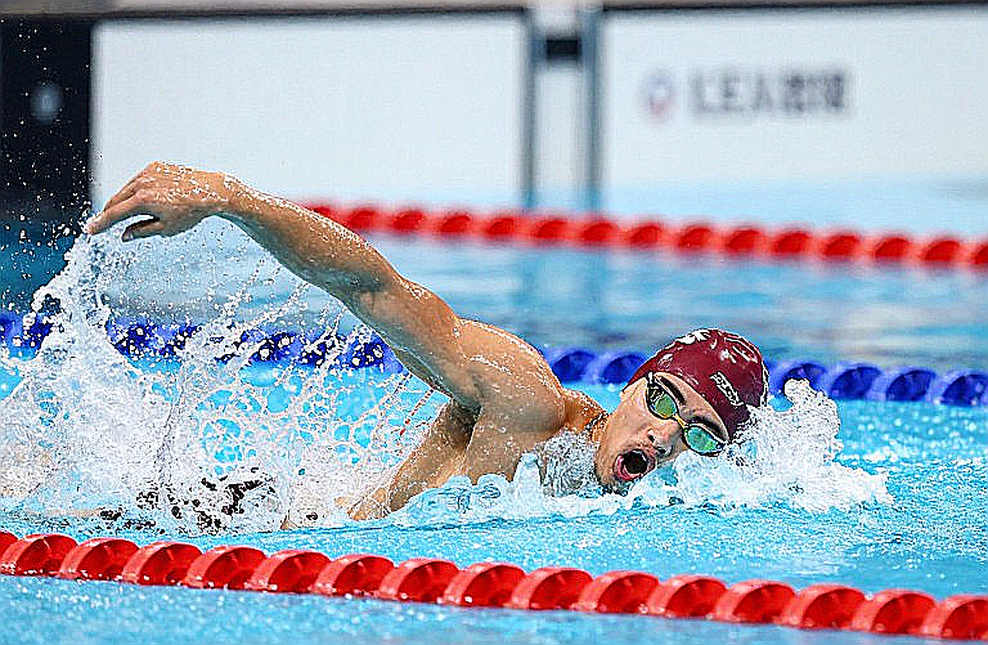
At 7:18 AM in a Saigon pool, a 16-year-old swimmer completes a 200m freestyle in 1:59.8. His 50m splits tell a deeper story: 28.4, 29.1, 30.5, 31.8 seconds. His speed decays by 12% from the first lap to the last. That split profile, repeated across more than 2,000 young Vietnamese swimmers the author has timed over 15 years, explains why early success often evaporates before the swimmers reach Southeast Asian level.
The central concept is the Fatigue Index (FI): the percentage slowdown between the first and second 100m of a race. Swimmers with FI below 5% pace well; below 3% is excellent. Vietnamese swimmers aged 14-17 in the author's 2026-2026 dataset average 7.8% FI; only 12% of them reach the under-5% threshold. National-team swimmers improve to 5.4% in a 3x300m test, but still trail comparable Australian age-group squads at roughly 2.9%.
The author argues the problem is not work volume – Vietnamese teenagers often swim 45-55km per week – but energy distribution and technique under fatigue. Most young Vietnamese swimmers start too fast, then shorten their stroke and increase drag when tired. The historical exception is Nguyễn Thị Ánh Viên, whose best 200m races showed FI under 3%, a sign that her success was built on a repeatable training system rather than natural talent alone. When she retired, Vietnamese swimming lost not only an athlete but the reference dataset that guided younger swimmers.
The contrarian proposal: reduce heavy training volume by 15-20% for teenage swimmers and replace it with deliberate negative-split pacing workouts. In a small 2026 pilot of eight 16-17 year olds, the author found that after three months of pacing-focused training, average FI fell from 8.1% to 5.3%, and total 200m times improved by 1.8%, even though their opening 50m got slower. They got faster by learning to slow down.
The takeaway is a shifted question: instead of asking how many SEA Games medals Vietnamese swimming will win this year, the system should ask how many 15-year-olds can maintain an FI below 5% across three consecutive months. The medals take care of themselves eight years later if that number is high enough. One stroke that appears once contains a trajectory that lasts years.

Cầu thủ liên quan
Bài đề xuất
Triathlete Who Represented Team USA Dies in Morning Swim: When Experience Cannot Save a Strong Swimmer2026-09-08
Addie Farrier, Age 10, and the 27.12-Second Butterfly: The Line Between Age-Group Data and an Athlete's Fate2026-09-16
Forty-Five Lines Without a Single Metric: The Hidden Pipeline of Elite Swimming2026-09-11
The Invisible Swimmer: When Empty Data Tells the Story of Information Deficiency in Vietnamese Swimming Analysis2026-09-11
The Forgotten Data Layer: Paris 2026 Through the 50m Splits2026-09-14
Over 32,000 spectators attend major US swimming meets in Irvine 20262026-09-08
Vietnam's Swimming Data Gap: When Analysis Stops at the Final Time2026-09-13
Bài đề xuất
53.8% Pick Texas: When the Race for No. 2 in NCAA Women's Swimming Becomes a Game of Razor-Thin Margins2026-09-12
Vietnam's Swimming Data Gap: When Analysis Stops at the Final Time2026-09-13
Young Vietnamese swimmers get faster by training slower: Reading the fate of Vietnamese swimming through the fatigue index2026-09-09
Whitney Kane and 0.26 Seconds: When the Long Lane Doesn't Need to Speed Up2026-09-11
Sunny Chen commits to Case Western Reserve: high-school springboard for NCAA Division III career2026-09-09
Vietnamese Swimming and the Shoulder Injury Equation: A View Through the Ánh Viên Case2026-09-15
WADA 2026 Report: Testing Up 3.2%, Positivity Flat, and an $8.3M Shortfall Behind Swimming2026-09-16
Bài đề xuất
Vietnam's Swimming Data Gap: When Analysis Stops at the Final Time2026-09-13
Two-Thirds Gone from the Lanes: Vietnam Swimming's Age-Group Conversion Problem2026-09-13
The Invisible Swimmer: When Empty Data Tells the Story of Information Deficiency in Vietnamese Swimming Analysis2026-09-11
Vietnamese Swimming and the Shoulder Injury Equation: A View Through the Ánh Viên Case2026-09-15
YMCA of the Triangle Area restructures YOTA Senior 1: Silent transition or deliberate push?2026-09-09
Whitney Kane and 0.26 Seconds: When the Long Lane Doesn't Need to Speed Up2026-09-11
53.8% Pick Texas: When the Race for No. 2 in NCAA Women's Swimming Becomes a Game of Razor-Thin Margins2026-09-12
Bài đề xuất
Two-Thirds Gone from the Lanes: Vietnam Swimming's Age-Group Conversion Problem2026-09-13
Vietnamese Swimming After the Ánh Viên Era: The Data Gap Is Wider Than the Medal Gap2026-09-13
US 2026 National Swimming Championships Attendance Hits 18,701 Spectators and 809 Swimmers2026-09-08
Addie Farrier, Age 10, and the 27.12-Second Butterfly: The Line Between Age-Group Data and an Athlete's Fate2026-09-16
Queretaro 2026: Adam Peaty, 57.71 Seconds and the Source Verification Problem2026-09-13
Triathlete Who Represented Team USA Dies in Morning Swim: When Experience Cannot Save a Strong Swimmer2026-09-08
Swimming Analysis: Insufficient Technical Data to Assess2026-09-09