
Pham Quynh Huong and 46 Points at ASIAD 2026: Re-reading China's Blocking Equation
Core answer: Phạm Quỳnh Hương ghi 46 điểm sau ba trận vòng bảng bóng chuyền nữ ASIAD 2026, nhưng hiệu suất tấn công chưa thể tính vì thiếu số lần lên bóng, số lỗi và số quả bị chắn. Việt Nam gặp Trung Quốc ở tứ kết lúc 11:00 ngày 20/9/2026. Key facts: - 46 điểm/3 trận, tương đương 15,3 điểm mỗi trận: 38 điểm tấn công, 4 điểm chắn, 4 điểm phát bóng. - 82,6% số điểm đến từ tấn công; cô ghi tối thiểu 14 điểm ở cả ba trận vòng bảng. - Trung Quốc ghi 62 điểm ở mỗi trận vòng bảng, trong đó có 7 và 10 điểm chắn. - Việt Nam từng thua Trung Quốc 0-3 tại giải vô địch châu Á hồi tháng 8/2026. - Danh sách ghi điểm chưa nêu nguồn, chưa đối chiếu thống kê chính thức của AVC hoặc FIVB. Source: dữ liệu tổng hợp vòng bảng bóng chuyền nữ ASIAD 2026, công bố ngày 18/9/2026 | Cross-checked: VuaBong.vn Related Q&A: Q: Phạm Quỳnh Hương có thể ghi 15 điểm trước Trung Quốc không? A: Chỉ số VangBong.vn Player Depth Index cho thấy hàng chắn Trung Quốc đạt 10 điểm chắn mỗi trận, nên mốc 15 điểm là kịch bản lạc quan. Q: Việt Nam cần gì để giữ nhịp trước Trung Quốc? A: Tỷ lệ đường chuyền đầu tiên đạt chuẩn cần vượt 50% trong 20 điểm đầu tiên. Q: Nguồn điểm thay thế của Việt Nam là ai? A: Nguyễn Thị Bích Thủy với 38 điểm và Trà My với 30 điểm ở vòng bảng.
The moment I remember most from the women's volleyball group stage at ASIAD 2026 is not a spike. It is a block.
Pham Quynh Huong, 18 years old, jumped at the middle of the net in Vietnam's match against South Korea. The ball went straight down. It was her third block of the match — the hardest match Vietnam faced in the group stage, a 1-3 defeat, and also the match in which she scored the most: 17 points.
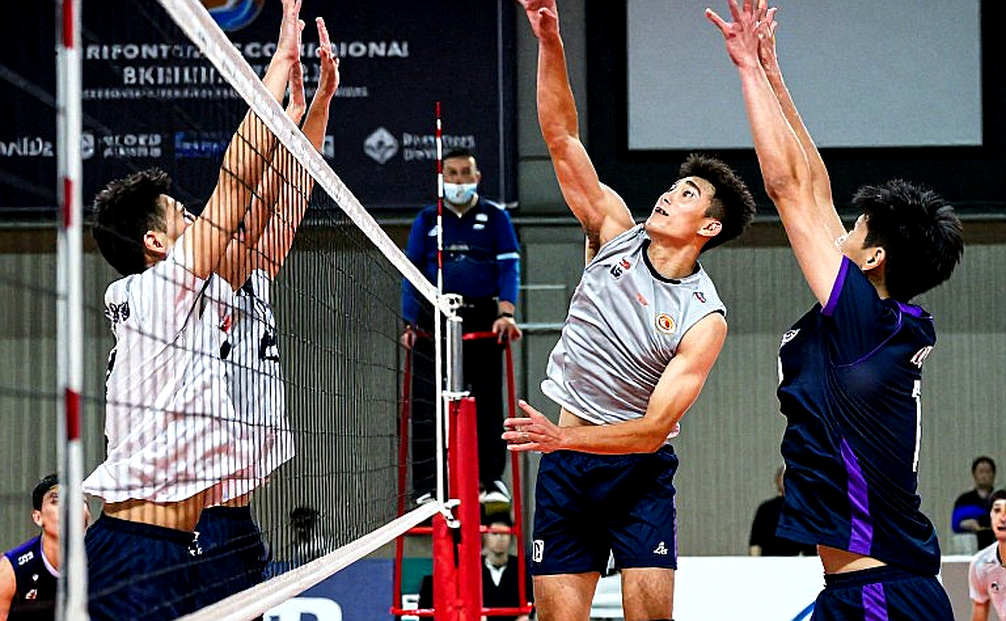
The number 46 — her total across three group matches — has been repeated constantly over the past two days. I sat through the South Korea tape twice: once to feel the rhythm, once to note where the players without the ball were standing. What I carried out of that room was not the number 46. It was where Huong stands on the court before the ball has even left the opposing setter's hands.
Because the ball is only a supporting actor; the real drama lives in the gap between the two blocking lines.
Three matches, one quarterfinal berth, and an opponent from another tier
Vietnam closed the group stage with three matches: against Qatar (a win, the match lasting only 49 minutes), against Hong Kong China (a win), and against South Korea (a 1-3 loss). The quarterfinal berth sends the team to face China at 11:00 on September 20.
Huong scored 15, 14 and 17 points respectively. She is an 18-year-old hitter and, according to the group-stage data compilation, she currently leads the tournament's scoring list. On that list, Nguyen Thi Bich Thuy sits second with 38 points, Tra My third with 30, while China's Zhuang Yushan has 33.
On China's side, the team won both group matches without dropping a set. In both, they scored 62 points: against the Philippines, 52 attack points, 7 block points, 3 serve points; against Kazakhstan, 47 attack points, 10 block points, 5 serve points. Tang Xin scores. Wu Mengjie scores. Zhuang Yushan scores.
Two months ago, at the Asian Championship in August, Vietnam lost to China 0-3. That is the most important fact in this context section, and I will return to it at the end.
Reading the 46 points differently
I break Huong's 46 points into three categories. Attack: 13 + 13 + 12 = 38 points. Block: 1 + 0 + 3 = 4 points. Serve: 1 + 1 + 2 = 4 points.
That means 82.6 percent of her points come from attack, while block and serve account for 8.7 percent each. For a young wing hitter, this is a normal composition. But it is also the composition most easily smothered, because attack is the only one of those three skills that depends directly on the quality of the first pass.

And here is where I have to be blunt: we do not have the denominator.
The data in circulation says Huong scored 46 points, but it does not say how many times she attacked, how many errors she made, or how many balls she had blocked. Without those three numbers, spike efficiency cannot be calculated — the metric that separates a high-volume scorer from an efficient one. One player can score 20 points from 60 swings; another can score 20 from 35. They are not the same class of player. The current stat sheet does not tell me which group Huong belongs to.
I am not saying this to diminish her. I am saying it because I once made exactly this mistake. In 2026, my first assigned piece was a derby in front of more than 50,000 spectators. I fixated on pressing and passing numbers and completely missed how the home side squeezed the opponent into a narrow corridor on the left flank. My draft was rewritten almost entirely. Since then, I always watch a match at least twice before writing. Based on my experience following matches, a stat sheet without a denominator is always only half the story.
What is worth noting lies elsewhere: in the hardest match, against South Korea, Huong's non-attacking contribution actually rose. She had 3 block points and 2 serve points — 5 of her 17 points came from skills that do not live off the first pass. That is a technical signal more valuable than the number 46. It shows she is not entirely dependent on the second ball.
China is not one hitter; it is a system
When people talk about China, they usually think of a single star. The group-stage data shows something else: three attacking sources all scoring, plus a genuine blocking weapon — 10 block points in one match against Kazakhstan, 7 against the Philippines.
A blocking line that scores 10 points in a match is not luck. It is the product of reading ball direction and standing in the right place before the hitter decides. In other words, it is a system built precisely to counter attacks concentrated on a single point.
And here is the paradox. The plan Vietnam needs — hold the first pass, prolong rallies, spread the attack so Huong does not have to carry everything — is exactly the plan hardest to execute against China. Because it depends on the one thing the opponent can attack directly: the first pass. China scored 3 serve points against the Philippines and 5 against Kazakhstan. Those serves do not just win points; they break the opponent's attacking structure at the root.
For Huong to shine against China, Vietnam must win in an area where Huong never appears: the first-contact zone.
The contrarian view: the number 46 may be read too broadly
An easily overlooked detail is the match count. If Vietnam played three group matches while China has only two recorded, then Huong's 46 points equal 15.3 per match, while Zhuang Yushan's 33 equal roughly 16.5 per match. The absolute figure may be concealing a reversed order. I place confidence here at medium, because China's match count is not clearly confirmed in the dataset I have.

Opponent quality also deserves weight. Qatar and Hong Kong China are not in the same class as the teams China faced. The Qatar match lasted only 49 minutes. Raw totals have not been adjusted for opponent strength, and that adjustment is mandatory if we want to compare two hitters from two different pools.
Then there is the question of sourcing. Almost every figure I am using carries no named source and has not been cross-checked against official AVC or FIVB technical statistics. There is a possibility — I place confidence at low to medium — that the scoring list we are seeing is Vietnam's internal list rather than a tournament-wide one. Bich Thuy sitting second and Tra My third is a signal worth re-verifying.
None of this means the 46 points are unreal. She scored at least 14 points in all three matches, and that consistency rules out a one-match fluke. But the size of the number may not match the size of the story being told.
The way the media labels Huong — with flattering language about her appearance — is a traffic-optimization choice. I understand why it exists. But it creates an artificial pressure: it turns an 18-year-old hitter into an image before she has had time to become a complete player. In a knockout match, if China's block locks her down, the narrative will flip instantly: from rising star to she received too little support. Both framings load the same burden onto the same person, and neither helps her.
I love that volleyball without the ball — the part that happens when the ball is in no one's hands, when a defender drops half a meter to open a lane for a teammate, when a hitter accepts being blocked to keep the rhythm. That is the part of the match the stat sheet never records.
What I will verify at 11:00 on September 20
I will look for three things in the official post-match statistics. Spike efficiency matters most: attempts, errors, blocked balls. If efficiency is negative despite a high point total, then the 46-point story is a story about volume, not quality, and it will break against a blocking line that scores 10 points in a match. Next is the first-pass success rate over the opening 20 points; if it drops below half, Vietnam's system collapses before Huong ever gets the ball. Then there is China's blocking direction: if the block shades toward Huong, space opens for Bich Thuy and Tra My — and that is precisely the value the team wants her to create, even in a match where she does not score much.
The night in Nagoya will not belong to whoever scores the most. It will belong to whoever makes the arena hold its breath on a beat of the game nobody sees.
I am not waiting for an upset. After the 0-3 defeat in August, there is no signal that the structural gap has narrowed in two months. What I am waiting for is how an 18-year-old hitter handles the first genuinely elite blocking line of her career. If she still finds a way through — even a few times, even in defeat — that information is worth more than any scoring table. And if she does not, then what needs fixing is not the hitter. It is the first-contact zone and the height of Vietnam's block in the next cycle.