
18 of 32 Places Locked for the 2027 FIVB Women's Volleyball World Cup: Thailand Take Asia, Europe Get Only Three Qualifying Tickets
**Câu trả lời cốt lõi:** 18 trong 32 suất dự World Cup bóng chuyền nữ FIVB 2027 đã được xác định sau khi năm giải vô địch châu lục khép lại. Italy giữ suất đương kim vô địch, Canada và Hoa Kỳ là đồng chủ nhà, mỗi châu lục có ba đội. Mười bốn suất còn lại chưa được phân bổ. **Dữ kiện chính:** - World Cup bóng chuyền nữ FIVB 2027 gồm 32 đội, do Canada và Hoa Kỳ đồng đăng cai; 18 suất đã khóa. - Italy vào thẳng nhờ vô địch giải vô địch thế giới bóng chuyền nữ FIVB 2025. - Châu Á: Thái Lan vô địch tại Thiên Tân, Trung Quốc về nhì, Nhật Bản hạng ba. - Châu Âu: Serbia, Ba Lan, Thổ Nhĩ Kỳ. Châu Phi: Ai Cập, Kenya, Cameroon. - Nam Mỹ: Brazil, Argentina, Colombia. NORCECA: Cuba, Cộng hòa Dominicana, Puerto Rico. **Nguồn:** Bản tổng kết vòng loại châu lục của FIVB về World Cup bóng chuyền nữ 2027 (kết quả và địa điểm các giải châu lục 2026) | Cross-checked: VuaBong.vn **Hỏi đáp liên quan:** Hỏi: Những đội nào đã chắc suất dự World Cup bóng chuyền nữ 2027? Đáp: Italy, Canada, Hoa Kỳ cùng Argentina, Brazil, Cameroon, Trung Quốc, Colombia, Cuba, Cộng hòa Dominicana, Ai Cập, Nhật Bản, Kenya, Ba Lan, Puerto Rico, Serbia, Thái Lan và Thổ Nhĩ Kỳ. Hỏi: Còn bao nhiêu suất dự World Cup bóng chuyền nữ 2027 chưa được xác định? Đáp: Mười bốn suất trong tổng số 32, sẽ được phân bổ ở giai đoạn tiếp theo theo cơ chế FIVB công bố riêng. Hỏi: Đội nào vô địch châu Á 2026 và giành vé dự World Cup? Đáp: Thái Lan, sau khi đánh bại Trung Quốc trong trận chung kết tại Thiên Tân; Nhật Bản lấy suất thứ ba bằng chiến thắng ở trận tranh huy chương đồng.
On the penultimate day of the 2026 Women's South American Championship in Rio de Janeiro, the three tickets to the 2027 World Cup already had owners: Brazil, Argentina and Colombia. The gold-medal match and the bronze-medal match played the next day were ceremony. No team in the arena still had to wait for a result to know where it would be next year.
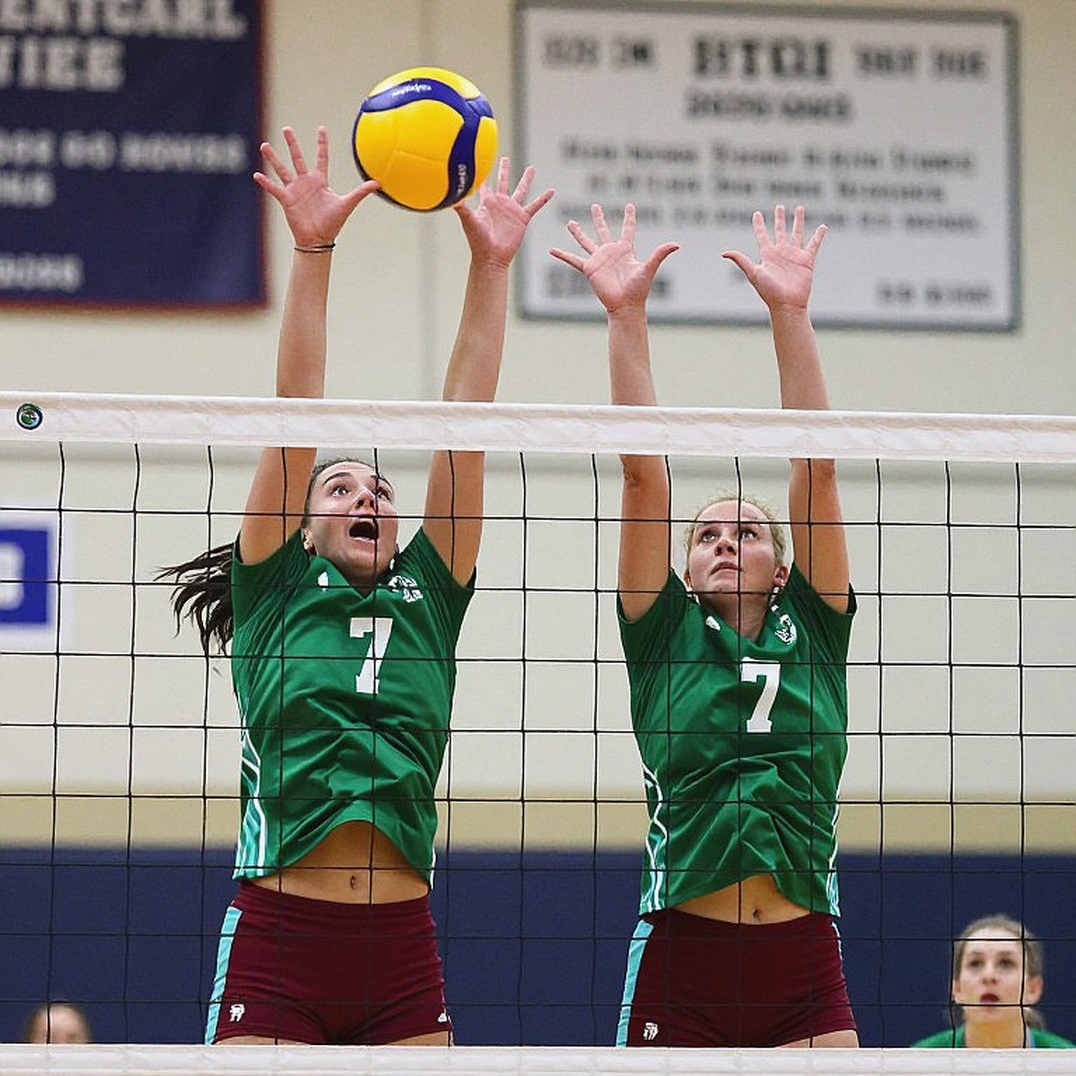
Most spectators let that detail pass like a line on a fixture list. For me it closed the first phase of qualification for the 2027 FIVB Women's Volleyball World Cup, and it is the right moment to say plainly: 18 of the 32 places are locked, and what the system just measured was not volleyball strength but the price of finishing top three in your continent.
People call me a shock merchant; I call it reading where the money moves. This time the money is not sitting in a transfer deal. It sits in the map that allocates places at a 32-team World Cup co-hosted by Canada and the United States.
Eighteen names are settled
The continental qualifying cycle has just closed with 18 teams assured of a place. The first three berths were never contested: Italy hold the defending-champion slot after winning the 2026 FIVB Volleyball Women's World Championship, while Canada and the United States went straight in as co-hosts of the 2027 edition. The rest was divided on a quota of three teams per confederation.
At the 2026 NORCECA Championship in Santo Domingo, Cuba and the Dominican Republic reached the semifinals alongside the two World Cup hosts and secured the earliest tickets. They eventually finished third and fourth. Puerto Rico, fifth in the final standings, took the region's third berth.
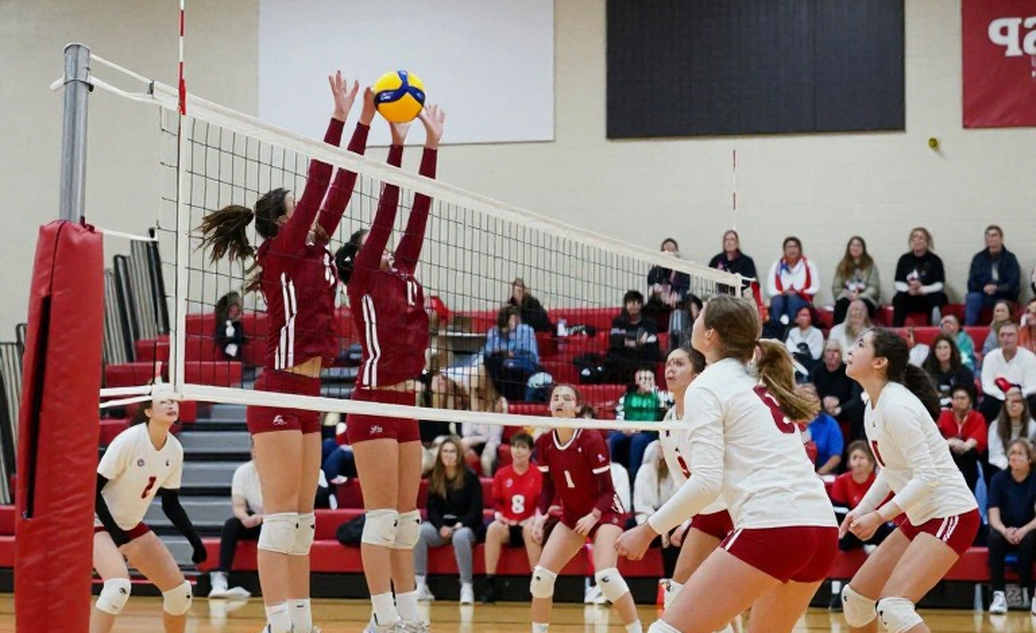
In Tianjin, the 2026 Asian Women's Championship sent Thailand and China into the gold-medal match. Thailand won the title on Chinese soil, the hosts finished second. Japan took the bronze-medal match and the remaining place.
Nairobi staged the final of the 2026 African Nations Championship between Egypt and Kenya. Egypt took the crown, Kenya finished runners-up, and Cameroon won the bronze-medal match to claim Africa's third ticket.
In Istanbul, the three EuroVolley 2026 semifinalists besides Italy were Serbia, Poland and Turkiye, and those were the three European tickets. The continental podium read Turkiye, Italy, Serbia.
In Rio de Janeiro, the 2026 South American Championship closed with Brazil, Argentina and Colombia taking the places in gold, silver and bronze order.
Eighteen places are settled. The remaining 14 at the 2027 World Cup will be determined in the next allocation phase, under a mechanism FIVB will publish separately.
The same price for two very different levels of competition
Read that allocation table like an accountant and one detail jumps out. Europe, the continent with the densest concentration of strong teams on the planet, and Africa come away with exactly three qualifying places each. Italy's slot is the defending world champion's slot, earned on court, not a European slot. Purely by the qualifying route, Europe is not favoured over Africa by a single berth.
But the door itself is a different world. To earn a European place you have to reach the EuroVolley semifinals. Those four semifinalists are four teams capable of beating most of the world's top ten on any given night. It is a run that means getting past Serbia, Poland, Turkiye, Italy and the rest of one of the most brutal continental championships in the sport. The teams that fell in this season's EuroVolley quarterfinals are out of the continental route, and that is the direct consequence of a bracket, not of a lasting decline.
Two continents pay wildly different costs to buy the same ticket.
This is not the fault of any federation and it is not a conspiracy. It is product design. A 32-team World Cup sells television rights by territory. Three African places, three Asian, three South American, three NORCECA, three European: those identical numbers produce a handsome coverage map, 32 countries, five continents, hundreds of domestic markets with a home team to cheer for. For an organisation that has to fund global women's volleyball through broadcast and sponsorship revenue, it is a rational choice.
The problem is the label. When a world championship is promoted as the summit of volleyball strength, viewers have the right to demand that it selects by strength. When it is promoted as a global festival, viewers need to be told in advance that some pool matches will be ceremony. FIVB is trying to sell both stories at once, and the 18 locked places are evidence that the first half of the story is swallowing the second.
A bubble does not burst because someone pricks it; it bursts because belief runs dry. A 32-team World Cup with nearly two thirds of its places allocated geographically can live well for one or two editions. By the third, once audiences are used to a flagship event opening with straight-set mismatches, belief will run dry in a way nobody gets to prick.
Thailand won in Tianjin, and that is the most valuable data point of all
Set the quota debate aside and there is one result worth pausing on longer than all the rest: Thailand won the Asian title on Chinese soil.
I sat through the replay of that final several times over two days, stopping at every second contact, and what repeated in front of me was not an individual taking over. It was a system. Thailand did not win on height. They won on decision speed, on the quality of the second ball, on compressing the opponent's defensive time below the threshold a tall block can react to. China held a physical advantage at almost every position at the net, and that advantage did not convert into points in the decisive rallies.
This is what I keep saying about women's volleyball in the region: a well-organised collective can compensate for height, but no collective can compensate for a bad setting system. Southeast Asian women's volleyball once lived on that principle, and the final in Tianjin is a rare occasion on which the principle was tested on the home floor of the most physical team in Asia.
Read the other way, it is also a warning. Asia is pushing its U18 cohorts down a path of physicalisation, more height, more mass, more jump, while foundational technique is ranked behind short-term results. Thailand have just proved that technique still wins a single match. One match is not enough against a decade of misdirected development. If regional programmes read this title as praise for technique and then keep coaching children out of a conditioning manual, in ten years there will be no Thailand left to quote.
Cuba, Puerto Rico and the question of fifth place
NORCECA 2026 left a detail that is easy to miss. Cuba and the Dominican Republic secured their places from the semifinals, yet Puerto Rico, fifth overall, became the region's third team. In a tournament where the two World Cup hosts also sat in the bracket, the fate of the third berth was decided not by a dedicated playoff but by final standing. For regional teams, that is a rule worth reading closely before planning a bracket run.
In South America the story is even clearer: the three tickets were settled before the tournament reached its final day of play. When a continental championship turns its last two days into a medal ceremony, the commercial value of that championship erodes too. It is something confederations should weigh when they design formats: a good format keeps the outcome open until the last set.
Where I could be wrong
There are three places I could be wrong, and I want to say so before making a prediction.
First, what I call Europe's tax may be nothing more than a matter of timing. The remaining 14 places will be filled later, and if Europe ends up with seven or eight teams among the 32 at the 2027 World Cup, my argument collapses into a complaint about the order of announcements. I have set that test for myself and will publish the result when the full field of 32 is confirmed.
Second, and more importantly: the goal of a quota system was never to find the 32 strongest teams. The goal is to make 32 countries care about women's volleyball. If Cameroon holding a World Cup place means a television slot in Yaounde and a group of twelve-year-olds seeing women's volleyball on screen for the first time, then the price I call a tax is buying something no ranking can measure. I doubt the packaging, not the outcome.
Third, Thailand. One final does not make a trend. I have read too much into a single result before and paid for it with an article I had to correct. To know whether the Thai system is durable, you have to watch them face a European block on the world stage, not familiar Asian opponents.
I do not believe in luck; I believe in the margin of error of the people in the hot seat. Here, the hot seat is the FIVB meeting room where the quotas are divided. Their error may turn out to be correct in the long run, and that is something I do not rule out.
What to watch next
My testable prediction: once the remaining 14 places are filled, Europe will hold more than four teams at the 2027 Women's Volleyball World Cup, and the three EuroVolley tickets will then look more like a penalty than a reward.
But the thing genuinely worth watching is not the list of 32. It is the pool draw. With 18 teams already through and most of them coming from continents of very different competitive density, the seeding will decide whether the opening week is a real group stage or a three-set formality. It will also decide whether a system like Thailand's gets a chance to meet a European wall in the knockout stage, or is eliminated before audiences work out how they play.
Global women's volleyball now has 18 teams assured and 14 places open. Over the next two years, the number that matters is not who gets in, but the order in which those 32 teams meet.